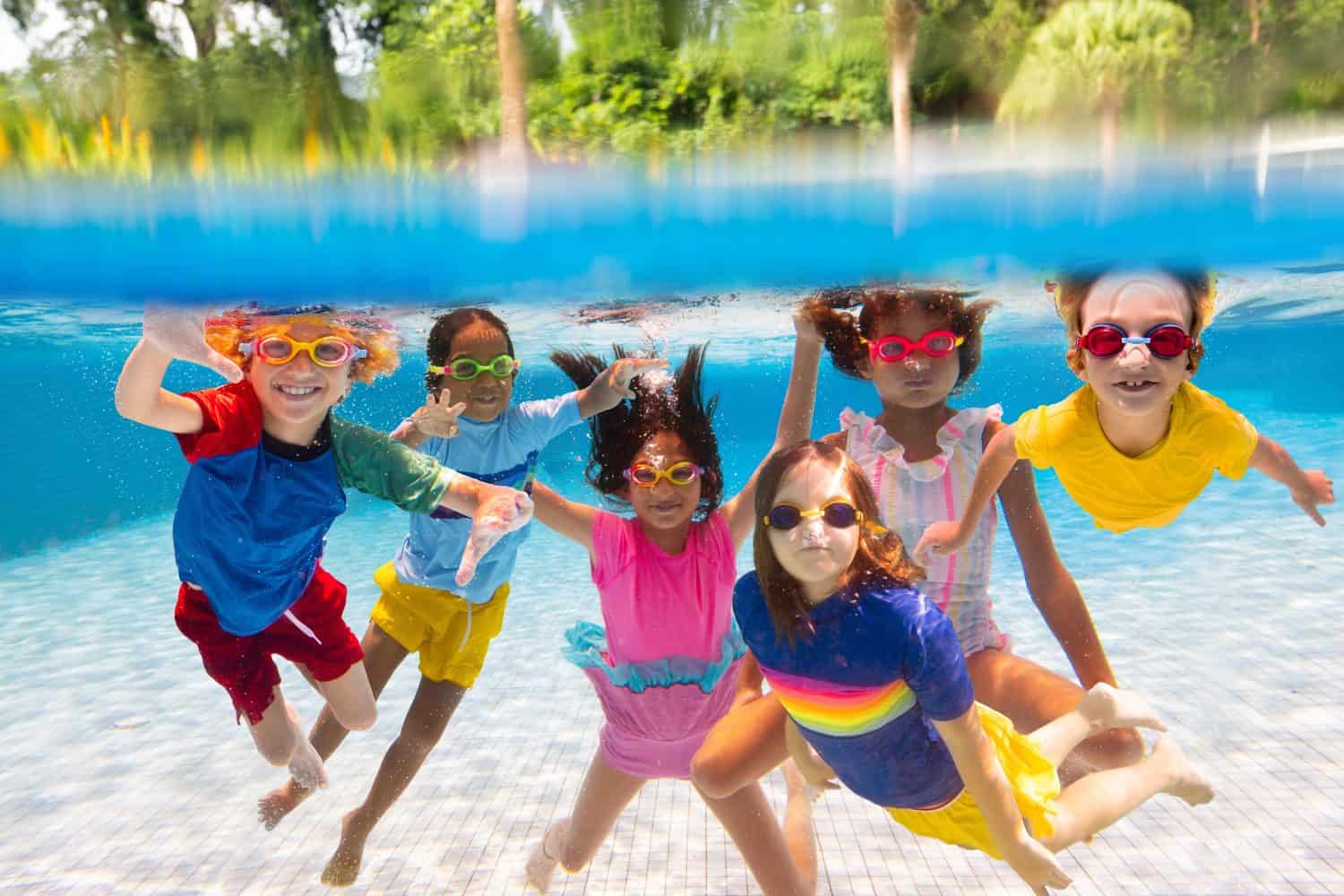
As the days grow longer and warmer, parents and kids alike look forward to summer and the fun activities that come with it. But before you have fun at the pool or at the beach, make sure the whole family knows how to stay safe around water.
The CDC reports that drowning is the leading cause of death of 1 to 4-year-olds in the United States. However, taking swim lessons can reduce the risk of drowning by 88%, according to a study from the National Institutes of Health. Follow these tips to help your family get ready for a trip to the pool or the beach.
Why Are Water Safety and Swim Lessons So Important?

©Irina WS/Shutterstock.com
Most parents already know that drowning is a huge risk, especially for toddlers and preschool-aged children. Most children are curious about water and will try to explore it. But children can drown in even a small amount of water if they don't have the strength or skills to get out, or if the adults supervising them don't know what to watch for.
“Water safety is critical because drowning happens quickly, quietly, and can happen anywhere to any child, even to really great parents,” says Heather Trnka, manager of injury prevention at Akron Children's Hospital and Director of Safe Kids Ohio. “Drowning doesn’t look like it does on TV and in the movies. It is not loud; children are not splashing or yelling for help. It is silent, children will bob right at the surface of the water, submerging just below the water line, and coming back up. If you do not know what you are looking for, it is very easy to miss. Drownings can happen in under a minute, often while adults take their eyes and attention off the water for just a moment.”
However, there are many layers of protection that adults can provide to prevent drowning. Giving a child swim lessons, knowing how to supervise children who are playing in water, and setting rules about when and how to go in the water can significantly reduce drowning risks.
When Should Children Start Swimming Lessons?
©BaLL LunLa/Shutterstock.com
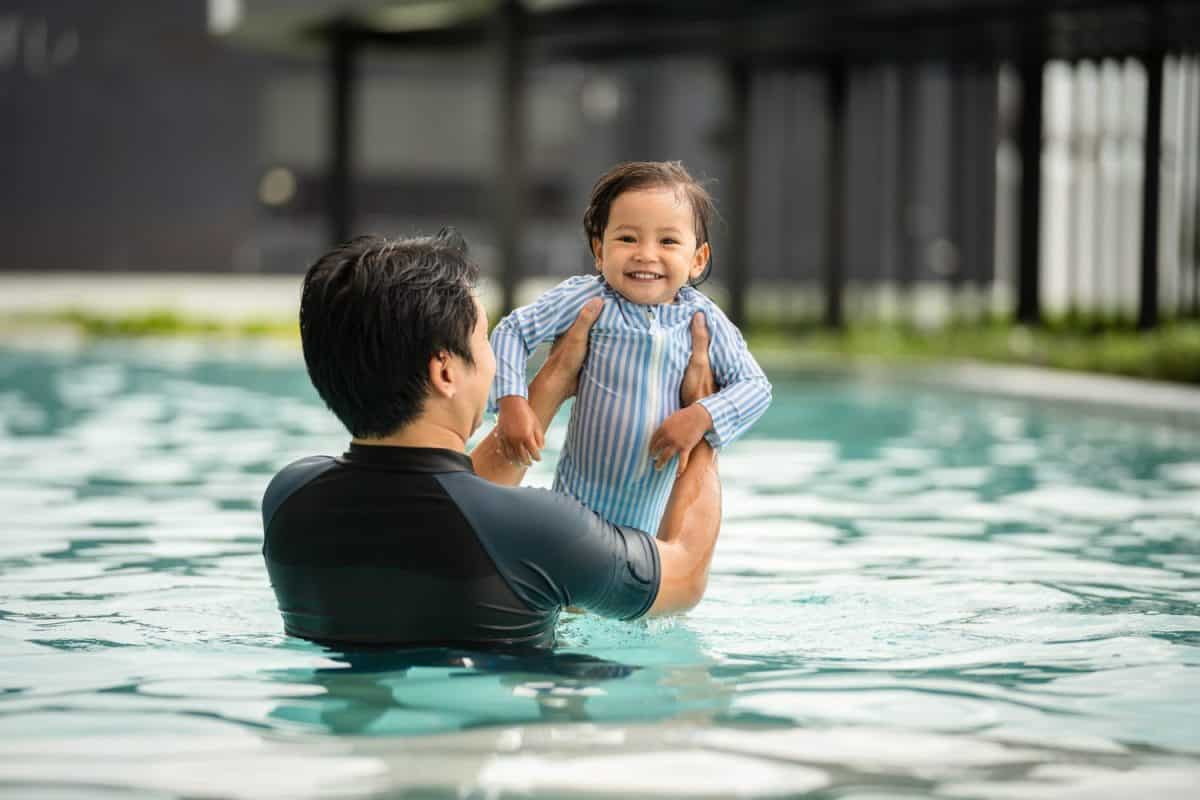
The American Academy of Pediatrics recommends starting swim lessons around age one, but parents can begin parent-child lessons in late infancy to help their child get comfortable in the water. Between the ages of 1 and 4, swim lessons should focus primarily on water safety and survival. Parents should look for kids learning to float, how to flip from their front to their back, and how to move to an exit and get out of the water, says Trnka. After age 4, kids are developmentally ready for formal skills training, like treading water and learning strokes.
“An important thing to remember is that swimming lessons give kids the skills they need if they are in the water, whether during swimming time or not, but lessons do not drown-proof a child; it is one layer of protection — not a guarantee, ” Trnka says.
What Should Parents Look for in a Swim School or Instructor?
When parents are checking out venues or instructors to teach their children to swim, they should make sure the facility is clean, the ratio of students to teachers is no higher than 4:1, and that there is a lifeguard other than the instructor on duty at all times. Trnka urges parents to make sure that instructors are well-trained, preferably by a nationally recognized program like the American Red Cross or YMCA. Instructors should also know CPR, first aid, and how to use an AED.
If a program checks all of those boxes, ask if you can get a trial lesson before committing to paying for a package. Check to see if the instructor has a good rapport with your child or children. If they don't, your child may be resistant to going to swim lessons.
“A great swim instructor should make your child feel confident and safe, as well as reinforce water safety with the family,” Trnka says. “Trust your gut, if the program doesn’t meet your needs or isn’t child-focused, it’s ok to look somewhere else.”
Trnka also discourages attending swim schools that use sink-or-swim as a component. Throwing a child into the water who is not prepared can cause panic. It's better to ease children into the water, especially if they are generally nervous about new experiences. And don't trust anyone who says they can make your child “drown-proof.” Even the best swimmers can drown in the right conditions.
What Can Parents Do to Help a Child Who Is Differently Abled Learn to Swim?
Learning to swim is unique for every child, and it can be challenging for some children with physical, cognitive, sensory, or developmental differences. Parents should look for programs that have experience working with children with disabilities. Be prepared to do whatever it takes to help your child be safe around water.
This might look like getting in the water with your child, taking lessons that are shorter in duration or have more frequent breaks, using picture cards, or generally accepting that progress may be slower or look different for different children. You know your child best, so make sure that whatever instructor you choose is checking in with you about how to best help your child.
What Should Parents Expect Their Children to Learn in Swim Lessons?
Infant swim lessons should still be focused on parents getting their children comfortable in the water. These are not skill development lessons and mostly involve having children experience what water feels like while their parent is holding them or sprinkling water on their head.
Swim lessons for ages 1-3 will still likely involve a parent being in the water while children learn how to safely get in and out of the pool, how to put their face in the water and blow bubbles, and how to kick on their front while holding the edge of the pool. Trnka says that some swim programs allow children as young as three to be in the pool without a parent or caregiver, but that this should be done only with a child-to-teacher ratio of 1:2.
By age 4-5, children are developmentally ready to learn to float, roll from front to back, get back to the edge of the pool, and tread water. Some children begin learning strokes by age 5.
“Just remember, every child progresses at their own rate, whether it takes weeks, months, or even years, the goal is the same: they become comfortable in the water, understand the dangers of the water, and know what to do if they end up in the water unexpectedly,” Trnka says.
Keeping Your Child Safe, Even After They Learn to Swim
©Alex Photo Stock/Shutterstock.com
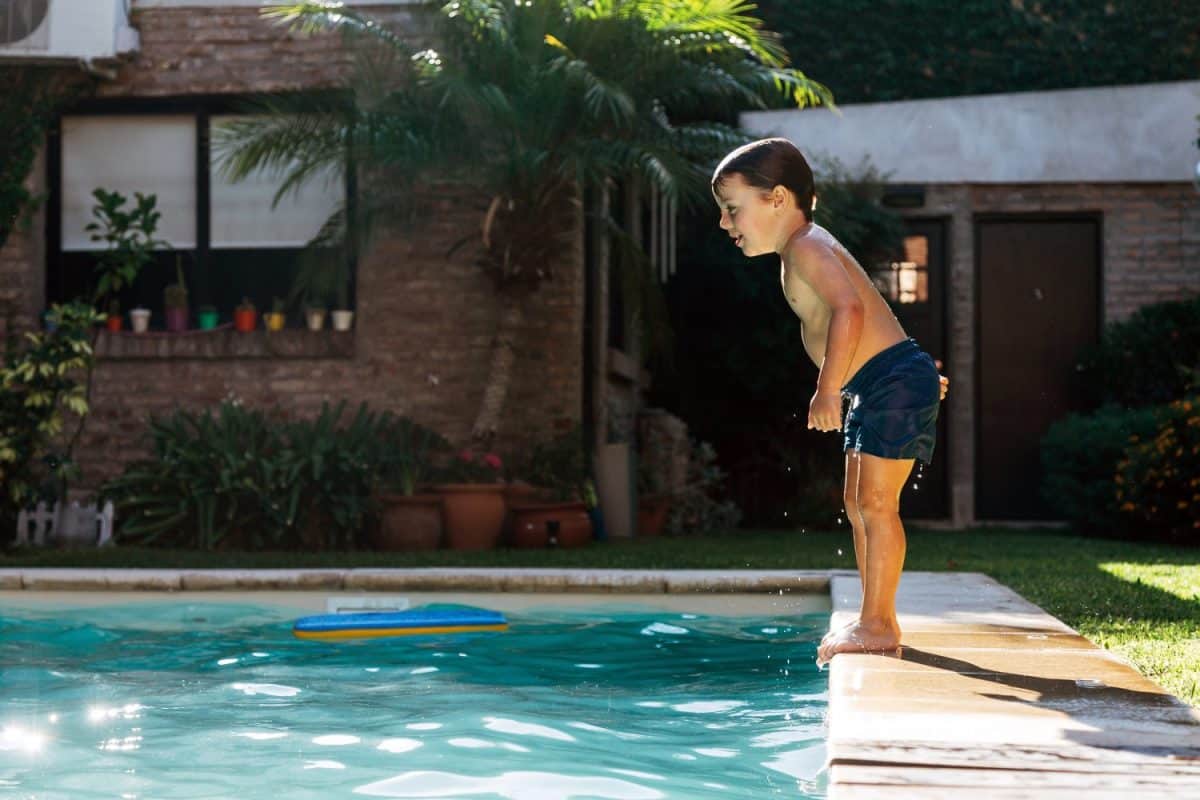
Children should never get in the water without telling a designated adult, and that adult should be watching the child or children at all times. This means no scrolling on a phone, reading a book, or talking to others in a way that takes their eyes off the water.
Trnka says that everyone should be considered a non-swimmer until proven otherwise. Non-swimmers and small children should always be within arm's reach of an adult. Once kids learn how to swim on their own, they should still be actively supervised and demonstrate knowledge of the rules and willingness to follow them before getting in the water. Older kids should be advised to continue to use the buddy system and to get out of the water if they feel fatigued.
If you're swimming in open water or boating, everyone should have a properly fitted life vest. Alcohol and swimming should not mix: don't drink if you're supervising kids who are swimming or near a pool or other body of water.
Unfortunately, most drownings occur during times outside of when kids are actually swimming. That's why it's important to keep backyard pools fenced on all sides. Add an alarm that sounds if someone enters the pool area. And all kiddie pools, water tables, or buckets that hold more than an inch of water should be emptied and turned over when not under the direct supervision of adults.
The image featured at the top of this post is ©FamVeld/Shutterstock.com