
As soon as you have a baby, it feels like there are milestones you’re supposed to keep track of. The first year of life is full of milestones, but it can be difficult to tell when you have a late bloomer and when you should really be concerned. First-time parents often don't know what is considered normal and what should be a red flag when it comes to developmental differences.
The good news for new parents is that you'll be seeing your pediatrician a lot within the first year, and often around the times when your child should be meeting a new milestone. Keeping track of these milestones can give you peace of mind since you can share with your child's doctor any concerns you have. To find out when parents should worry about milestones, we speak with pediatric experts about some of the things to look out for.
What Milestones Should Parents Look For?

©Natalia Deriabina/Shutterstock.com
While most parents are eager for their babies to learn to talk and walk, those aren't always the most important things that pediatricians are looking for, says Dr. Amir Miodovnik, MD, MPH, a physician at the Kennedy Krieger Institute in Baltimore.
“In the first year, the most important milestones aren’t just about walking or talking, they’re about connection. Babies should seek out faces, enjoy interaction, and show you what they find interesting. If those shared social moments aren’t there, a discussion with your pediatrician is warranted,” he says.
Milestones Before Six Months
By two months, Dr. Miodnovik says babies should be showing interest in seeing faces by turning their heads when they hear your voice and smiling back when they see you smile.
By four months, look for babies to follow your face with their eyes and make noises in response to your talking or making silly sounds at them. Dr. Miodnovik says to listen for oohs and aahhs or other vowel sounds. Children also start to understand object permanence, or the idea that something still exists even if they can't see it, during this time. Playing peek-a-boo can be one way to see if your child is beginning to develop this concept.
Milestones Between Six Months and One Year
©Nina Buday/Shutterstock.com
At six months, babies should be able to make sounds back and forth with you and show an interest in or eagerness toward keeping a “conversation” going.
Expect your baby to start expressing their needs, wants, and opinions around nine months by making gestures, like wanting to be picked up or giving you an object, or by creating different tones to show when they are happy, hungry, angry, frustrated, etc. They should also start to respond to you calling their name.
Feeding and Motor Milestones Between Six Months and One Year
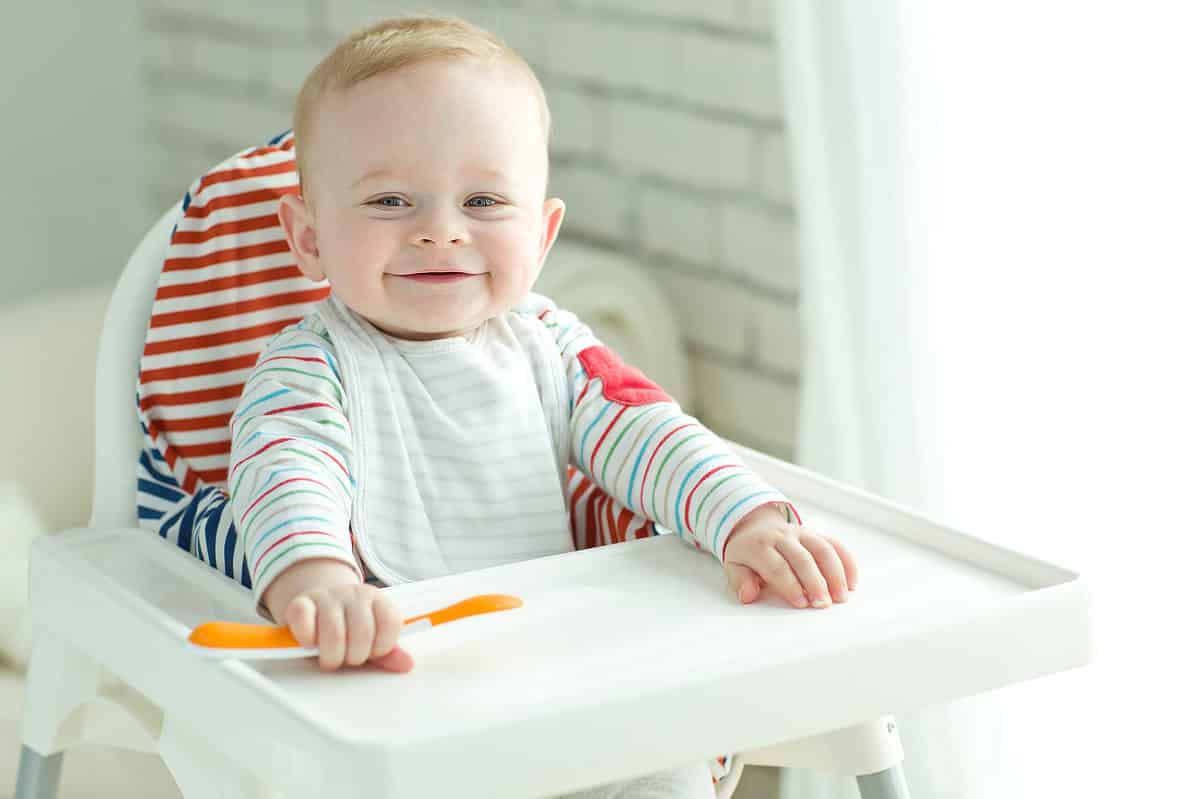
Aside from the sounds and gestures your child makes, babies should be able to support their own head and sit up in a high chair when they're around six months old. This makes it possible for parents to start to introduce solid foods.
“With solid foods, look for the infant's ability to move food pieces from one side of their mouth to their tongue and vice versa,” says Polina Shkadron, a neurodivergent therapist and founder of Play to Learn Consulting in New York City. “The skill of tracking a food item and being able to independently bring it to their mouth is a priority.”
Along with new gestures, babies usually begin crawling between the ages of seven months and ten months. With gross motor skills such as crawling, the date of the development is less important than the quality and intent of the movement, Shkadron says.
“[Crawling] is a crucial part of development because it sets the foundation for coordinated movements, body awareness as you are moving both sides of your body, organization of those movements, and the ability to cross midline,” she says. “There are important sensory needs and motor learning that are involved with the ability to move your body decisively and know exactly where you want it to go and for what purpose.”
Milestones at or Shortly After One Year
By the time they are one year old, a child should be able to nod or shake their head, wave, and point to what they want. They should be babbling with pitches and rhythms that are starting to resemble talking, and they should be able to follow gestures like “come here” and “give it to me.”
To make sure children are on track to meet these milestones, Shkadron recommends checking out 16 by 16, a document from The First Words Project that shows 16 gestures every child should know by 16 months old, from giving an object and shaking their heads at nine months to the thumbs up sign and a shrug of the shoulders for “I don't know” by 16 months.
Most babies start walking between 11 and 14 months, with some a little earlier and others a little later. While many parents start panicking if their child isn't walking by the age of one, most pediatricians don't start investigating possible causes until 18 months.
Some children, especially those who are already skilled at cruising or walking while holding onto furniture, just have a different personality and catch up on their own. If you suspect your baby may have another reason for not walking, such as muscular dystrophy or developmental delays, start talking to your pediatrician between 16 and 18 months.
How Play Can Help Parents Observe Milestones
©Ana Sha/Shutterstock.com
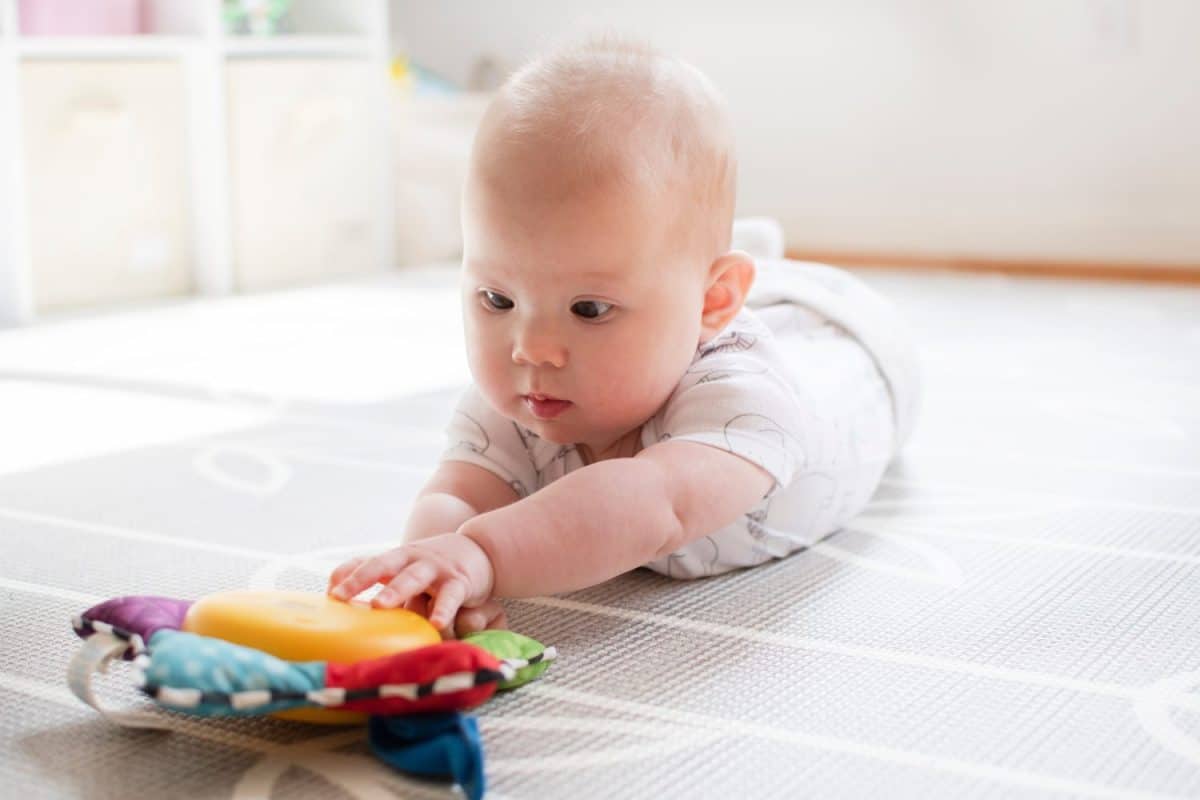
Talking to and playing with your child can be one of the best and easiest ways to learn what milestones they are meeting. For example, by playing peek-a-boo, you can know if your child understands object permanence and see if they know how to smile or laugh. By playing with toys, especially those that don't make a lot of noise or have flashing lights, you can see what your child is interested in and if they are understanding cause and effect.
“We are looking at what the child is interested in and what they do on their own to show you those interests,” Shkadron says. “The simplicity of the toy and the way that the child notices its different parts is important.”
Playing with your baby will build recognition and trust between you and your child. It will also help you learn what is normal for your infant, and what might be a step backward or a frustration for them while developing new skills.
When to Ask Questions About Your Baby's Development
Dr. Miodnovik advises against the “watch and wait” approach when it comes to babies' development, especially when it comes to social interactions. If you sense something is wrong, tell your pediatrician as soon as you can.
“Parents often think, ‘He’s just shy, ‘ or ‘She’ll talk later.” However, a lack of gestures, pointing, and back-and-forth interactions are developmental signs worth investigating,” he says. “A ‘quiet baby' is usually not a concern for autism, but a lack of social behaviors is.”
The biggest red flags are a lack of babbling or gestures by age one or a loss of any previously gained skills. But here are some other things parents should be looking out for:
-Lack of smiling or eye contact by six months old
-No back-and-forth sounds, facial expressions, or smiles by nine months
-No pointing, gestures, babbling, or response to name by one year
What to Do If Your Pediatrician Says to Watch and Wait
If you still have a feeling that something isn't right, you can always ask for a second opinion or ask friends to help you find a specialist, Dr. Miodnovik reminds us.
“If the pediatrician recommends ‘watching and waiting,' but you still have a nagging feeling, you can self-refer for a developmental screening,” he says. “As a developmental-behavioral pediatrician, I never doubt a parent's gut feeling about their child's development.”
Remember, you know your child best, and sometimes it takes a bit of advocating on your part to get your child the support they need.
The image featured at the top of this post is ©Prostock-studio/Shutterstock.com