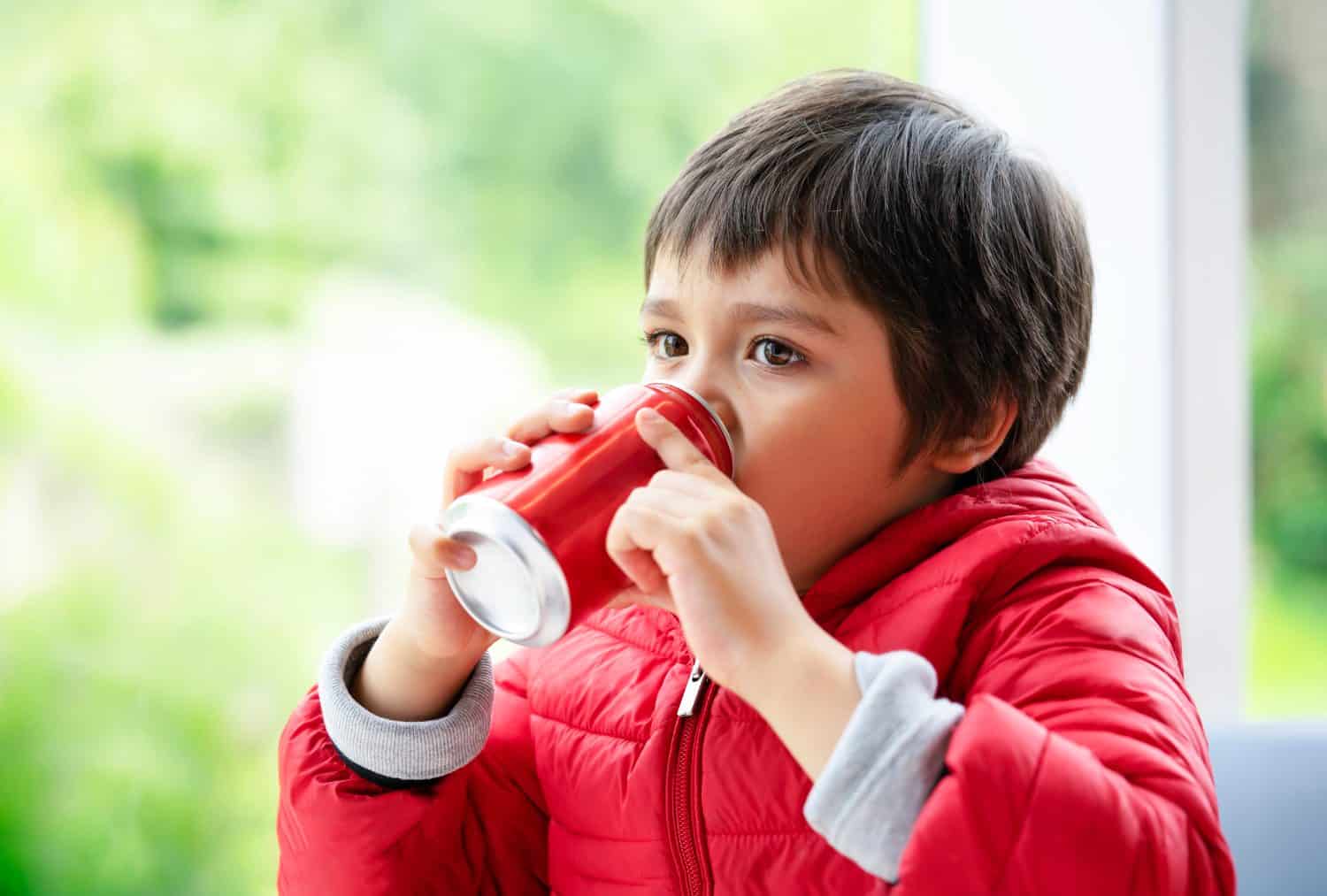
You know you should read the ingredient labels when food shopping. But doing a supermarket sweep before dinner doesn’t leave much time to look at labels, and sometimes, you might not know which ingredients are safe. Much like added colors, artificial sweeteners can show up in many kid-friendly products, but are they safe for children to eat?
We speak with two nutrition experts to determine what options are safe for kids and what parents need to look out for.
What Are Artificial Sweeteners?

©Szasz-Fabian Ilka Erika/Shutterstock.com
The word “artificial” is a clue that these sweeteners aren’t exactly the healthiest ingredient. “Most artificial sweeteners are manufactured chemical compounds,” explains Helen Tieu, RD, MAN, CDE, a registered dietitian and founder of Diet Redefined.
In addition to making food sweeter, artificial sweeteners have fewer calories — or sometimes none at all, according to the Mayo Clinic. Additionally, some studies have shown that sugar substitutes can help decrease cavities as compared to sugar.
The Food and Drug Administration (FDA) approved six artificial sweeteners as safe for consumption:
- Aspartame
- Acesulfame potassium
- Sucralose
- Neotame
- Advantame
- Saccharin
Not all sweeteners are synthetic, though. “Plant-derived processed sweeteners such as stevia and monk fruit extract are natural,” adds Tieu. “They provide an intense sweetness that helps enhance the flavor of foods.”

©New Africa/Shutterstock.com
What Products Are Artificial Sweeteners In?
Artificial sweeteners are found in many food options, and more often than not, they’re in kid-friendly products. “They’re present in a lot of the things we buy on a daily basis,” says Candice Van Eeden, a Holistic Nutrition Coach at Kuon Healthcare.
“Diet sodas, sugar-free yogurt, flavored water, protein bars, and chewing gum all contain artificial sweeteners; they’re even in some children's medicines.” Reduced-sugar and processed foods tend to contain them as well.
How much artificial sweetener would be “safe” for kids to consume, if at all?
Although these sweeteners are somewhat safe, they shouldn’t be consumed in large quantities. “Most of the approved sweeteners are deemed to be safe when used in moderate amounts,” says Van Eeden. That doesn’t mean that all kids can consume artificial sweeteners, though.
“Some children are sensitive to these additives,” she adds. “Natural alternatives such as stevia and monk fruit have previously been considered less hazardous alternatives since they do not elevate blood sugar, and they are naturally produced plants.”
Many foods that contain artificial sweeteners aren’t an integral part of your child’s daily diet. Sometimes, eating foods that contain artificial sweeteners can cause tummy troubles. “Some children may experience side effects such as GI upset (bloat, gas, loose stools) with sugar alcohols or large amounts of certain artificial sweeteners,” explains Tieu.
Kids who have PKU, or phenylketonuria, should not consume aspartame, as their bodies can’t break it down. Always speak to your child’s pediatrician or a pediatric dietitian, who can explain what artificial sweeteners are safe for your child.
What Amount of Artificial Sweeteners Is Safe?
Determining how much artificial sweetener is safe depends on your child’s age. According to the American Academy of Pediatrics, children under the age of 2 shouldn’t have artificial sweeteners at all. For children ages 2 and older, there shouldn’t be more than 6-8 ounces of food or drinks that contain sugar substitutes.
Van Eeden advises: “Artificial sweeteners are not recommended for children under two years old due to a lack of research and because the food products typically do not contain nutrients required for optimal growth for the child.”
And then, there’s also the chance that your child could develop a serious sweet tooth. “They may lead to adapted preferences for very sweet foods due to the intensely sweet nature of artificial sweeteners, which may encourage increased processed food intake and reduced whole foods intake, leading to reduced nutrient intake.”

©LightField Studios/Shutterstock.com
What Are Some Healthier Alternatives to Artificial Sweeteners?
Of course, eating an apple is better than a bowl of Apple Jacks. Tieu offers some tips to satisfy a sweet tooth sans artificial sweeteners:
Fresh or frozen whole fruit: “Sweet, but also contains fiber and micronutrients to support blood sugar management, satiety, and gut health,” she says.
Plain yogurt or plain Greek yogurt: Sweeten with fresh or frozen fruit and a drizzle of honey.
Cinnamon and vanilla: Add these to enhance the flavor and sweetness of foods.
Mashed banana and cooked apples: Get ready to go back to the days of pureeing fruits for your baby. Mashed bananas and apples can naturally sweeten food while maintaining fiber and micronutrients.
Chocolate: “Moderate amounts of dark chocolate (aim for at least 70% cocoa) can also be a part of a well-balanced, healthy diet,” adds Tieu.
How to Talk to Your Kids About Making Healthy Choices
It can be hard to tell your kid that their favorite sports drink isn’t the healthiest option. “Frame it that their favorite food is a treat to have, on occasion, rather than an everyday thing,” Tieu suggests. “Offer an alternative that's still sweet, yet healthier.”
One way to curb artificial cravings is by limiting the amount of food in your home that contains artificial sweeteners. Remember, the goal isn’t to eliminate them from your child’s diet, but rather to help them make healthier food choices. “Keep it simple and positive,” says Van Eeden.
“Teach them that there are some foods they treat as snacks, and healthier foods will make them stronger and have more energy.” Include your child in the decision-making process by starting with a simple swap: replace one item with artificial sweeteners with a healthier option.
“With exposure to these types of foods, paired with parental modeling and limited exposure to artificial sweeteners or food with added sugars, children may grow to enjoy the taste of naturally occurring sugars,” says Tieu.
Eliminating artificial sweeteners isn’t always practical. “The emphasis should still be on whole foods, while keeping artificial sweeteners — plant-derived or synthetic — to a minimum,” says Van Eeden. “This helps to ensure they get all of the nutrients needed for growth, encourages healthy dietary habits, and helps to prevent their taste buds from habituating to artificial intense sweetness.”
But if the closest you can get to your child eating strawberries is in a Pop-Tart once in a while, it’ll still be just as sweet.
The image featured at the top of this post is ©Ann in the uk/Shutterstock.com