
Time flies once you have a baby. One moment, your little bundle of joy is a newborn, and the next, they're moving on from formula or breast milk to real food. It's a bittersweet transition, but one that has to happen eventually. When the time comes, you need to decide whether to go with traditional spoon-feeding pureed foods or to begin baby-led weaning. Letting your child take control of their eating can be daunting at first, but some parents prefer that route, and you may be the same.
In this guide, we'll tell you everything you need to know about infant-led weaning, including the best foods to try, how to keep your baby safe, and what you'll need to make the transition a success.
What is Baby-Led Weaning?
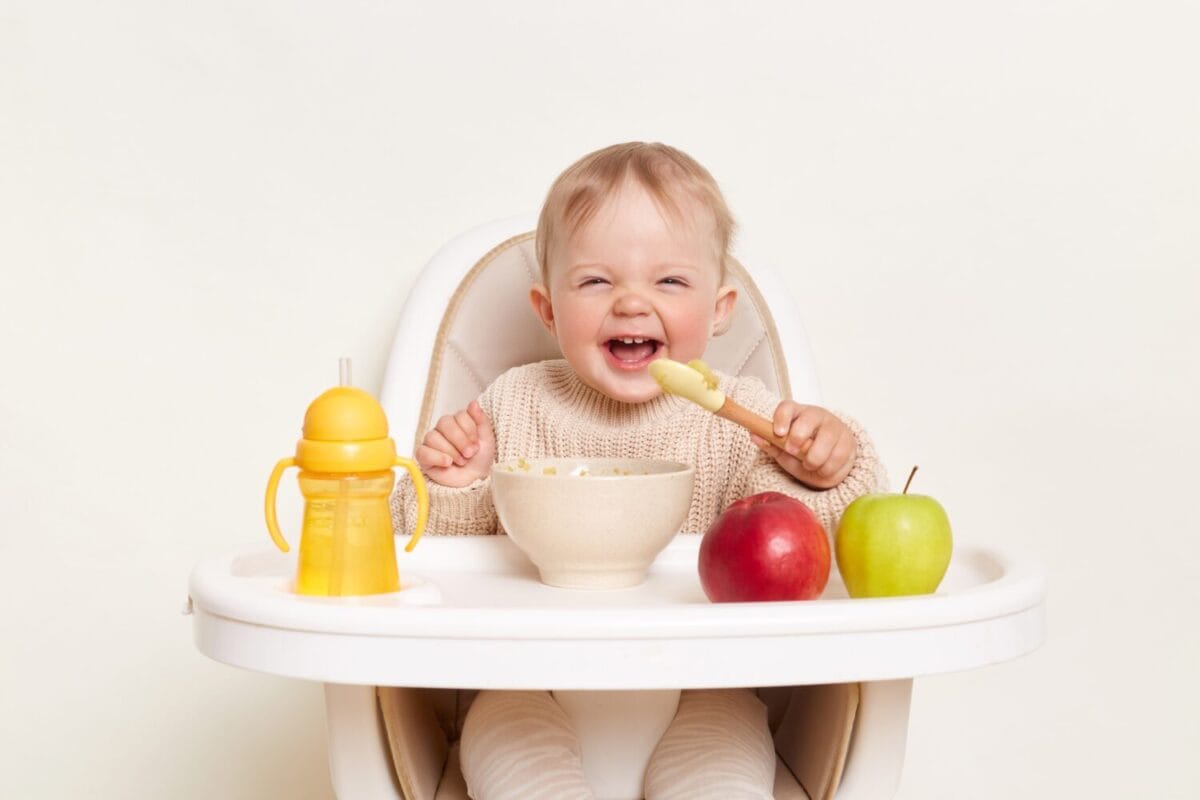
There are many perks to baby-led weaning, including introducing a sense of independence.
©StoryTime Studio/Shutterstock.com
If you're a new parent, you may be wondering what baby-led weaning is all about. Regardless of whether you decide to breastfeed or give your baby formula, you'll eventually need to introduce a mixed diet that includes some solid foods. It's not a process that will happen overnight. After all, your baby doesn't know anything different than breast milk or formula.
This process requires the baby to learn about food with a different texture than they're used to eating. Plus, it asks them to start using their hands to manipulate the food and feed themselves. Typically, this process should begin at about 6 months of age, but some babies are ready by 4 months.
Baby-led weaning is different from the traditional approach of spoon-feeding, where you completely control the process. This is typically done with pureed foods that are fed on a spoon. As a parent, you are controlling the process, whereas in baby-led weaning, the baby takes the lead.
Benefits of Baby-Led Weaning
There are pros and cons to both baby-led and traditional weaning, but many people are partial to the former. Here's why:
- Offer More Flavors – When babies have more control, they can pick up a larger variety of foods and learn what they like on their own. You being the one to decide what your baby eats could lead to picky eating in the future.
- Promotes Independence – You give the baby the chance to build their sense of independence. It’s a small step, but it could give your child the head start they need for a successful adult life.
- Focus on Whole Foods – When you don’t engage in baby-led weaning, you’ll be primarily feeding your child processed purees. Instead, give them whole foods, and they can be sure to get the nutrients they need.
- Prevent Future Obesity – By letting your child take control, they can tell you when they’re full and want to stop eating. This sense of control could help them when they get older.
- Improved Motor Skills – When you feed your baby using traditional methods, you’re doing most of the work. By engaging in baby-led weaning, you help your kids improve their dexterity as they lift the food to their mouths while learning how to chew and swallow.
While there are many benefits, the choice of how you evolve your baby's eating style is ultimately up to you.
Who Is Baby-Led Weaning Best For?
While just about any baby can engage in independent eating, there are certain kids and families who may find the process easier. In addition to waiting till at least six months of age, there are certain signs you should watch for that prove that your baby is ready:
- Your baby can sit upright with little to no support from you.
- The baby can reach for objects and hold them.
- Your child has shown that they’re able to put things in their mouth.
- The baby no longer has their tongue-thrust reflex, where they immediately spit out food that’s put in their mouth.
If you are overly cautious or you just want to make sure that your baby is ready, speak to your healthcare provider and get their input.
Keep in mind that although your baby is learning to feed themselves, remember that formula or breast milk should still be part of the daily equation, at least until the end of the first year. Even if they start solid foods, babies aren't able to have cow's milk until they're at least one year old.
Best Foods to Try
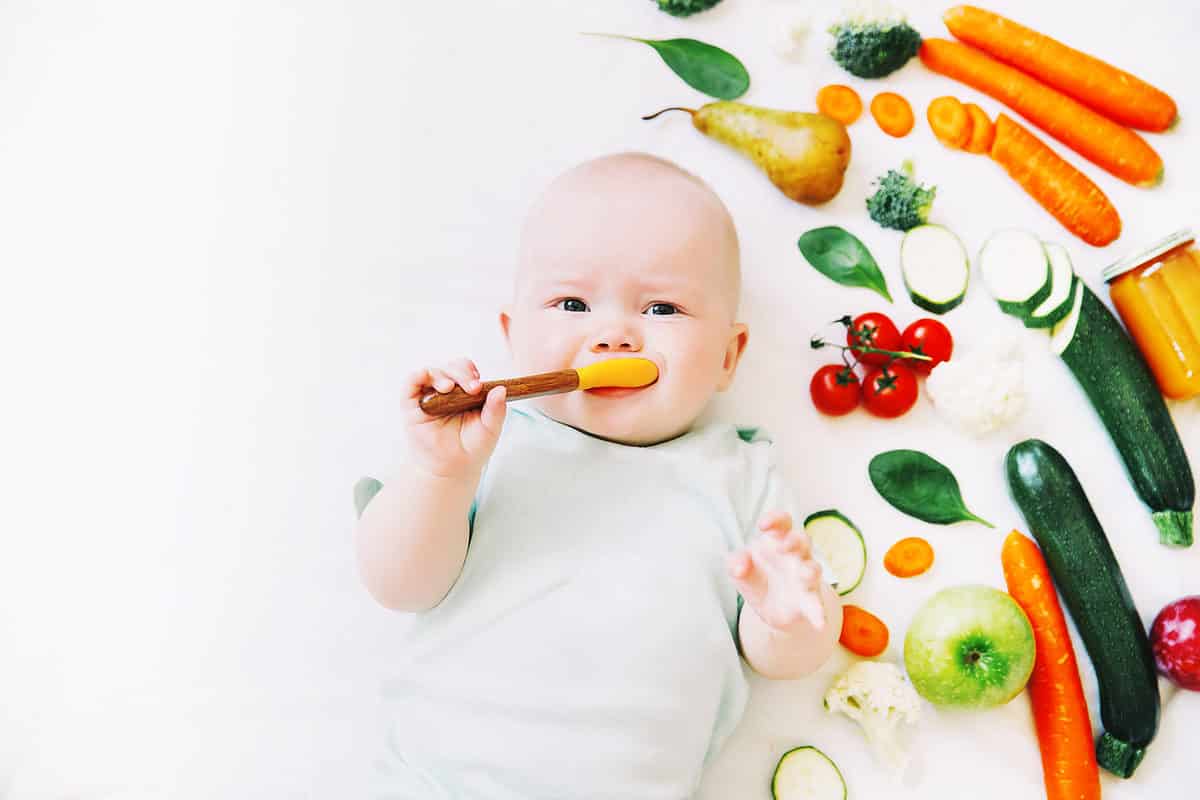
Introduce a healthy balance of fruit, protein, and vegetables by age 6.
©iStock.com/NataliaDeriabina
Once you've done your research and decided to continue with baby-led weaning, pick the food options that will set your child up for success. When selecting food, look for nutritious options with a focus on more whole foods and fewer processed options. Since your baby will be picking up the food with their fingers, choose food that is easy to hang onto. Make sure it's not too sticky, hard, or difficult to chew. Nothing too hot or too cold — room temperature is best.
As for specific foods, consider:
- Fruit – Pears, bananas, kiwi, mango, and strawberries are all great. Don’t feed round fruits like berries or grapes unless they’re cut into smaller pieces first.
- Vegetables – Almost any cooked and peeled vegetables will do, including carrots, squash, and sweet potatoes. Try to avoid veggies with hard textures, like carrots and celery. However, steamed carrots are typically good. So are steamed green beans and sweet potatoes.
- Protein – Soft and shredded meats, like fish and tofu, are great.
- Whole Grains – For a well-balanced diet, include some tasty whole grains. These can include baked oatmeal strips, whole grain toast strips, pita strips, and pancake strips.
- Dairy – For dairy and protein requirements, provide plenty of cheese. Cottage, mozzarella, Swiss, cheddar, and ricotta cheese will all do.
- Drinks – Continue to stick with formula or breast milk until your child is one year old.
Avoid honey at all costs until your baby is at least one year old, because it can carry the risk of infant botulism. Also, don’t worry about adding salt or sugar to improve the taste of any food since they’re not necessary for a baby. The ingredients also don’t provide any nutritional value.
Safety Tips During Baby-Led Weaning
When you let your baby take the wheel and start eating on their own, you'll need to be there every second of the process. Caution is key, so your child doesn't choke or have any other incidents. Remember that even if your child shows signs that they may be ready to feed themselves, you should still watch carefully. If they're struggling, consider waiting a bit longer and then try it again.
To start, under no circumstance should you allow this process to begin before the baby is at least six months old. Even after that point, look for the signs of readiness that we shared earlier. Consult the list of starter foods above and avoid anything that could even potentially become a choking hazard.
During feedings, always sit your baby upright, ideally in a highchair where they can be buckled in. You may need to place your hand on their back to help them remain sitting straight, especially when they’re younger. Always be watching for signs of gagging or choking so you can act at a moment’s notice.
While these safety precautions should keep your baby out of danger, you should seriously consider infant CPR classes so you can act quickly if there is an incident. Knowing this form of first aid can be helpful in other sudden circumstances as well.

If your baby is ready, let them take the lead, and remember it will take time for them to learn.
©ZlataSole/Shutterstock.com
Tips for Getting Started
Now that you know all of the signs and guidelines about baby-led weaning, let’s look at some steps for how to get started. Pick a time when your child is alert, rested, and appears eager to learn. Plan your meals 30 minutes before your typical breastfeeding or formula feeding time so they’re not overly hungry, and they’ll eat carefully.
Then, start simple. Place a piece of food on your baby's highchair tray. Don't worry about providing bowls or plates. If they seem confused, let your little one watch you as you take a bite, and they may mimic the behavior. Then, let your child take the lead. They may pick up the food and put it back down. That's okay. Don't force it. See what happens during the next feeding.
You may have to help a bit at first by handing the food to your baby or being patient if all they do is lick the food to determine its texture. Over time, your baby will be more eager to take full control. When in doubt, try to make it fun. Smile and laugh with your baby. Show them how enjoyable it is to eat for themselves.
Since this is a learning process, invest in a large bib, since food will fall. If you value your clean floors, go the extra mile and add newspaper on the floor under the highchair.
Consider all of these safety tips and food options, and you can help your baby reach the next milestone in their life.
The image featured at the top of this post is ©iStock.com/Liudmila Chernetska