
By the time you're pregnant with your first child, you've likely heard many stories about what happens during labor — both good and bad — and you might be thinking about the kind of support you need from those around you. Some women choose to have family members, such as their mother or sister, in the room, while others prefer to have only their husband and medical team present.
Whether you're giving birth in the hospital with an OB or in a birth center with a midwife, you may consider bringing a doula into the mix. Even if you have the support of a partner and family, doulas are specially trained to provide non-medical support to laboring women.
While the role of a doula itself isn't something new, even those in birth work have noticed how the demand for doula support has been steadily increasing in recent years. To discover why this extra layer of support seems necessary and how it can benefit women in labor, we speak with Micaela Darr, owner of Beata Birth.
What Is a Doula, Anyway?

©antoniodiaz/Shutterstock.com
It's easy to get confused about the difference between doulas and midwives, but while midwives have medical training, doulas are non-medical professionals who provide physical and emotional support to pregnant women. In most cases, this support starts during pregnancy and continues until the woman is postpartum. There are even postpartum doulas who specialize in providing extra support to new moms during the fourth trimester.
Although professional doulas are a relatively modern phenomenon, the role itself is ancient. Throughout history, women have supported one another during labor. Before the 20th century, most women gave birth at home, with the help of a midwife and surrounded by female relatives.
Darr, a certified childbirth educator, doula, and mother of seven, explains that in a world where there is so much fear surrounding pregnancy and birth, what drives modern women to hire a doula is a desire for safety. She sees this with many pregnant women in LA County, where she offers doula services and teaches childbirth classes. However, safety is not just physical. Emotional safety is just as important as physical safety, and part of that is women feeling informed and empowered during pregnancy and birth.
Bridging the Gap Between New Moms and Their Care Teams
Darr says that when she's teaching birth classes, she often compares working with a medical team during pregnancy to going to a mechanic when you know nothing about cars. They may tell you what's wrong or what the risks are, but you might not understand the terminology.
“There's this power dynamic between medical professionals and lay people in terms of terminology and in terms of risk,” Darr says.
“I think a lot of times, what women and husbands rely on me for is information. They have me there as another consultant. I'm just another perspective they use to make their decisions. Women feel like they're able to make fewer fear-based decisions when there's somebody there who's going to talk it through with them and not rush them through a decision.”
Informed decision-making in labor is important for numerous reasons, especially because no matter how well you prepare, birth doesn't always go the way you plan. Experiencing this first-hand is what led Darr to teach women about birth.
©Oksana Shufrych/Shutterstock.com
When Birth Doesn't Go the Way You Pictured
While many women today go into pregnancy either fearing or dreading the idea of birth, this isn't the case for all women. When Darr was growing up, birth was simply a part of life.
“I actually attended my first birth when I was 12,” she says. As one of 10 siblings, she got to witness what it was like to have an uncomplicated home birth. This experience led to her having a vivid idea of what she expected birth to look like when she had kids of her own.
To prepare for her first birth, she took Bradley Method classes, also known as Husband-Coached Childbirth, and was prepared to have an unmedicated birth without unnecessary interventions. Instead, she ended up with placenta previa, a serious pregnancy complication where the placenta covers all or part of the cervix. This complication led to Darr having a scheduled C-section.
“I was really disappointed and also scared. My childbirth educator was really helpful in that she met with me, we went over a birth plan for a C-section, and she was super supportive,” Darr tells us.
Planning for a Different Type of Birth
When Darr became pregnant with her second child, her childbirth educator helped her prepare for a VBAC, or vaginal birth after cesarean section. Her experience having a successful VBAC in the hospital is part of what led to her becoming a childbirth educator and doula.
“After I had that birth, I thought, everyone should know this stuff about birth — the stuff that I had learned about my body and about the way it's made to work. There's so much fear surrounding birth, so I decided to become a childbirth educator.”
Darr completed the childbirth educator certification process through an organization called CAPPA, and during that process, she was able to attend births. Getting to witness so many other women give birth fueled her passion for supporting pregnant women, showing her the beauty and awe of what women's bodies are capable of.
Some Things Matter More Than How Labor Unfolds
Darr certainly isn't the only woman who went into her first birth with high expectations. Whether a woman plans for an unmedicated birth or plans on asking for an epidural as soon as she's past triage, birth can be unpredictable. Though preparing for birth is essential, it's also important for women to understand that everything may not go as planned. In moments like this, the support doulas offer can be life-changing.
“There's no way to really know exactly how birth is going to unfold. Never. Just holding it in awe and being really present there for women is what still draws me to doula work. The woman should be the focal point in a labor, and a lot of times, they aren't,” Darr says.
“This perfect birth that you imagined almost never happens. But looking at it afterward, [you can ask] what did I learn from that, what strengths did I show, how was I supported and loved, how did my perspective shift. We can take positive experiences from those things, regardless of how the birth itself, on paper, turned out.”
The Kind of Moms Who Choose a Doula
Although her classes were irregular in the beginning as she raised and homeschooled her own children, Darr started to teach more regularly several years ago. When she started teaching more frequently, moms started asking her to be their doula. As the number of births she attends has increased, Darr has noticed a growing interest among women in seeking support from a doula during labor, reflecting a broader trend of increasing demand, and it's not always the women you would expect.
“Even women who are anticipating things like epidurals or following the hospital protocol are still wanting support. In my mind, I used to associate a doula with only natural births, but it turns out that women who are planning to have epidurals still really want that one-on-one support that a doula provides. In the hospital setting, having a team whose only focus is you feels safe to women. That's what women want to feel is safe.”
The type of support doulas offer can vary depending on the type of doula, type of birth, and the desires of the laboring woman. Typically, doulas offer physical and emotional support for women. This might look like assisting with breathing techniques, applying counter pressure, providing encouragement, and even advocating for their client while they're in labor.
With the Loss of the Village Came a Need for Support
A doula can benefit any pregnant woman, even those who have a strong support system, but some experts suggest that the increase in women hiring doulas may be partly related to the loss of traditional support systems or ‘the village.'
Women have supported one another in childbirth long before the term “doula” was recognized. Before the rise of professional doulas, it may have been your sister, cousin, or neighbor supporting you. With so many modern families living far away from relatives or even being estranged from them, there's more of a need for support when it comes to all aspects of matrescence.
Darr believes that the increased need for support is connected to the loss of a village. She adds, “Honestly, it's generational. A lot of my clients don't even want their moms there because their moms have so much fear surrounding birth.”
©DS Tkachuk/Shutterstock.com
Do Doulas Replace the Role of a Partner in Birth?
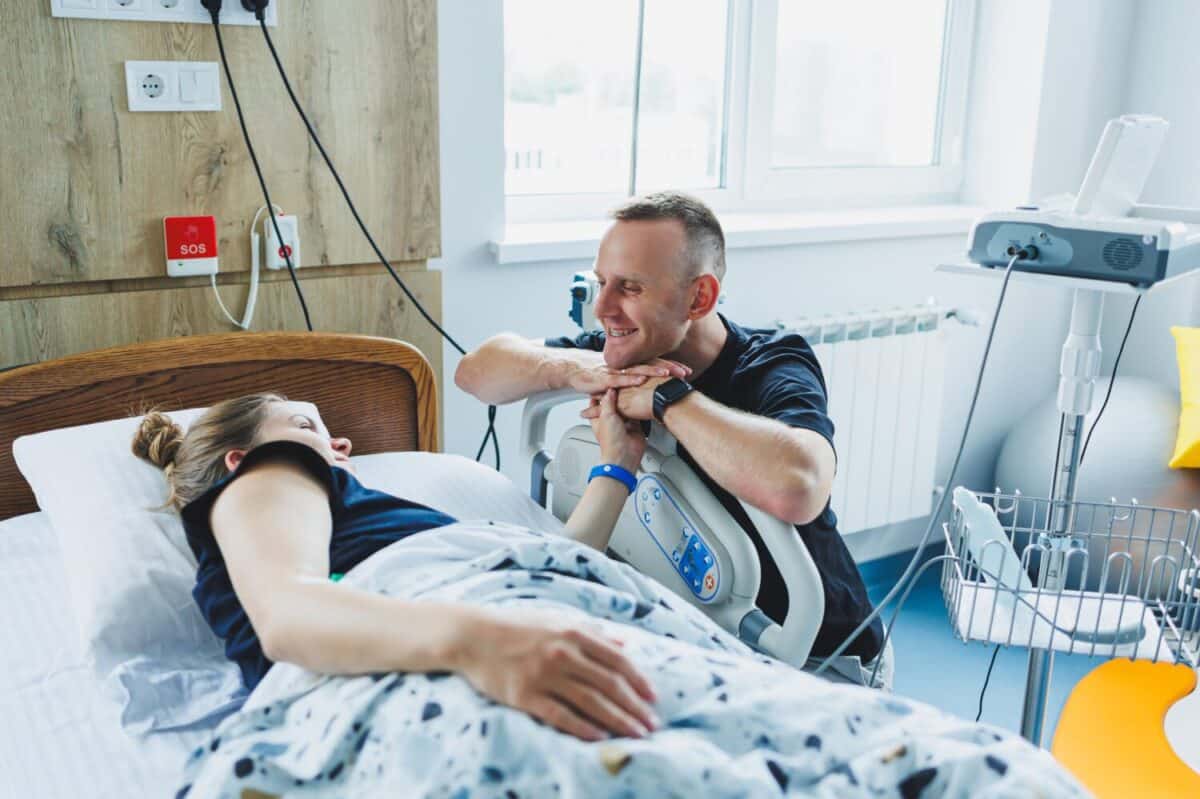
If you're considering hiring a doula, you might wonder how their role differs from the role of your partner. Shouldn't your husband be the one helping you and advocating for you in labor? Partner support is actually an important part of what doulas offer. Rather than replace the role of a partner, doulas are there to support the laboring mother and the father, allowing every member of the birth team to be as involved as they want to be.
Darr adds to this with her personal experience, saying, “I can't replace dads. I've been asked to be at a couple of births where the dad has not been present, and those are absolutely the hardest births. What a woman wants in her labor is the person that she loves the most in the whole world, and when he can't be there, it's much harder on the mom.”
How to Find the Right Doula for You
Who you want on your birth team is an extremely personal choice. Birth is one of the most, if not the most, vulnerable experiences most mothers will ever have. That's why, when you're looking for a doula, it's critical to find someone you feel safe with. When asked what advice she would give to a mom looking for the right doula, Darr gives this guidance:
“Ideally, you find someone that you know who's had a birth like you want to have and can recommend from personal experience. Interview them and get a sense of how comfortable you are with them. Do you trust them? It should be somebody who doesn't take on too many clients, and who's available to meet with you before your baby is born so you can develop a relationship with them.”
Unlike choosing a medical professional, experience and certifications aren't the most important when it comes to finding a doula. In this type of role, it's essential to ask yourself how the doula you're considering makes you feel.
“Get a well-rounded view of what their personality is like. You'll mesh with some people and not with other people, and that's more important in birth than you would think. This isn't a clinical relationship. Bedside manner really matters with a doula,” Darr says.
Even when birth doesn't go the way you planned, it can still be a positive experience for many women. The type of support you receive during labor can impact the experience more than anything else. As interest in doula support grows, educators and doulas like Micaela Darr work to bring healing to mothers, reducing fear and increasing women's confidence in their own bodies.
“Healing the birth world [means] you have to heal it in each room. Then, that woman will take into her experience with her kids, the way she talks about birth, and hopefully not be fearful when it comes to her children giving birth.”
Micaela Darr, childbirth educator, doula, and owner of Beata Birth
The image featured at the top of this post is ©antoniodiaz/Shutterstock.com