Key Points of Pregnancy at 38 Weeks
- Your baby is considered to be full term and your due date should be set at this point.
- Be aware that even if your water doesn't break on your due date you should still contact your doctor as they may need to induce labor but generally not at the 38th week.
- Your baby is fully developed and is only putting on weight at this point in time.
Congratulations! You have a full-grown or full-term baby simply waiting for its debut. You will most likely have an estimated due date if you are giving birth naturally or a firm date for a C-section. You should have your home prepared for returning home from the hospital. This will mean a lot of different things for a lot of different people, but generally, this could mean having the house clean, having the pantry and fridge stocked up, the baby's clothing and care ready, or whatever else you and your partner need to have ready. Read on to learn what to expect at the 38th week of pregnancy.
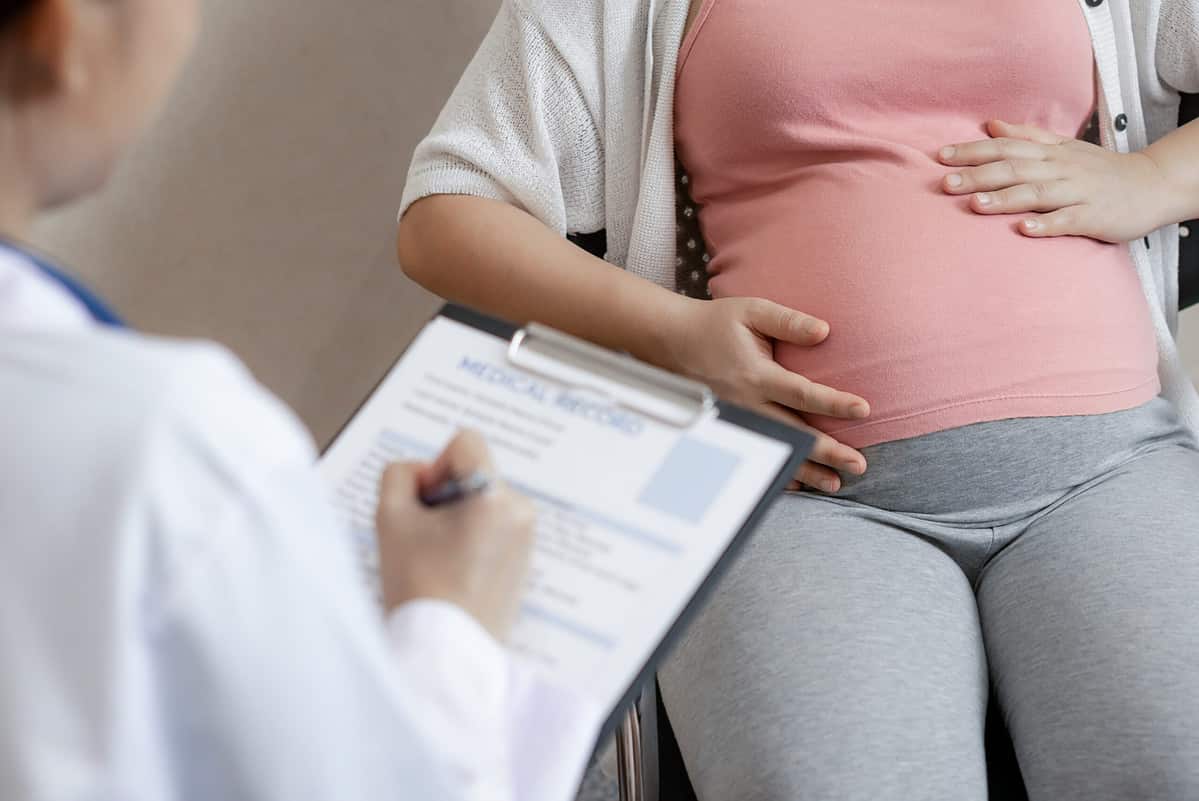
©Blue Planet Studio/Shutterstock.com
Pregnancy Body Changes at 38 Weeks
By the time you are 38 weeks pregnant, you may be going to the bathroom more than ever. Your bladder is extremely compressed as your baby is pressing on it. You may also struggle with passing stools as the pressure is narrowing your sphincter.
As your due date approaches, it is a good idea to familiarize yourself with what to expect in during labor and birth. Do not wait for your water to break, as only 10 percent of women have their water break on its own. Labor can come in three forms; pre-term labor, false labor, and actual labor. All come with similar symptoms so you'll want to focus on other signs that you are actually going into labor.
Pre-labor is the time before actual labor when the body prepares for childbirth. Pre-labor occurs when the baby's head drops down into the pelvis, Braxton Hicks contractions become more frequent, and there is an increase in vaginal discharge.
False labor feels like the real thing but labor contractions are irregular and painful. You may feel them in various parts of your body (such as the back, lower abdomen, and pelvis). You may be experiencing false labor if your contractions stay the same in intensity (that is, they don't get worse) and come in uneven intervals with pain in your lower back vs. your abdomen. The contractions may also stop if you change position.
Actual labor can be determined by contractions that occur at regular intervals and are coming closer together. The contractions start at the top of your uterus and then spread over the entire uterus, through your lower back, and into the pelvis, increasing in intensity. You may feel very strong menstrual-like cramps accompanied by back pain. Your contractions will become stronger and more painful and won't be alleviated by changing position.

©iStock.com/Basilico Studio Stock
Your Baby's Growth and Development at 38 Weeks
When you are 38 weeks pregnant, your baby can measure anywhere from 19 inches to 21 inches. Your baby weighs about 6 pounds, 6 ounces by now. Fat is still accumulating, although growth is slower now.
Since your baby has had the muscles to suck and swallow amniotic fluid, waste material has been accumulating in his or her intestines. Cells shed from the intestines, dead skin cells, and lanugo hair are some of the waste products that contribute to meconium, a greenish-black substance that constitutes your baby's first bowel movement.
Your baby is now full-term, which means that if your baby were born today, he or she would be considered a full-grown baby. Your baby is still growing an ounce a day at 38 weeks pregnant.