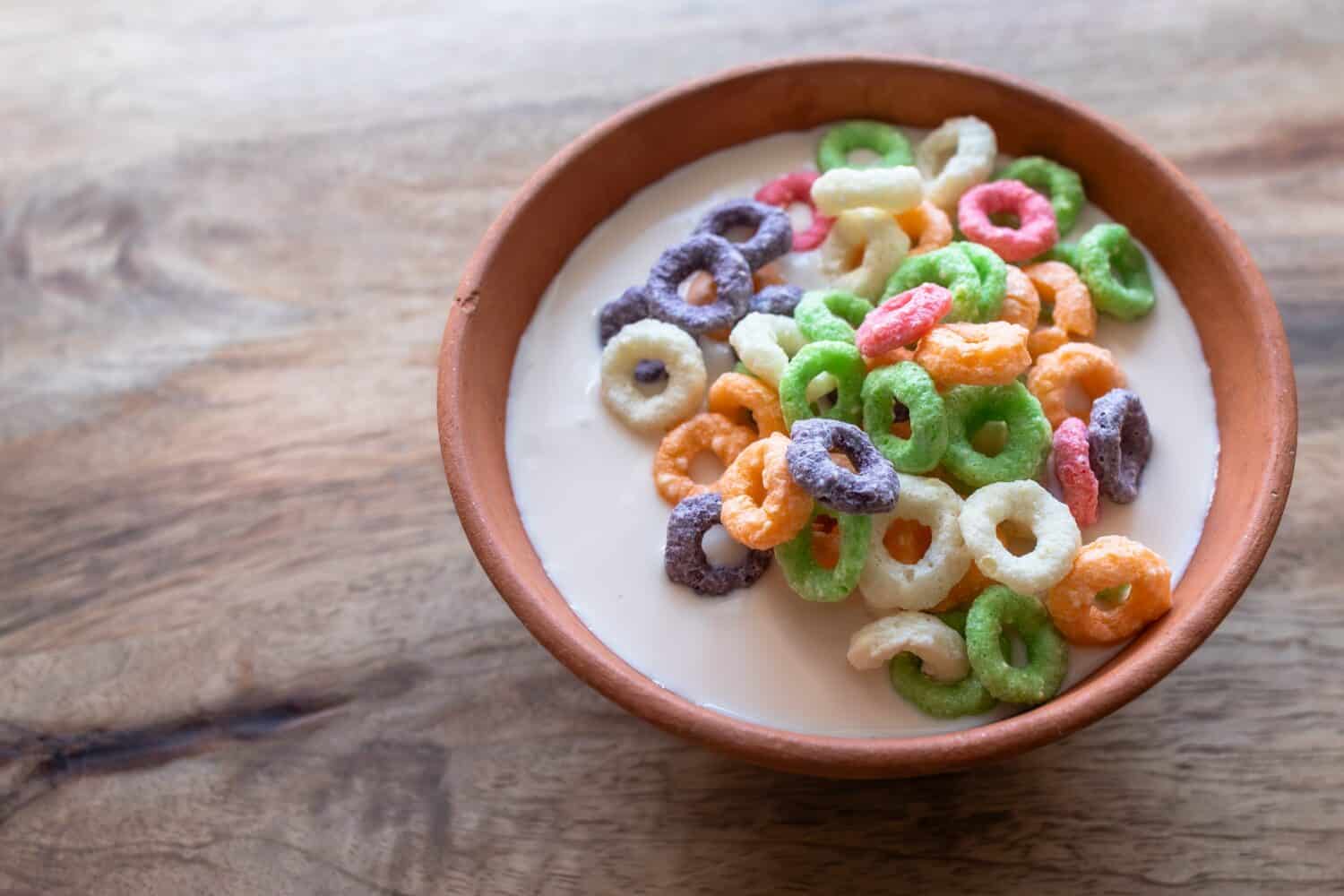
When you think of food dyes, you might picture those electric orange crunchy chips that leave a powdery residue on your fingers. (You know which ones we’re talking about.) Kids’ food sure can be colorful, but it isn’t always healthy. And since food dyes are especially common in snacks and other foods targeted for kids, it’s important to understand what’s healthy and what’s not. (Because kids’ yogurt shouldn’t be bright blue.)
What Are Food Dyes, And How Did They Become Used In Foods?

©Antonio_Diaz / iStock via Getty Images
It’s often said that we eat with our eyes first, and that’s the primary purpose of food dyes — to make what we eat look more appetizing. “Food dyes are color additives used to make foods look brighter or more consistent,” says Kathleen Benson, CSSD, CPT, RDN at VNutrition. “Some are synthetic and chemically produced, and others come from natural sources like plants or minerals.”
But kids have been eating since the dawn of time, regardless of the hues of the herbs they consumed. So why does food today seem to need an extra visual oomph to be enticing? As it turns out, industrialization might have made food more plentiful, but it also created a need for visual consistency.
“Food dyes became more common as food production became more industrialized,” Benson explains. “Processing, storage, and transportation can dull normal/natural color, so manufacturers typically use dyes to help products look the way people expect them to look. Over time, bright colors also become part of branding, especially in foods marketed to children.”
How Can You Spot Food Dyes On Ingredient Labels?
Look, ingredient lists are long, complicated, and full of words that are hard to pronounce, much less understand. (Azodicarbonamide doesn’t exactly roll off the tongue.) Food dyes, on the other hand, are fairly easy to find on a food label, and you’ve probably seen most — if not all — of them before.
The most common ones are:
- FD&C Red 40
- FD&C Yellow No. 5
- FD&C Yellow No. 6
- FD&C Blue No. 1
- FD&C Blue No. 2
- FD&C Red No. 3
Food dyes are regulated by the Food and Drug Administration (FDA) and assigned acceptable daily intake levels that are considered safe for the general population. Research has found that most people consume amounts below those thresholds.
Do Food Dyes Have Any Benefits?
Sure, you want your pantry stocked with healthy staples. But when you have a picky eater or are pressed for time, grabbing a brightly colored snack (or fast food) can sometimes feel like the easiest option. Still, food dyes themselves don’t offer anything more than a pretty plate of food, with Benson adding: “Food dyes don’t provide nutritional value.”
Color can influence how we perceive taste and freshness, and it can make foods more appealing, which is why companies use it. So if your kid swears that their lemonade tastes more “lemon-y” because it’s bright yellow, that’s due to the power of suggestion, not the actual flavoring. “Food dyes affect appearance only — they don’t contribute to the food’s flavor,” Benson says.
©Vladimir Iakovenko/Shutterstock.com
Is Red Food Dye More Dangerous Than Others?
Researchers have explored whether food dyes may play a role in behavioral issues in some children. Some studies have found an association between certain synthetic food dyes and adverse behavioral outcomes, including symptoms related to hyperactivity. “Some research has explored a possible connection between certain synthetic dyes and behavioral changes in children,” Benson says. “The effects are not universal, but some families do report noticing differences.”
“Certain synthetic dyes have been studied more frequently in relation to behavioral concerns, which is why they receive more attention,” Benson explains. “However, responses vary, and many children consume them without noticeable effects.”
In other words, sensitivity appears to vary from child to child.
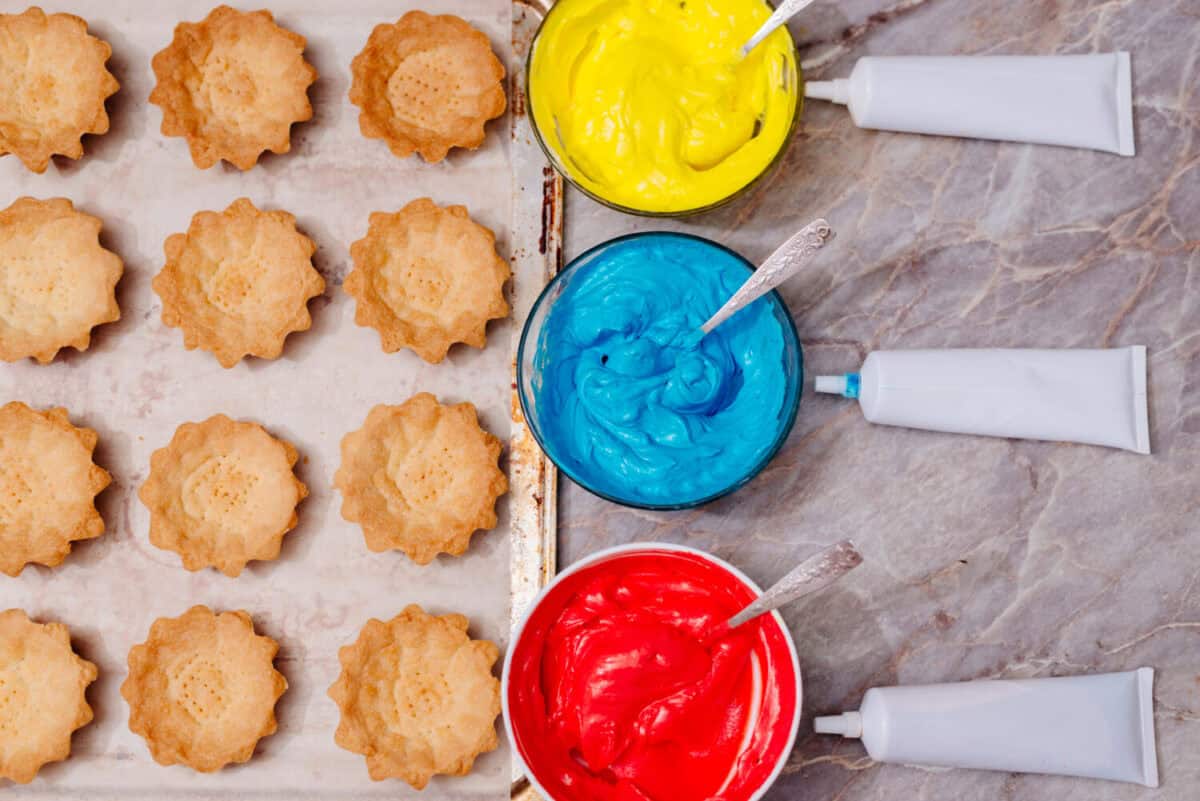
When it comes to food dyes, the primary colors — red, yellow, and blue — lead the pack. But it’s FD&C Red 40 that often generates concern among parents.
“Red food dye is a common ingredient in many processed foods and beverages,” says Trista Best, MPH, RD, LD, Registered Dietitian at The Candida Diet. “It’s often derived from synthetic sources, such as coal tar or petroleum.”
Best continues: “While the FDA considers red food dye to be safe for consumption, some studies have suggested that it may be linked to hyperactivity and other behavioral problems in children, along with many other serious health concerns.”
For parents who want to limit red dye specifically, Best notes that it is commonly found in:
- Candy and other sweets
- Soft drinks and sports drinks
- Packaged baked goods, such as cookies and cakes
- Processed foods, such as lunch meats and frozen dinners
- Packaged cereals
- Jams and jellies
What Happens When Food Dyes Are Decreased From Your Child’s Diet?
Unlike other foods that can trigger cravings, food dyes aren’t addictive substances. That means reducing them typically won’t cause physical withdrawal symptoms. “For most children, removing food dyes wouldn’t likely create a significant physiological change,” Benson explains. “For children who are sensitive to them, reducing intake may lessen symptoms such as irritability or hyperactivity.”
Still, if your child is used to drinking intensely colored sports drinks, there may be an adjustment period as they get used to less colorful liquids. “Because color influences expectations, food may seem different at first even if the ingredients have not changed.”

©LightField Studios/Shutterstock.com
What Can Parents Do If They Want To Make Their Child's Diet A Little Less…Artificially Colorful?
Going from foods colored with dyes to naturally colored foods might not be an easy sell at first, which is why patience helps. “Focus on increasing minimally processed, nutrient-dense foods such as fruits, vegetables, whole grains, beans, dairy, eggs, and lean proteins,” Benson says.
And if you want to give snacks some pizzaz, natural ingredients like beet juice or turmeric can give food an extra pop of color — and are healthier, too. While food dyes might make foods look more exciting, they definitely don’t make them healthier. But it doesn’t have to be all or nothing — small changes can make a big difference over time. And you don’t have to ditch everything that has food dye. So enjoy a cupcake with your kid — even if it does have neon frosting and gummy worms on top.
The image featured at the top of this post is ©Larysa Shcherbyna/Shutterstock.com