
There are two words that every parent dreads hearing: flu season. During the 2023-2024 season, approximately 40 million people were sick. According to CDC data, 40 million, 470,000 people were hospitalized with flu-related complications. These facts are not something anyone wants to think about, but they're something families must be prepared to deal with. As flu season ramps up, we speak with two experts to find out how to keep your family safe. Here's what you should know about this year's virus.
The Truth Behind Vaccine Effectiveness

©PeopleImages.com – Yuri A/Shutterstock.com
C. Leilani Valdes, MD, MBA, FCAP, is a member of the College of American Pathologists and a Pathologist at Regional Pathology Associates. She spoke with us about how to guard against the flu and whether the flu shot is worth considering.
“I recommend the flu vaccine for everyone six months and older. Even healthy children and adults benefit because the vaccine doesn’t just reduce the chance of getting sick, it can make any infection much milder,” she says.
“It also helps protect the people around them, like babies who are too young to be vaccinated or older family members with chronic conditions. Think of it as a way to create a protective shield around your family and community.”
While the flu shot is recommended for babies six months and older, there are ways to protect younger babies as well. “For babies younger than that, prevention focuses on keeping germs away. That means regular handwashing, cleaning toys and surfaces, keeping sick visitors at a distance, and minimizing exposure in crowded places during flu season. It’s about creating a safe ‘bubble' while their immune system is still developing,” she explains.
Those most at risk are young children, older individuals, and anyone who is pregnant or has chronic health conditions like asthma, diabetes, or heart disease. For these groups, flu symptoms can be worse or exacerbate underlying conditions.
“Some flu strains can be more severe than others, but we never know exactly which strain will dominate until flu season is underway. That’s why vaccination and early attention to symptoms are so important for everyone, especially those at higher risk,” says Dr. Valdes.

©PeopleImages.com – Yuri A/Shutterstock.com
Flu Prediction for The 2025 Season
We also asked Dr. Valdes what pathologists are seeing in the lab this year, since strains of the flu can vary from season to season. “Pathologists look at lab samples early in the season to see which flu types are circulating,” she says.
“If labs show a stronger or more aggressive strain is spreading, it’s a good idea to be extra watchful for symptoms and reach out to your child’s doctor quickly. Basically, early lab data helps families get ahead of the flu instead of playing catch-up.”
Regardless of early detection, Dr. Valdes recommends ensuring that kids get vaccinated on time. She also encourages frequent hand-washing and avoiding close contact with anyone who’s sick. These simple steps can halt the course of the virus and should be a common practice, especially during flu season.
Flu Symptoms to Watch Out For
Flu severity varies from case to case, so we asked Dr. Valdes which symptoms parents should look out for. “Parents should look for high fevers that don’t respond to medication, trouble breathing, persistent vomiting, signs of dehydration, extreme fatigue, or confusion,” she says.
If any of these symptoms worsen, Dr. Valdes recommends getting medical help immediately. “Prompt care can prevent complications and help children recover more comfortably,” she says. Regarding common flu symptoms, fever, cough, sore throat, runny nose, body aches, and fatigue are typical.

©Lipatova Maryna/Shutterstock.com
Aside from monitoring flu symptoms for your own family, helping prevent the virus from spreading is another priority. Dr. Valdes recommends keeping sick children home until they have been fever-free for at least 24 hours without medication.
“This usually takes about 3–7 days, depending on the child and the severity of their symptoms. Keeping children home during this time not only helps them recover but also prevents spreading the flu to classmates and teachers,” she says.
How to Prepare Your Home for Flu Season
When the flu makes its rounds in your family, it's easy to understand the panic. As parents, we always want our children to be safe. Fighting something invisible to the naked eye feels impossible. That's why we speak with Dr. Kaitlin Wiseman, Co-Founder and Chief Medical Officer at Playhouse MD, about what you can do. Together with her sister, Dr. Wiseman combines play with medical treatment to lessen stress on children when they fall ill. When we asked about flu season preparation, she provided us with both professional and personal insights.
“I don’t think you can ever be too early in preparing for flu season! Honestly, as soon as one season ends, you can start thinking ahead to the next,” she says. “With two young kids at home, I’ve learned that viruses don’t really follow the calendar. While flu and colds tend to spike in the colder months when we’re indoors more often, you can catch a virus any time of year. So I find it’s always smart to stay prepared rather than wait until fall to start thinking about.”
The At-Home Flu Kit Every Family Needs
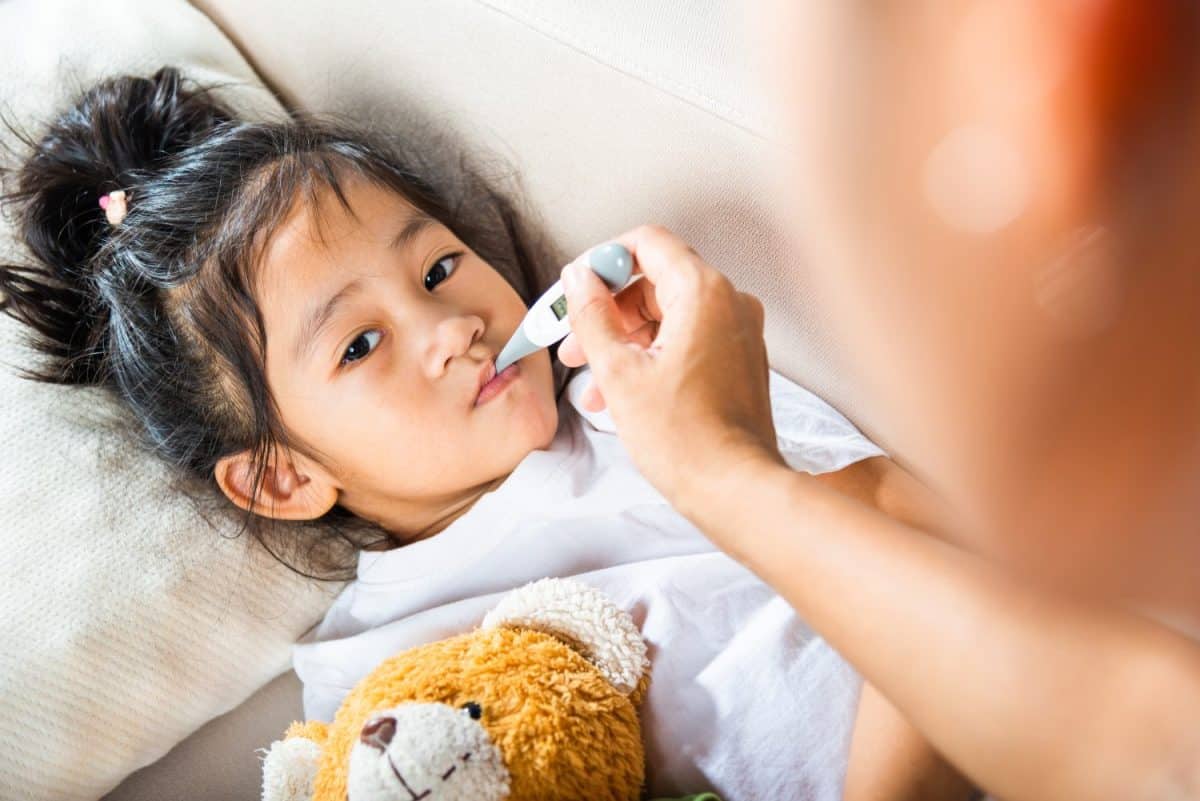
“Precautions can look a little different depending on where you are! At home, it’s all about being ready: have a working thermometer, children’s medicines, a nasal aspirator or bulb, and a medicine dispenser so you’re not scrambling when someone spikes a fever,” Dr. Wiseman advises.
©Sorapop Udomsri/Shutterstock.com
Building on the idea of preparedness, it's important for parents to safeguard their homes as much as possible. Dr. Wiseman shares what she would put in her flu-fighting kit, as a parent herself: “My flu-fighting kit always starts with thermometers: an ear thermometer — look out for the new Playhouse MD Thermometer coming soon! — for my 3 ½-year-old son and a rectal thermometer for my 1 ½-year-old daughter, since that’s still the most accurate at her age.”
With a stuffy nose being a common symptom of the flu, Dr. Wiseman recommends some of her own tried-and-true tools. “For congestion, I keep both Playhouse MD Booger Buddies, the Light-Up Nasal Bulb, my go-to practical tool, and the Light-Up Nasal Aspirator, perfect for those deeper suctions, especially before feeding! I also include medicine dispensers — with the pacifier attachment for my daughter and without for my son — along with acetaminophen and ibuprofen for fevers or when they just need some relief.” Thinking of her own family, Dr. Wiseman adds one thing every parent is all too familiar with: “And of course, wipes… because they come everywhere with us.”
What to Do When the Flu Strikes
Getting sick is inevitable, but knowing what to do for your child when this happens is key. Is there a way to stop the spread of the flu once it arrives? “There’s the theoretical approach and then there’s the realistic approach,” Dr. Wiseman explains.
“In theory, you’d separate the sick child from the rest of the family, keep them in their own space, and even wear a mask around them to reduce spread. But in real life, especially with young kids, that’s usually not what happens.” Handwashing, avoiding the sharing of items, and teaching children to sneeze or cough into their elbows are more realistic. “It’s not foolproof,” she says, “But it helps.”

©Iammotos/Shutterstock.com
She also encourages families to consider the overall health of other family members. “If there are newborns in the home, or someone is immunocompromised or has other health conditions that put them at greater risk, I’d make more of an effort to separate the sick child,” she says.
“And if it turns out to be something like influenza, in some cases it’s even reasonable to consider prophylactic treatment for higher-risk family members.” As general treatment for healthy family members, the basics apply: plenty of rest, adequate hydration, and age-appropriate fever medicine, such as acetaminophen or ibuprofen (never aspirin). “Those basics go a long way toward keeping kids comfortable while their body fights the virus,” says Dr. Wiseman.
Non-Medicated Treatments
Dr. Wiseman also has some alternative treatments for the flu that do not require medication. As any parent knows, when your child is sick, half the battle is finding ways to make them comfortable.
“We don’t usually recommend over-the-counter cough and cold medicines for children, as they often don’t work well and can cause side effects. But things like a cool-mist humidifier, saline nasal drops, or a spoonful of honey for kids over one year old can sometimes ease symptoms,” she says.
“Beyond the medical side, sick days are really about comfort. Kids can look extra tired and flat when they’re unwell, so we focus on keeping them cozy and relaxed: favorite pajamas, comfort foods, and yes, usually a bit more screen time than normal.”
The Ultimate Flu Guide, Based on Age
Dr. Wiseman left us with a complete guide to the flu, broken down by each age group. If your child gets sick, here's the best practice depending on their age:
- In babies < 6 weeks: Any fever is an emergency. They need to be checked right away in the emergency department because their immune systems are still so new. This isn’t something to watch at home; it’s always better to get them seen right away.
- For babies 6 weeks to 3 months old: With flu-like symptoms, especially fever, they also always warrant a check. This doesn't necessarily mean in the emergency department. They’re still so young at that age, and things can change so quickly. In this case, doctors want to assess the patient and provide clear guidelines to the parents.
- For most well children over 3 months with typical viral “flu-like” symptoms: Cough, runny nose, fever, but who are still breathing with ease, drinking well, urinating normally, and experiencing alert/playful periods, it’s usually safe to manage them at home for the first 48–72 hours. Supportive care, including rest, fluids, nasal hygiene, and fever medication (such as acetaminophen or ibuprofen), is recommended.
- Children <2 years old or those with chronic medical conditions: They should be seen promptly, since antiviral treatment (like Tamiflu) can reduce complications and illness severity.
- Older, healthy children with mild symptoms: These can often be managed at home. Antivirals may still be considered if started early (within 48 hours). This is important if they live with someone at high risk (like a baby under 6 months or someone immunocompromised).
- Children with chronic health conditions: Children with conditions such as asthma, heart disease, or immune problems should be seen promptly if they develop viral symptoms.
- If the fever persists beyond 2–3 days, or if new symptoms appear: With ear pain, extreme sleepiness/hard to wake, breathing difficulties/breathing very fast, or worsening cough develop, that’s the time to see a doctor to check for a bacterial infection (like an ear infection or pneumonia) on top of the virus. If your child shows signs of dehydration (no urine, no tears, parched mouth), has severe or worsening pain, blue lips or face, a seizure, a widespread rash, or vomiting or diarrhea that does not stop or has blood, get immediate help.
- If it’s true influenza (lab-confirmed or strongly suspected, given that other close contacts have confirmed cases): The approach differs slightly in this case because there are antiviral medications designed explicitly for flu.

©Drazen Zigic / iStock via Getty Images
And, finally, as a disclaimer, Dr. Wiseman adds, “You know your child best. These tips are meant as general guidance, but if you ever feel concerned about your child’s overall condition, there is never a wrong time to reach out to your healthcare provider. Trust your instincts — seeking advice early is always okay.”
The image featured at the top of this post is ©Tomsickova Tatyana/Shutterstock.com