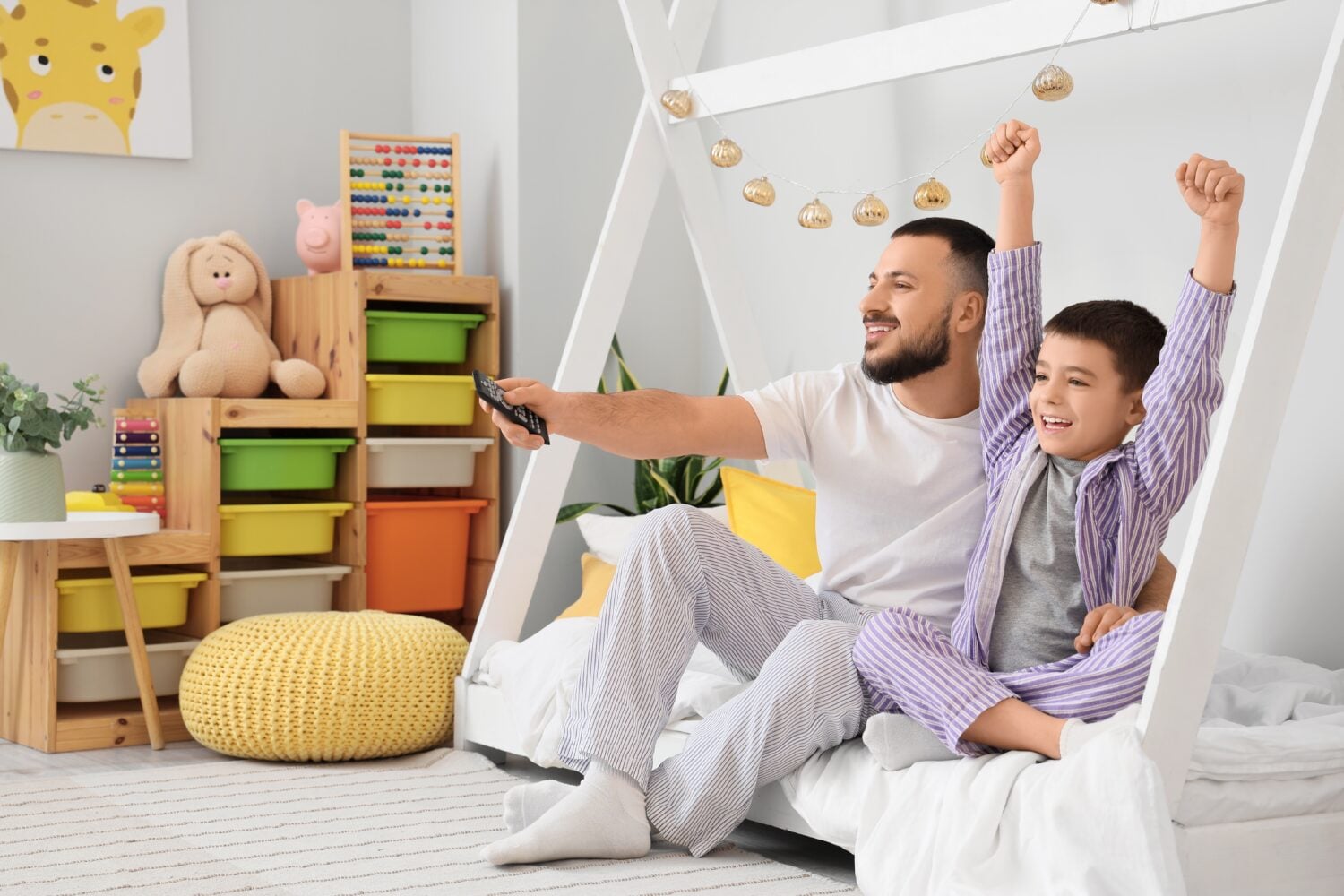
“Can I watch a movie in bed?” my kids ask me nearly nightly now that they are on summer break. My 8- and 7-year-olds share a room that has a TV, and my 4-year-old likes to join them for sleepovers on special movie nights. As someone who never had a TV in my own room growing up, I liked the idea of my kids occasionally watching movies together before bed. (I remember loving movie night sleepovers with friends who were luckier than I was with a TV in their rooms!)
However, with today's concerns about screen time and the endless stream of digital entertainment, I now wonder if I made the right choice by letting them have a TV in their room — and how I can ensure it doesn’t harm them. We speak with experts to get more information on how to approach this topic with our kids.
How Do Screens Affect Sleep?
When looking at screen time in general, whether the screen is in a child’s room or not, tons of research back up the idea that kids need a break before bed.
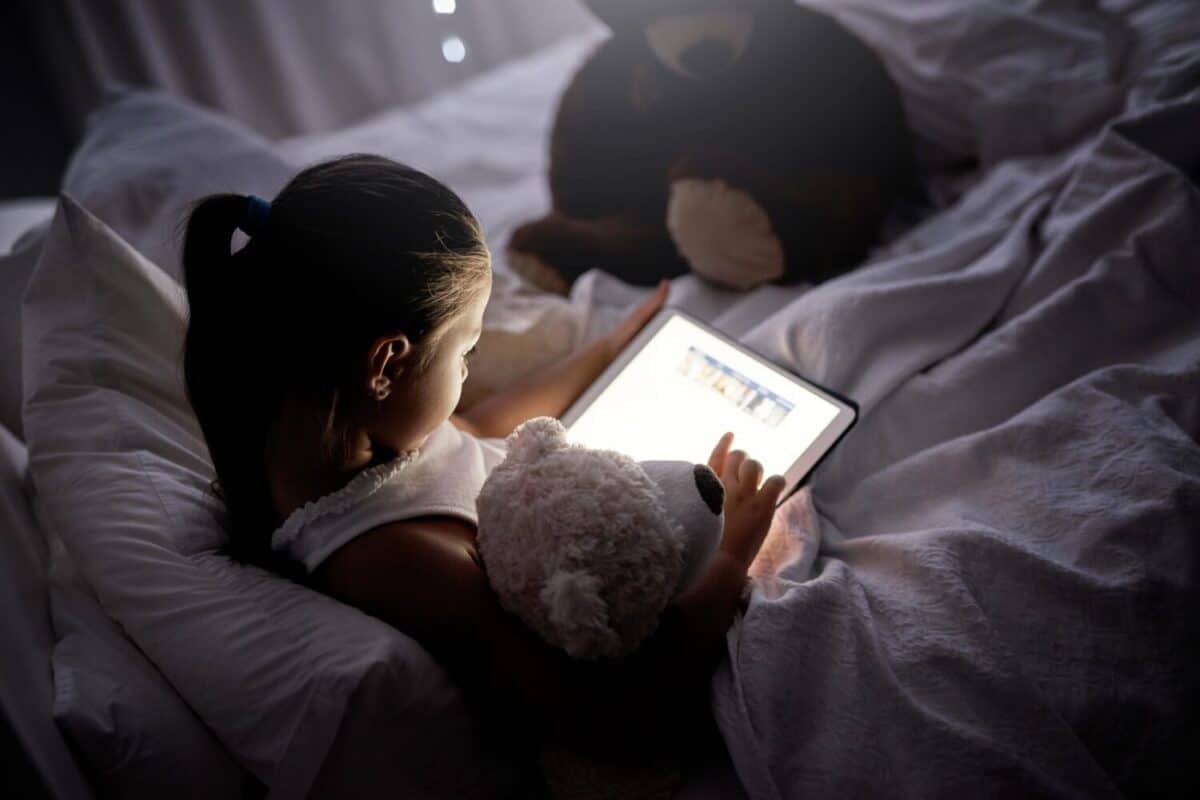
“Screen use before bed can delay melatonin onset due to the active blue light emitted from these devices,” Funke Afolabi-Brown, MD, FAASM, triple board-certified sleep medicine physician and best-selling author of “Beyond Tired, A Sleep Physician’s Guide to Solving Your Child’s Sleep Problems for Good,” tells us. “Also, the content on TV keeps the brain in an alert state exactly when it needs to wind down.”

©Pressmaster/Shutterstock.com
Lynette Gogol, DO, DipABLM, triple board-certified neurologist and lifestyle medicine physician, agrees. “The research is fairly consistent that screen use, especially close to bedtime, is linked with shorter sleep, later bedtimes, poorer sleep quality, and more daytime sleepiness in children and teens,” she tells us. Dr. Gogol pointed me to studies, like a 2014 study that said a bedroom TV was associated with less sleep for kids, and a 2017 study that showed the benefits of a calming bedtime routine for kids.
“Screens can interrupt sleep in a few different ways,” Dr. Gogol continues. “They can delay bedtime, keep the brain mentally or emotionally stimulated, expose children to exciting or upsetting content, and make it harder for the brain to shift into rest mode. Interactive screen use, such as gaming or switching between shows or apps, can be especially stimulating.”
Introducing a TV to your kid’s room changes the dynamic of their bedroom as a safe, quiet, restful place and can create a routine where your child might need a TV to fall asleep.
“The bigger issue is the whole bedtime pattern: the light, the stimulation, the content, the delayed bedtime, and the habit of using the bedroom as an entertainment space,” explains Dr. Gogol.
And if your child isn’t getting great sleep, it will affect them during the day. Eleecia Myers, LPC, NCC, counselor at Key Counseling Group, tells us, “Poor sleep affects mood, emotional regulation, focus, school performance, and overall mental health. For children who already struggle with anxiety, ADHD, or emotional overwhelm, nighttime screen use can increase restlessness, making it more difficult to fully decompress.”
Start the One-Hour-Before-Bed Rule
Not allowing screens at all is unrealistic — especially during summer break — but the experts we speak with agree that parents should turn off all screens one hour before bedtime.
“Creating a calming bedtime routine helps children smoothly transition from stimulation to relaxation,” Myers says. “This can include reading, stretching, journaling, listening to calming music, or practicing breathing exercises and coping skills.”
©PeopleImages/Shutterstock.com
After all, kids need to learn how to calm down and fall sleep without a crutch like the TV playing in the background all night. “Bedtime can become a valuable opportunity for children to learn how to self-regulate and tolerate quiet, calm moments without needing constant digital stimulation,” Myers adds.
Children thrive on routine, and helping them quiet down at night is vital. Dr. Gogol says, “Consistency matters. Children’s brains and bodies do best with predictable sleep cues. A consistent bedtime helps anchor the circadian rhythm, which is the body’s internal sleep-wake clock. When bedtime changes often, or screens are used right up until sleep, the brain can get mixed signals about when it is supposed to wind down.”
She recommends a simple and effective bedtime routine, which could include a bath or shower, putting on pajamas, brushing teeth, reading, listening to quiet music, journaling, praying, or having a calm conversation with a parent.
“These can all help the nervous system begin to shift toward sleep,” Dr. Gogol says. “The goal is not just to take the screen away. The goal is to replace it with something that helps the child feel safe, calm, and ready for rest.”
Alternative, Calming Bedtime Activities
Turning on the TV at night might be easy, but it’s far from the best thing for our kids. Luckily, there are many other options for restless kids who need help winding down for the evening.
Dr. Afolabi-Brown suggests turning on age-appropriate audiobooks or podcasts, reading physical books with your kids (or letting school-age children read to themselves), drawing, or journaling. Quiet creative play is great for younger children while older kids and teenagers may enjoy listening to music before bed.
Other things you could try, according to Myers, include white noise machines, calming music, sensory lights, calming sensory items, or guided breathing exercises to help kids relax.
“While these tools can help support relaxation, they’re different from TVs or highly stimulating screen use,” Myers says. “The goal is not to remove all comfort from a child’s room, but to create an environment that supports rest, emotional regulation, and healthy sleep habits.”
On special nights or weekends, Dr. Gogol recommends hosting a family movie night in the living room instead of a child’s bedroom.
What If My Kid Already Has a TV in Their Room?
If you do have a TV in your child's bedroom, Dr. Afolabi-Brown recommends enforcing a TV curfew with a smart plug or parental control. “TV should never be used as a sleep aid or background noise,” she says.
“Parents should control the timing, content, and access,” Dr. Gogol says, adding, “A TV in the room should not mean private, unlimited access. If the rules become hard to enforce, that may be a sign that the TV does not belong in the bedroom.” She also recommends not turning on anything scary or fast-paced or emotionally intense before bed and turning off autoplay or unlimited streaming.
Like with many other areas of parenting, Myers says structure and consistency are important. “Encourage clear expectations around screen-time limits, turn off screens at a consistent bedtime, use parental controls, and make sure screen use doesn’t interfere with sleep, homework, movement, or family interaction,” she says.

©Miljan Zivkovic / Shutterstock.com
Myers also suggests avoiding giving your kids overnight access to streaming, gaming, or other devices. “The goal is to help children develop healthy habits and boundaries around technology instead of relying on screens as their primary coping tool,” she adds.
Most importantly, help kids ensure their bedroom is still a place for rest. “I encourage parents to make sure the bedroom still feels like a calm, safe space where they can unwind, relax, and sleep without constant stimulation or distraction,” Myers adds.
Tips to Approach This Conversation With Your Kids
The way you approach this conversation with kids is important, especially if no TV is a new rule after they’ve already had one in their room.
“Parents need to approach this conversation with curiosity and collaboration rather than punishment,” Myers says. “Children often respond better when they understand the why behind boundaries. Parents can explain that sleep helps the brain and body recharge, and reducing distractions supports emotional health, focus, and overall well-being.”
She also suggests involving your kids in creating the rules for screens in your house. “Asking questions like, ‘What helps you feel calm before bed?’ or ‘What would help your room feel relaxing and peaceful?’ can encourage ownership and cooperation instead of creating unnecessary power struggles,” Myers explains.
Bottom line: What Do Experts Say About It?
At the end of the day, our experts don’t recommend putting a TV in a kid’s room.
“Screens are everywhere in today’s world. Most families try to find a realistic balance rather than aim for perfection,” Myers says. “It’s important to remember that children benefit from having at least one space or part of the day that feels slower, calmer, and less digitally demanding.”
“Helping children create moments that are distraction-free gives them opportunities to practice emotional regulation, breathing skills, and coping strategies, especially when life feels overstimulating,” she continues. “Those quiet moments are often where children learn how to truly rest and reconnect with themselves.”
©Ground Picture/Shutterstock.com
In my family, we limit watching TV in bed to once a week on weekends, and sometimes a bit more often during the summer. However, we always start it much earlier than their usual bedtime routine. The rest of the time, they read books or listen to audiobooks to wind down before bed, and use a sound machine in their room when falling asleep instead of relying on the TV.
My sister even went so far as finding a vintage TV with a built-in VHS player, so her daughter can pick a video tape to watch instead of having access to unlimited streaming. There are so many ways to make this work for your family, from completely banning TVs in your child’s room to setting limits and workarounds to protect your kids’ mental health.
“Sleep is not just downtime for children; it supports learning, memory, emotional regulation, immune function, growth, and behavior,” Dr. Gogol says. “Protecting sleep is one of the most important things parents can do for a child’s daily functioning and long-term health.”
The image featured at the top of this post is ©Pixel-Shot/Shutterstock.com