
We've all heard the warnings about the need to limit your child's screen time. However, many kids head to school where they end up working on tablets or laptops in their classrooms. You may find yourself wondering if all screen time is created equal.
For example, is playing a game or scrolling social media really equivalent to reading a book on a tablet? Are there advantages to reading physical books? And should parents consider the quality of their kids' screen time rather than enforcing set time limits? Let's see what the experts have to say.
Is All Screen Time Created Equal?
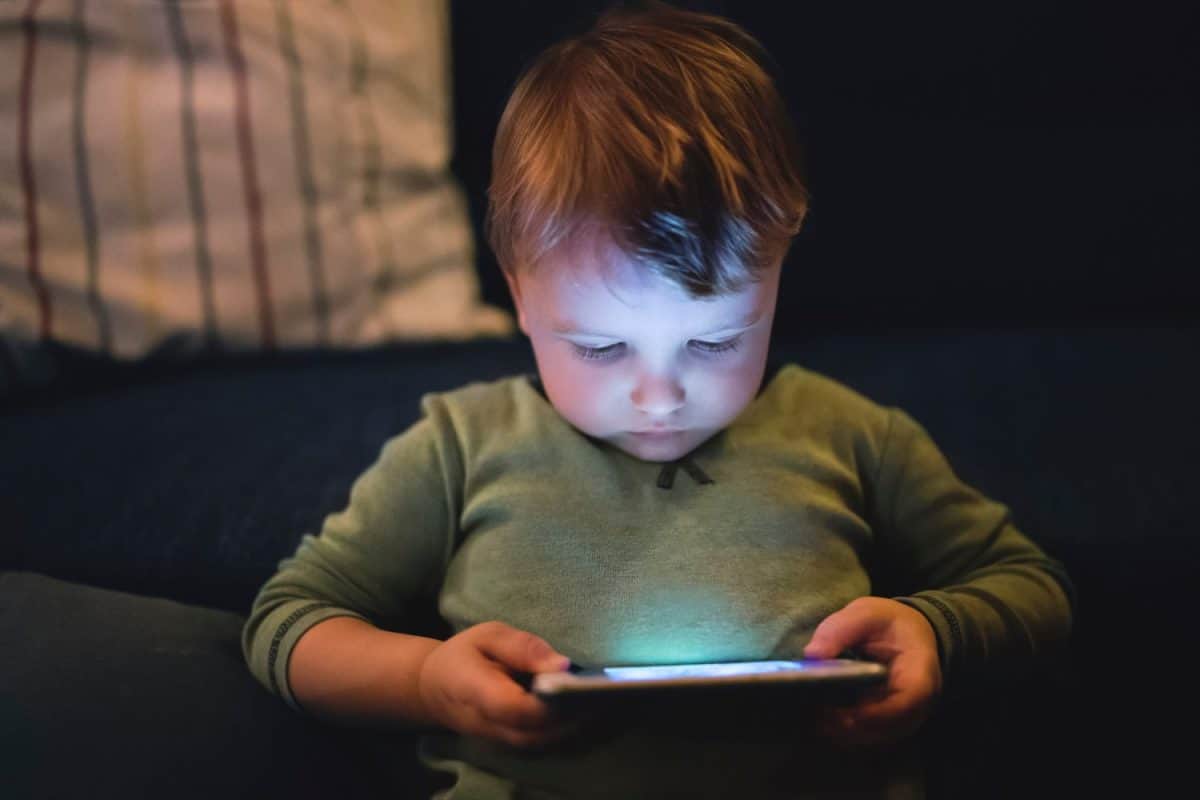
Higher screen time usage has been linked to poor sleep and other negative child development outcomes.
©Halfpoint/Shutterstock.com
According to a recent analysis of data from 46 studies, there is a link between higher screen time usage and negative outcomes on child development. Some of these include attention difficulties, poor sleep, reduced physical activity, and emotional and social challenges. However, what the analysis also revealed is that what the child is doing on their device makes a difference.
The researchers found that certain types of screen time were linked with either neutral or positive effects. Positive outcomes happened when children used a limited amount of screens for educational purposes and with parent involvement.
Understanding “High-Value” vs. “Low-Value” Screen Use
To find answers about how different types of screen time affect children, we speak with licensed psychologist and founder of Tech Positive Parenting, Rupa Robbins, PhD. Robbins specializes in children, teens, and technology. She explains that it's more important for parents to consider what kids are doing on their tablets or phones, rather than how much time they are spending on them.
Robbins says, “There isn't a lot of value to thinking just about the amount of screen time a child gets. Instead, we need to take a more nuanced approach and think about the content they are interacting with, what the screentime is facilitating, and what it is replacing. If a child is using an e-reader to read a novel, I would consider that much different than a child watching short-form videos on YouTube. What they do matters more than how much time they spend doing it.”
Does Comprehension Change When Kids Read on Screens vs. Physical Books?
Is there a benefit to handing a physical book to a child over having them read the same pages on a screen? Robbins says, “Yes. Research shows that children remember fewer concrete details when reading longer texts (over 1,000 words) on an e-reader.”
A recent meta-analysis of 56 studies showed that when students read passages that were over 1,000 words on paper, they scored higher on comprehension than those who had read the same text on a screen, which researchers call the “Screen Inferiority Effect.” The researchers theorized that this may have to do with the need to scroll for the longer texts, and that scrolling may “disorient readers.”
Robbins explains why it may be easier to remember details from physical pages over a screen: “One possible reason is that physical books provide spatial cues (such as knowing where on a page something was or how far into the book something appeared) that aid memory encoding and recall.”
When Is Screen-Based Reading Appropriate for Kids?

Young children benefit from the tactile aspects of holding books and turning pages.
©Prostock-studio/Shutterstock.com
Something else to consider is the age of your child. While toddlers gain fine motor skills when turning pages or grasping board books, older children have different needs. Robbins tells us, “In general, screen-based reading becomes more appropriate as a child gets older. The negative impacts, like reduced comprehension and engagement, are most pronounced for young children (ages 1-8). Teenagers, especially those with strong reading skills, show comparable comprehension and engagement on paper and on e-readers.”
Is It Okay to Let Your Child Read on a Tablet as Part of a Healthy Bedtime Routine?
You've probably heard that the viewing of blue light emitted from phones and other devices before bedtime makes it harder to fall asleep. But is it ever okay to let your child read their bedtime story on their tablet, rather than choosing a physical book?
Robbins says, “Yes. Again, it's important to consider the nuance here. A physical book is probably the best option, but an e-reader restricted only to books is better than watching videos or scrolling social media before bed. E-ink screens (like Kindle Paperwhites) are much better than backlit LCD tablets because they cause less eyestrain and emit less blue light.”
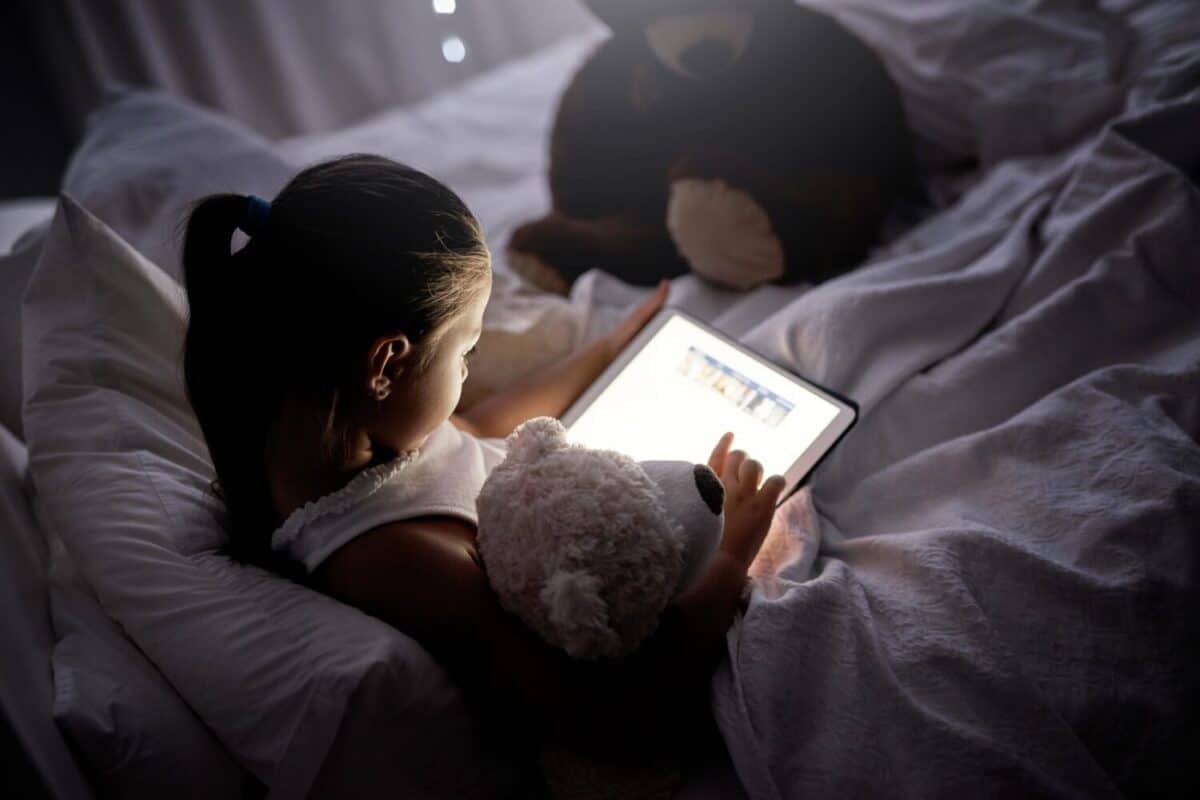
While reading a physical book has more benefits, reading on a screen may help readers who are struggling.
©PeopleImages/Shutterstock.com
Are There Benefits to Reading on Screens for Reluctant Readers?
If you have a child who is reluctant to read, you may find you can spark their interest through reading on screens. Robbins says, “E-readers can definitely act as a bridge, making reading more engaging and appealing for reluctant readers. Some digital books have enhancements (like animations or audio) that can be especially engaging for young or struggling readers.”
Just like reading physical books with your child, a parent's involvement is key when using a screen. Robbins explains, “In addition, when using an e-reader, parent participation is just as important as when reading a physical book. Parents can support reluctant readers by engaging with the material together on the e-reader, asking questions, and discussing the story. The most important part of reading for young children is developing literacy through conversation.”
What Type of E-Readers Do Experts Recommend for Children?
Robbins suggests buying a dedicated e-reader for your child rather than using a tablet that is also used for gaming or social media. Robbins says, “I highly recommend that parents get their children a dedicated e-reader (like a Kindle Paperwhite) rather than using an internet-connected tablet for reading. Comprehension is most affected by multi-tasking or switching, not by the e-reader itself. If a child has a device with only e-reader functionality, they are much less likely to multitask.”
The image featured at the top of this post is ©Iuliia Shcherbakova/Shutterstock.com