
As a parent, you know how demanding bedtime can be. Even if you only have one kid, it can seem like a marathon, and by the end, you’re more tired than your child. As you can imagine, navigating bedtimes with kids of different ages and unique needs is much more difficult. A bedtime routine that worked beautifully with one child may completely fall apart when another child enters the picture. The good news is that a peaceful evening doesn't require perfection. With the right strategies, parents can create a bedtime system that works for everyone in the family.
In this guide, we’ll provide some much-needed guidance on how to view bedtime from a different angle so you can wrap your head around what needs to be done. We’ll also provide some essential tips to make it all work.
Why Bedtime Gets More Complicated With Multiple Kids

Considering every child has different needs, bedtime with more than one kid can be a real challenge.
©Marina Demidiuk/Shutterstock.com
It’s not hard to imagine that navigating bedtimes with different kids can be a struggle, but have you ever considered exactly why it’s just so difficult? The main issue is that every child has unique sleep needs. A toddler needs up to 14 hours of sleep, a school-aged kid may sleep for 12 hours, and a teen needs eight to 10 hours. When you do the math, you could be putting different kids to bed at different times. Even if you aren’t physically putting them to bed, you still need to ensure that they’re washing up, brushing their teeth, and following all other necessary procedures.
Beyond that, you may face other challenges in your home, which may include:
- Different bedtimes for different ages
- Children sharing bedrooms
- One child needs extensive support, while the other is independent
- Sibling distractions
- Jealousy over bedtime attention
- Evening activities and homework
- Parents are feeling stretched thin
While you’re inevitably going to create a system that works, getting to that point can be stressful. Just remember to take it one day at a time and to do your best.
Create a Family Bedtime Framework
Navigating bedtimes with different kids will be somewhat challenging. You’re simply going to have to come to terms with that. However, you don’t need to let the stress get the best of you. What you need to do is to create a routine so you know what to expect ahead of time.
A potential example of a bedtime framework could be as follows:
6:30 PM: Baby bath and feeding
7:00 PM: Toddler bedtime routine begins
7:30 PM: Toddler in bed
7:45 PM: Younger elementary child starts routine
8:15 PM: Elementary child in bed
9:00 PM: Teen begins screen-free wind-down period
The exact times aren't important. What matters is establishing predictable transitions so everyone knows what comes next. While a consistent routine will help you to keep things straight in your mind, it will also help the kids. Children thrive on routine because it reduces uncertainty. Plus, when bedtime follows a familiar pattern, there are fewer arguments and less resistance.
Stagger Bedtimes

Staggering bedtimes can help to keep things organized and provide kids with individual attention.
©Kitreel/Shutterstock.com
One of the biggest mistakes parents make is attempting to put all their children to bed simultaneously. While initially this may seem efficient, it often creates bottlenecks and frustration. Though the bedtime process may take longer by putting the kids to bed at different times, this arrangement does have many benefits, including:
- More one-on-one attention
- Less competition between siblings
- Reduced chaos
- Easier transitions
- Better opportunities for connection
For example, if you have a toddler and a seven-year-old, putting the toddler to bed first lets you focus on that routine. Once the toddler is settled, you can spend dedicated time with the older child. While you’re putting one of your younger children to bed, your older kids can keep an eye on their siblings, so you can be confident that everyone is supported.
Create Predictable Bedtime Rituals
Though navigating bedtimes with different kids will undoubtedly be hectic, you can make things a bit easier if every kid goes to bed without much fuss. The way to do that is to create a routine. Create a simple sequence that may look like this:
- Brush teeth
- Put on pajamas
- Read stories
- Hugs and kisses
- Lights out
Your routine may look slightly different, but whatever you do, try to stick with it. Unpredictability can cause chaos. Plus, if your kids know the proper sequence of events, they may be able to follow the routine even if you’re not around.
Keep in mind that different children may have unique schedules based on their age. Older kids may have extra things they do before bed, such as journaling, reading, listening to calming music, or stretching. Let them do their thing as long as it is appropriate.
Finally, it’s essential to realize that a good routine includes going to bed at the same time every night, even on weekends. This is the best way to keep your children’s circadian rhythm in check so they can get the most restful sleep possible. Make sure you follow this advice as parents as well.
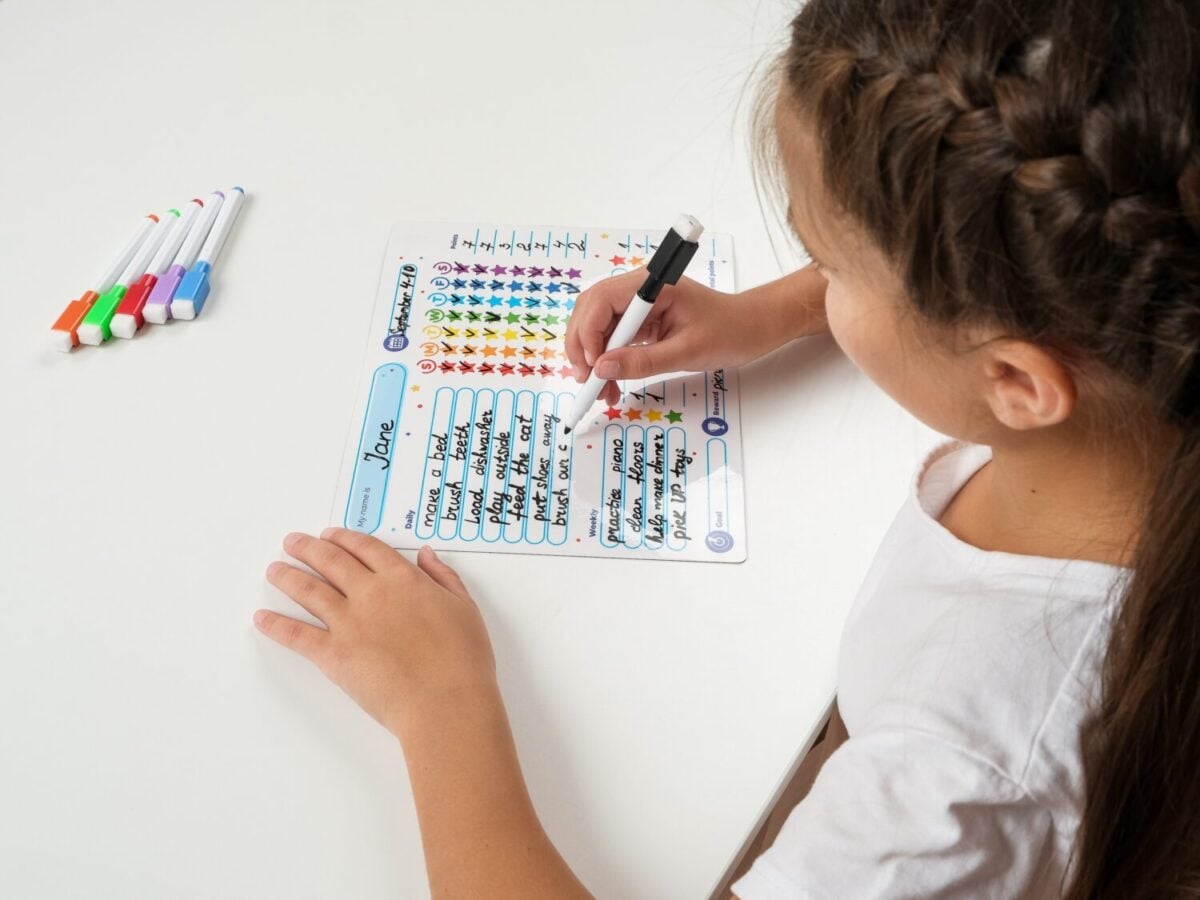
Visual charts can be a great way to remind your kids of what they need to do before bed.
©Artur Makarov/Shutterstock.com
Use Visual Schedules
It may take some time for your kids to get used to their routine, and that’s natural. However, you can help them along by creating a visual chart. Write the routine you created on a whiteboard. If you have younger kids, attach pictures of each activity to avoid confusion. You may also decide to make the visual schedule more of a check-off list that your kids can mark each night.
It’s something else for younger kids to look forward to. By putting the control in your kid’s hands, you’ll also help them to feel more independent. In time, maybe they’ll get so good at it that they’ll put themselves to bed!
Give Each Child Individual Attention
Remember that just because you have multiple kids, it doesn’t mean that you necessarily need to rush the process with each child. Your kids love you, and they want your undivided attention, so give them what they want. It’s just good parenting. Plus, when they know you’re paying attention, they’re less likely to mess around.
After a busy day filled with school, activities, chores, and distractions, bedtime may be the only moment when they have a parent's full attention. These moments don't need to be lengthy. Even a meaningful five minutes can make all the difference. Once you have your child in bed and everything else is done, consider these meaningful activities:
- Reading together
- Talking about the day's highlights
- Sharing something you're grateful for
- Discussing tomorrow's plans
- Offering a special bedtime hug
A nice activity like this will give your kids something to look forward to, so much so that they may not be as likely to find ways to delay going to bed.
Handling Shared Bedrooms

Create ground rules if your kids share a bedroom so they don't cause a ruckus.
©NMK-Studio/Shutterstock.com
Navigating bedtimes with kids who share the same bedroom is often more challenging. You can double that difficulty if the kids sharing a room are different ages. However, with a bit of strategy, you can make the arrangement work. Here are some ideas:
- Establish quiet expectations – If one of the kids goes to bed first, explain clearly what should happen after lights-out. Children should understand that once a sibling is asleep, the room becomes a quiet zone.
- Use white noise – If one kid has trouble falling asleep while the other is still awake, use a white noise machine or other soothing device to help create a calming atmosphere.
- Create individual spaces – Separate the bedroom by hanging a bedsheet in the middle so that each kid has their own personal area.
- Consider reading lights – If the routine of one of your children involves reading to help them sleep, consider small reading lights instead of keeping the bedroom light on.
- Separate if necessary – If sharing a bedroom simply isn’t working, then it may be necessary to change the arrangement, at least until better habits are established.
Encourage a Wind Down Time for Older Kids
As your kids get older, they’re undoubtedly going to ask to stay up later. That’s up to your discretion, but remember, they need a certain amount of sleep every night. One idea that may work is to give your kids ideas for how to wind down so that they feel like they’re staying up later, but in reality, they’ll probably be asleep before they know it.
Potential wind-down activities include things like reading, journaling, drawing, gentle stretching, and listening to calming music. Try reducing stimulating activities at least 30 to 60 minutes before bedtime. Ensure that screens are not part of the wind-down ritual. The blue light screens emit can disrupt that all-important circadian rhythm, and people's sleep could suffer as a result.
The Goal is to Do Your Best
In the end, every family is different. Over time, you'll figure out the best bedtime routine for your kids. Once you do, you’ll find that both you and your children will be happier and more well rested, making it a win-win for everyone.
The image featured at the top of this post is ©New Africa/Shutterstock.com