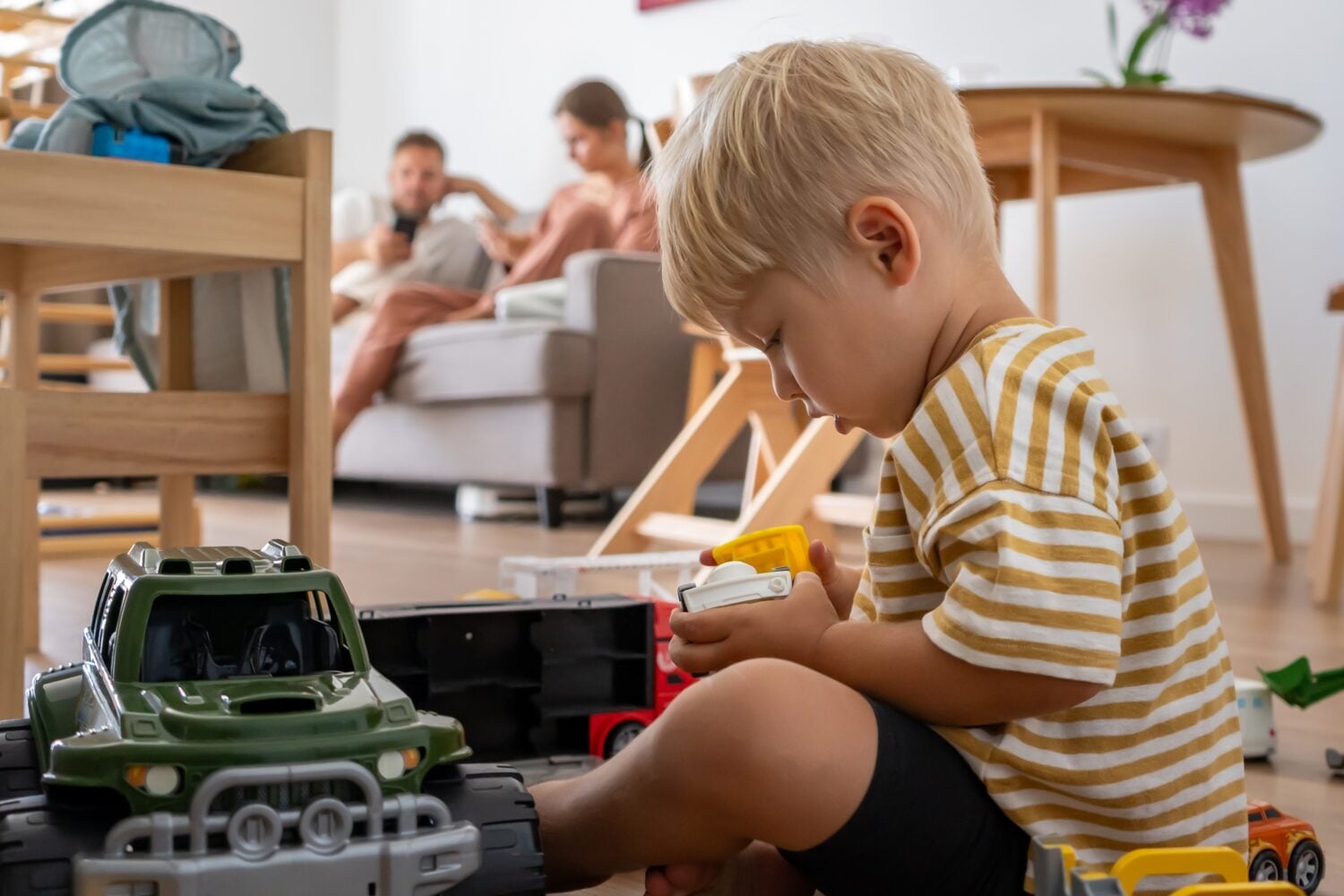
When toddlers happily play on their own, it provides more benefits than giving parents a much-needed break. Experts agree that free play encourages independence, problem-solving, and creativity. In the long run, children who can play independently develop resilience and self-regulation.
However, it can be easier said than done to get your little one to play without your assistance. Toddlers naturally want to connect with their parents. Playing alone is a skill they learn, not something innate that they are born knowing how to do. Fortunately, there are ways to set up your child's play space to encourage independent play and foster their independence.
Why Independent Play Matters
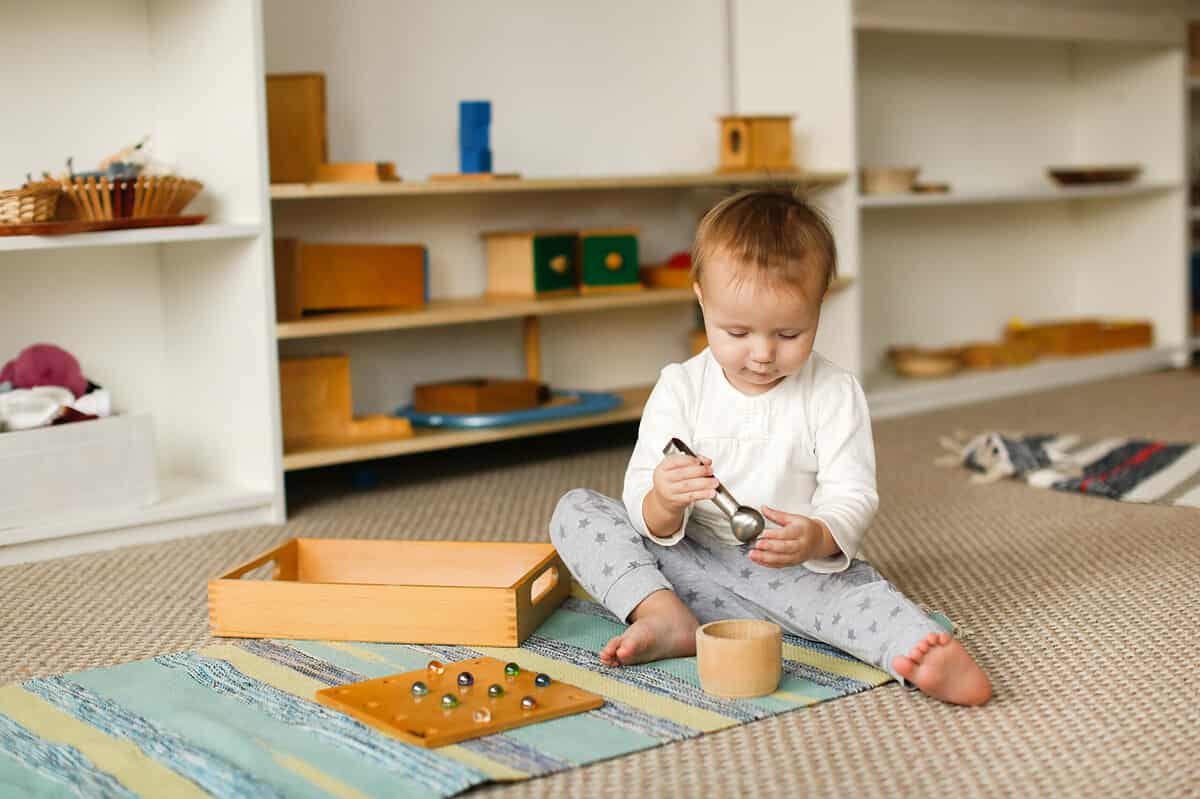
Low bookshelves with easy-to-reach toddler toys can foster creativity and independence in small children.
©Natalia Lebedinskaia/Shutterstock.com
While it's incredibly beneficial for caregivers to have breaks when caring for small children, free play is also a crucial milestone in a child's development. Researchers have found that independent play helps children develop beneficial social skills, such as conflict resolution and self-advocacy. When kids problem-solve on their own, they learn to be creative and independent. It's also been found to foster self-regulation, which helps later in life with mental health and academic success.
Create a Play Space That Invites Exploration
The first step in independent play is creating a safe space for your child to explore and play in. It doesn't have to be a big playroom. It can even be a hallway or a small area. The key is to have toys and playthings that your child can easily access on their own. You can store them on low shelves or in floor baskets to make clean up easy.
It helps to reduce clutter and provide a limited number of toys to choose from. Clutter or large piles of toys can overwhelm small children, making the decision of which toy to pull out and play with a challenge. You don't need to have every toy they own accessible to them. Placing a few objects in shallow baskets can look inviting and gain their interest.
Experts also suggest keeping screens and devices out of this area. You can gate it off so that when your child is in there, you know everything within reach is safe for them to play with.
Choose Toys That Spark Imagination
Once you have your space in mind, think about toys that little ones can play with on their own, and that will invite creativity. Some ideas include board books, puzzles, blocks, animal figures, dolls, art supplies, and play kitchens. Kids also love to play with simple household items. You can offer items such as cardboard boxes, wooden spoons, paper towel rolls, muffin tins, and measuring cups.
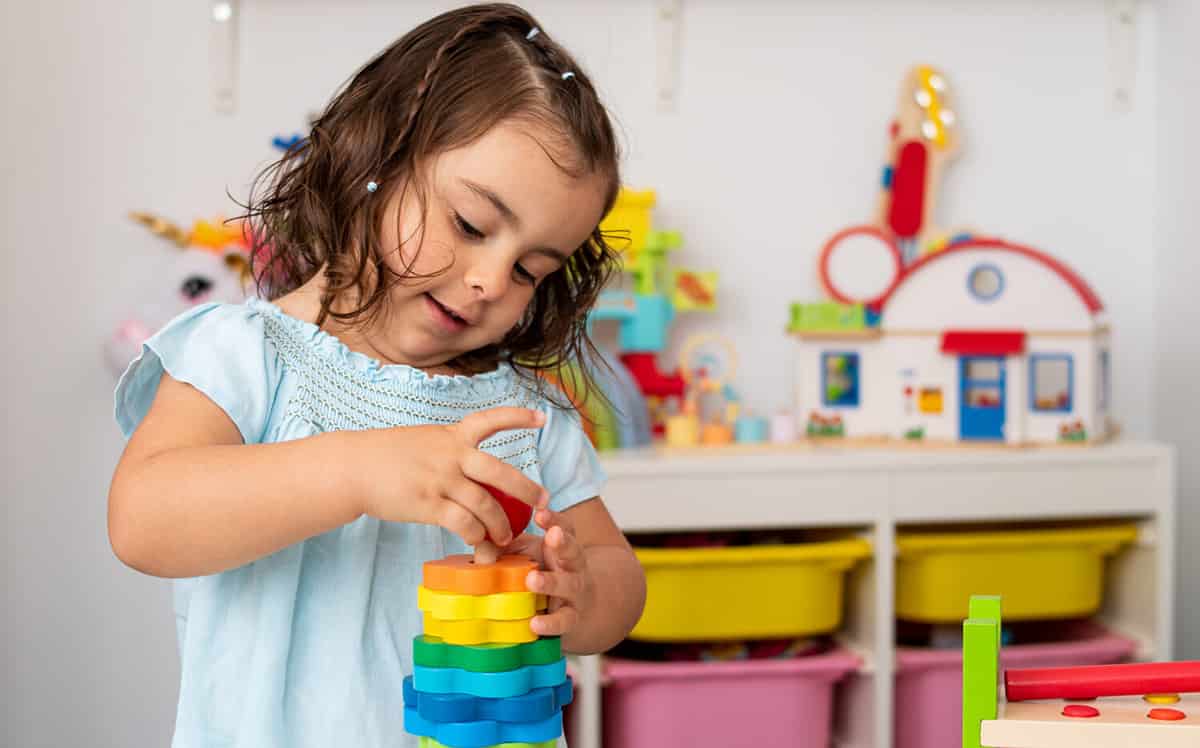
Simple toys without batteries, lights, and sounds help to spark a child's imagination by offering multiple uses for the same item.
©Juan Brian Diaz Hernandez/Shutterstock.com
For example, toddlers love to sort things. You could offer a small basket of cotton balls and a pair of child-safe tongs. Kids can practice their fine motor skills by picking up the cotton balls with the tongs and placing them into muffin tins or measuring cups.
Another thing to consider is adding toys that have multiple uses. For example, magnetic tiles and blocks can be used to build houses, buildings, and much more. Or they can be sorted into different piles based on colors or shapes.
Rotate Toys to Keep Things Fresh
These days, most children seem to have endless amounts of toys. Having every toy your child owns in the play area can create a cluttered, overwhelming space. Instead, try regularly rotating your child's toys in their play space. This can be a cost-saving way to prevent boredom and spark their interest without needing to make a new purchase.

Fostering creativity and independent play doesn't have to be all or nothing. It's best to start small in the beginning.
©CroMary/Shutterstock.com
Start Small and Build Up Over Time
If you've never left your child to play alone, it may be hard for them at first. Keep your expectations low in the beginning and don't expect them to suddenly be able to play alone for hours. Experts tell us that a two-year-old's attention span is four to six minutes. A three-year-old is only six to eight.
If your child is new to independent play, PBS Kids suggests that you begin by playing with them in their play space for around 15 to 20 minutes. Be engaged in their play and give them your full attention. Next, let them know it's now their playtime and you will be nearby. You can stay where you can see them, but work on your own activity.
Also, remember to start slow. Five minutes may be all they can do in the beginning. You can gradually build up the minutes over time. And finally, refrain from commenting on their play, even positive comments. Let them have the time to do their own thing without any interruptions.
Create Daily Opportunities for Free Play
To encourage independent play, work free play into your daily routine. Kids love predictability. Daily routines help them feel safe and confident, while giving them a sense of control over their world. With patience, consistency, and the right environment, independent play can become a regular part of your toddler's routine, giving you a daily break and providing them with important life skills.
The image featured at the top of this post is ©Dmitrij Galacewicz/Shutterstock.com