Menopause: The word itself is daunting. And if thinking about this next phase of life scares you, you're not alone. Some of you may already be experiencing perimenopause, without having a term to define why you suddenly feel like a stranger in your own body. The symptoms could not be more diverse or more unusual from person to person. This only adds to the anticipation or the need to have answers —and solutions — if you're already going through it.
If there's one thing we know demands attention, it's women's health. Even though menopause is an extraordinarily natural, mature phase of a woman's life, seeking help is an overwhelming experience. As it turns out, the best approach might be a combination of treatments. We speak with two women's health practitioners to learn how this works in tandem. One practices modern medicine and non-hormonal treatments, while the other uses energetic healing to realign the body. Here's what they had to say.
Modern Medicine and Menopause Assessment
©megaflopp/Shutterstock.com
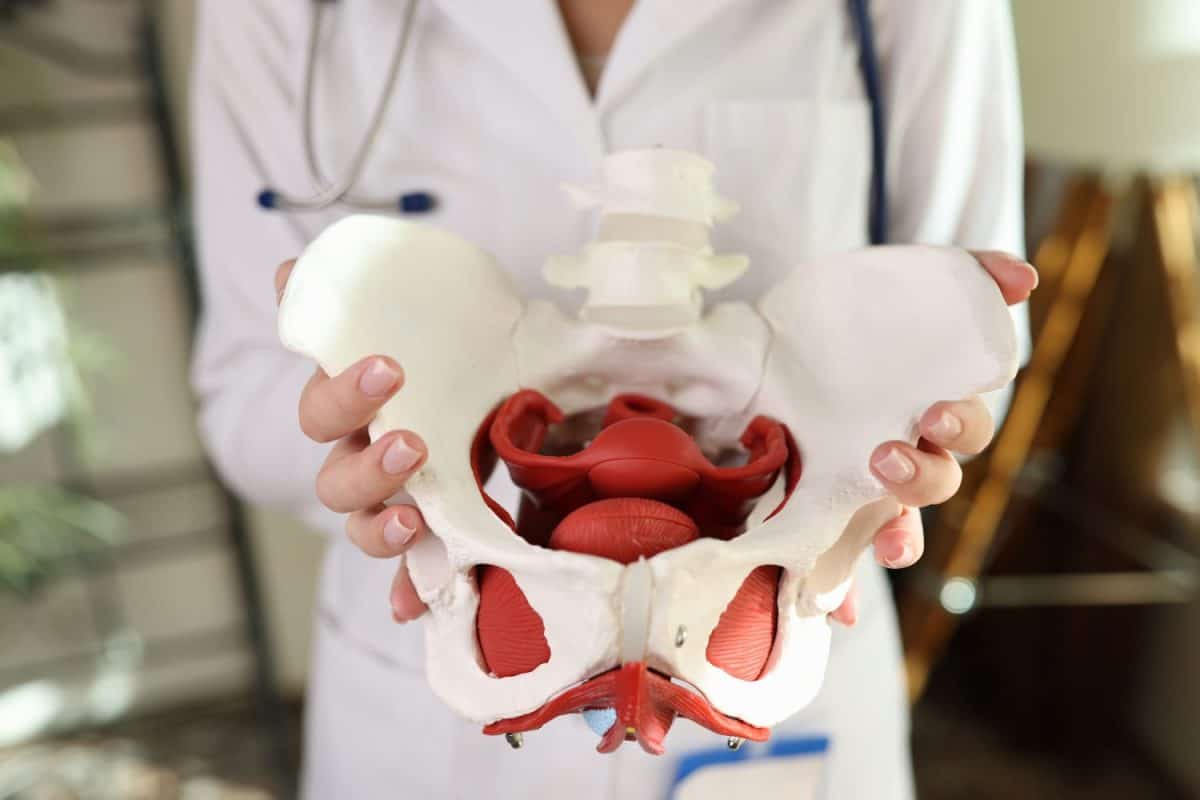
Dr. Alyssa Dweck, MS, MD, FACOG, MSCP, Chief Medical Officer of Bonafide Health, is a Menopause Society-certified provider. Her experience helping women through every phase of their lives runs deep, and so does her practice. When it comes to treatment, Dr. Dweck begins by understanding, quite literally, where a patient comes from.
“As a general rule, I base treatment recommendations on clinical presentation, medical history, and family history, and also focus on prevention and optimizing lifestyle habits. I recommend modification and enhancements to diet and nutrition, exercise with cardio and weight-strength training, sleep optimization, stress reduction, and community participation, to everyone regardless of additional treatment recommendations and severity of symptoms,” she says.
While menopause has a reputation for being unbearable, Dr. Dweck also shares that, surprisingly, not every woman experiences this. “Many women feel mild symptoms only and decline any medical intervention,” she says. Dr. Dweck continues, explaining that for those who are bothered by mild, moderate, or severe symptoms, she provides many options.
“Some opt just for lifestyle modification. Others choose behavioral therapies such as CBT. Well-studied herbal supplements, vitamins, and minerals can be beneficial, especially for those who prefer to avoid drugs and/or hormones. Non-hormonal medications for VMS (vasomotor symptoms) are discussed, including gabapentin, NKB antagonists, and antidepressants,” Dr. Dweck explains.
“Finally, hormone therapy is often considered the gold standard and first line for those without contraindication and based on personal preference. Since there are so many unique menopause experiences, there is no one-size-fits-all treatment paradigm.”
Treating Perimenopause
Perimenopause can begin as early as the mid-30s for some women. These symptoms echo full-blown menopause symptoms and are often an early sign of menopause. In this case, modern medicine offers preventive treatments. “Symptoms can be similar during both perimenopause and menopause, with caveats that irregular menses are common during the transition, and bleeding should not occur during menopause,” explains Dr. Dweck.
“Also, while vaginal changes, including dryness and pain during intimacy, often become more pronounced over time and are a chronic and progressive symptom during menopause, they can also be noted during perimenopause. Treatment can absolutely be symptom-directed or preventive. In particular, lifestyle modifications to diet, exercise, sleep hygiene, and stress management are suggested proactively and continuously.”
Addressing Severe Symptoms: Hormonal Replacement Therapy
Generally, symptoms that interfere with quality of life/or day-to-day activities, relationships, and productivity warrant treatment. For this, HRT is a viable option. “Hormone therapy typically provides estrogen support as natural ovarian production diminishes. Similarly, progesterone provides uterine protection in those taking estrogen. As ovarian function slows, progesterone production declines,” Dr. Dweck tells us.
©Chinnapong / iStock via Getty Images
“Hormone therapy is most definitely effective and primarily indicated to manage vasomotor symptoms, vaginal changes, and to prevent bone loss. Other benefits include improved sleep for those suffering from VMS at night and potential benefits to cardiovascular and neurocognitive health when given within the appropriate time window — before age 60 and within ten years of menopause onset. Hormone therapy is not primarily indicated for these issues, but it is surely beneficial overall, with nuances mentioned in the appropriate candidates. Some report improvement in joint pain, skin, hair, and nail health with hormone therapy, but these are not primary indications. Finally, local vaginal estrogen is a first-line management tool for vaginal dryness and prevention of recurrent UTI in those who are prone.”
Addressing Severe Symptoms: Non-Hormonal Treatment
The benefit of working with providers such as Dr. Dweck is the ability to explore natural options. Non-hormonal treatments are available, but there are some things to keep in mind. “There are a variety of herbal supplements that are clinically studied for safety and efficacy for various symptoms of peri/menopause,” Dr. Dweck emphasizes.
“One should ensure an herbal supplement is made with GRAS ingredients, which the FDA denotes generally regarded as safe, produced in a USP and GMP certified facility with third-party testing. Dietary supplements are meant to fill dietary voids and deficiencies in vitamins and minerals.”
Dr. Dweck adds that no matter the treatment, communication is key. “Starting the process with one’s gynecologist is common and often fruitful. For those who have complex menopausal issues or in cases where one’s general gynecologist is not well-versed, seeking guidance from a certified menopause practitioner is recommended. The Menopause Society is a great resource for this.”
Energetic Healing and Natural Menopause Treatments
©Tatiana Diuvbanova/Shutterstock.com
Rosalyn Acosta, Energetic Alchemist and founder of Live Heal Travel, provides a perspective on alternative medicine. Ayurvedic and Chakra healing have deep ancient roots in women's health, and Acosta sheds light on how she uses this to help women through menopause.
“In the West, we often think of ourselves as physical bodies that happen to have a spirit or consciousness. In energy medicine, we flip that: we are energy beings encased in a physical body,” Acosta explains. “We all possess a Luminous Energy Field (LEF): An ‘invisible' matrix that surrounds and informs our energy body, which in turn informs our physical body.”
In several steps, Acosta also explains how a first session of energetic healing looks:
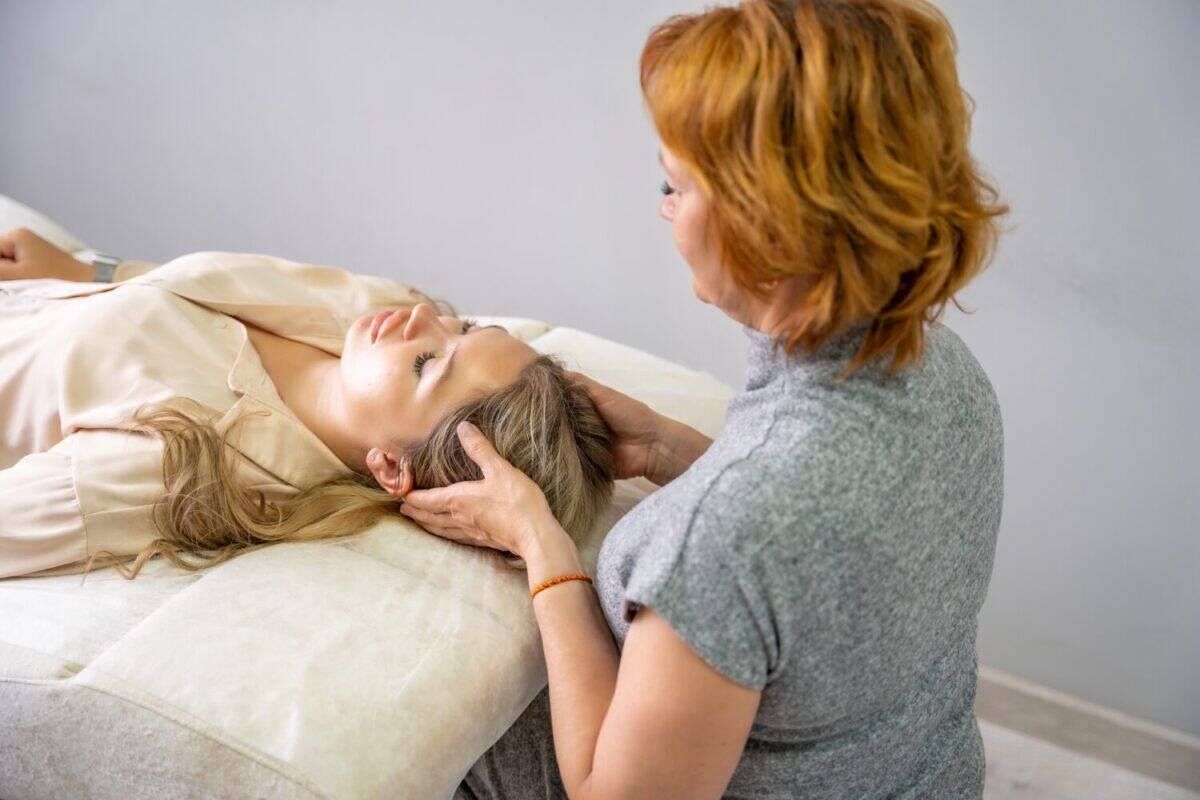
- In-Person: “You relax on a massage table, fully clothed. I use a blend of aromatherapy and sound therapy to soothe your nervous system. Through a light, gentle touch on the physical body and work within your energy field, I track and clear imprints.”
- Distance or Remote: “To the logical mind, healing from a distance sounds impossible, but to the quantum mind, it is simply physics. In our daily lives, we exist in a ‘Particle State,' separated by distance and linear time. But in a remote session, we shift into the Wave State of the Quantum Field. In the Andes, wisdom keepers call this Pacha (Space-Time). In this field, there is no ‘here' or ‘there'. This is what, in physics, is called Non-Locality. Connection is instantaneous. This is why I can access a client’s energy body in London while I am in San Francisco. Distance doesn’t matter when working with energy. During a remote session, I still play sound-healing music, and the results are just as profound as they are in person.”
- The Experience: “Most women report warmth, tingling, or seeing vivid colors. It is a deep, restorative ‘time-out' from the world, leaving people feeling utterly relaxed.”
Approaching Menopause Treatment by Clearing Paths
Energetic healing works through balancing and clearing blocked pathways. In this practice, moving “chi” or “prana” also helps alleviate pain and discomfort by allowing energy to flow more freely. While a drastically different approach, these treatments include Reiki, acupuncture, sound healing, herbalism, and energetic healing. Many of these address the seven Chakras, as Acosta explains.

©SFIO CRACHO/Shutterstock.com
“Chakras are physiological centers: spinning vortexes where an endocrine gland (hormones) meets a major nerve plexus (nervous system). In my practice, I work with the 7-chakra system,” she says. “During perimenopause and menopause, these junctions are critical because they are where your ‘fast' electrical nervous system meets your ‘slow' analog hormonal system.”
Acosta explains that, for example, the sacral chakra governs the ovaries and the adrenal glands. “When the ovaries downshift, the adrenals often go into overdrive to compensate, which can lead to that deep sense of burnout many moms feel.”
She adds that the throat chakra is equally crucial to clear, and is the home of the thyroid gland. “If a woman is experiencing thyroid imbalances, we look here to clear the energetic blockages impacting that gland's function. By clearing, balancing, and recalibrating the chakras, it helps a woman handle the transition to menopause with much more ease.”
Breaking Negative Mindsets
In the world of natural healing, menopause is often considered a shift from the “Crown” phase to the “Crone” phase of life. The latter is often viewed as a negative when, in reality, it's meant to be empowering. “Society often imposes a ‘decline' narrative on the Crone phase, but I point women toward the work of Dr. Clarissa Pinkola Estés, who reclaims the Crone as a time of stepping into power,” Acosta emphasizes.
“It is a ‘Crown' moment — a conscious evolution and a time of stepping into wisdom. This phase isn't a ‘fading away'. It’s an upgrade to your life’s purpose and destiny. Energy healing, like Reiki and Shamanic Energy Medicine, helps upgrade your field and align you with that life purpose so you can step more fully into this new version of yourself.”
She adds that healing the energy body is also the catalyst that allows the mindset to finally shift. “When we clear the energetic imprints and blocks from the energy field and body, the mind naturally follows.”
The Power of Energy Healing Alongside Modern Medicine
There are benefits to both types of medicine and healing practices, particularly regarding menopause. While modern medicine provides a baseline by which to measure symptoms, natural medicine offers pathways for relief and quality of life. One of the biggest of these, Acosta says, is learning how to naturally “reset” the nervous system.
©Microgen/Shutterstock.com
“Humans are one of the only animals that have lost the ability to naturally reset our stress response. In the wild, if you watch a gazelle escape a lion, it will find a safe spot and tremor from nose to tail, a process called neurogenic tremoring. This physical shaking discharges the massive surge of survival energy and resets the nervous system. Minutes later, the gazelle is grazing as if nothing ever happened,” she explains.
Acosta adds that most of us lose this ability, called the Moro reflex, by the time we're six weeks old. “Because we can't ‘shake it off' like the gazelle, many of us — especially busy moms — can become ‘locked' in a state of high alert. This is managed by the Limbic Brain, specifically the Hypothalamus, which acts as the command center for ‘fight or flight,” she explains.
“Energy medicine helps manually ‘reset' this system into the parasympathetic mode. To maintain this at home, I teach the Shaman’s Breath, known in the West as Box Breathing and even used by Navy SEALs to maintain composure in high-stakes environments. The Practice: Inhale for 4 counts, hold for 4, exhale for 4, hold for 4. This simple, rhythmic pattern forces the body back into homeostasis, or inner balance.”
How to Know What's Right for You
Each woman is uniquely different, meaning each menopause treatment will differ. The beautiful thing is that there is no right or wrong method to treat menopause. Depending on the symptoms, some women may find vast relief through HRT or lifestyle changes. Some, especially those holding stress and anxiety, may find their path lies with natural medicine. Together, the two present something more powerful than menopause relief; they offer hope that, somewhere out there, a better quality of life exists.
To find more resources on menopause relief and practitioners certified to treat it, like Dr. Dweck, The Menopause Society is the perfect place to start. To learn more about energetic healing and Acosta's practice, you can watch one of her clients' stories following a session.
The image featured at the top of this post is ©Ground Picture/Shutterstock.com