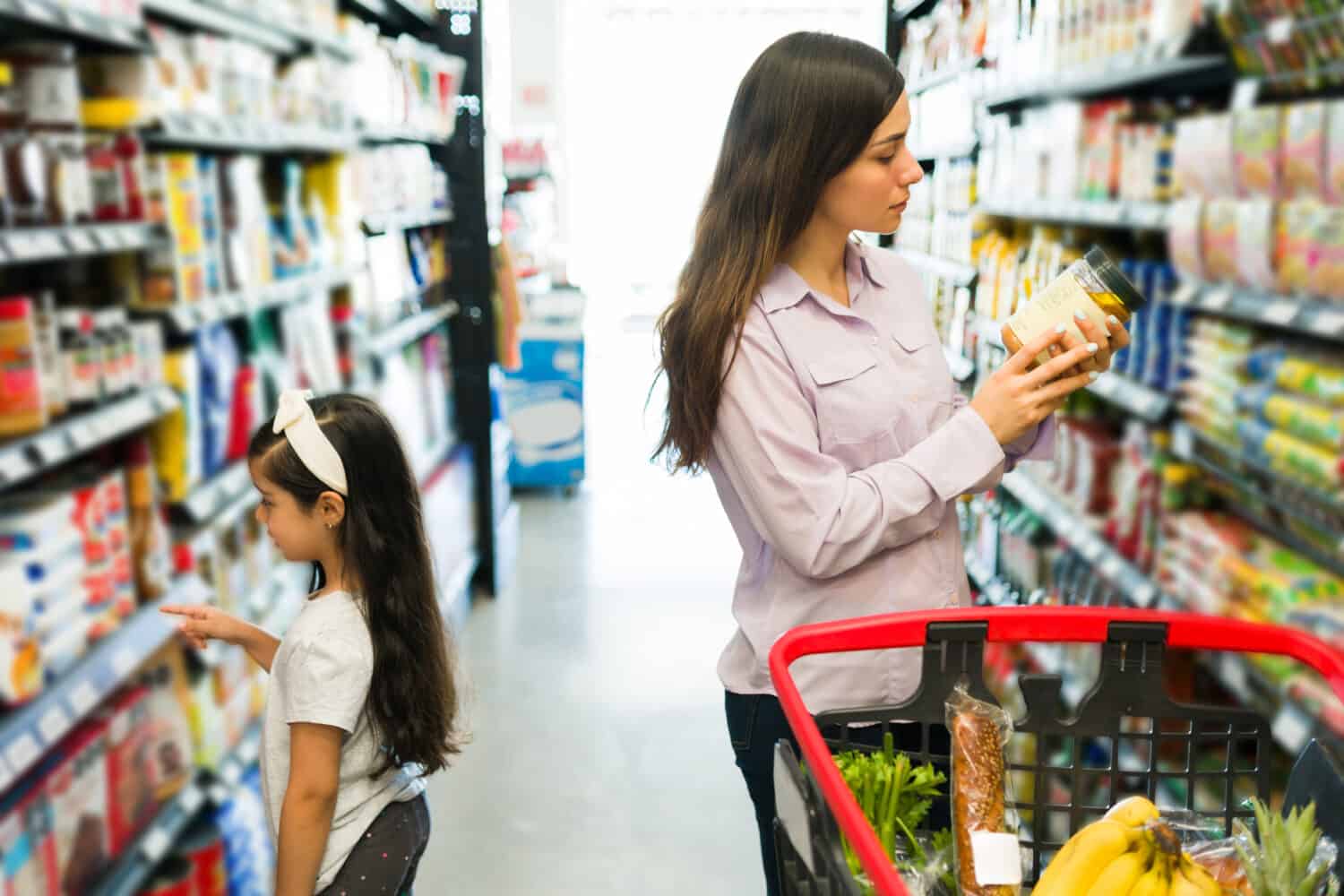
How can you possibly be out of strawberries and cherry tomatoes again? If your kids are eating you out of house and home, you're not alone. Lots of parents have noted that their children go through their favorite foods at breakneck speed, leaving parents constantly in a rush to go to the grocery store.
My two kids (newly 8 and almost 10) definitely eat their fair share of food, but we have lots of systems in place to help us avoid daily grocery store runs. Here are some tips that have worked for our family.
Use Grocery Store Apps and Ads to Make a List

©bbernard/Shutterstock.com
During COVID, we tried to go to the grocery store just once every two weeks, which meant we had to be better at meal planning and snack acquisition. We got in the habit of sitting down with the weekly grocery ad, either on the phone app or in the print version that comes to our mailbox, and finding the best deals on the foods we like the most.
For meals, this primarily means choosing the proteins that are cheapest per pound and buying enough for two or three meals featuring that protein each grocery run. Whatever we're not going to use in the first two or three days after purchasing goes in the freezer. Over the past five years, we've seen spikes in prices of pork, eggs, chicken, and more, so those items came off our list for months at a time.
For produce, we buy the maximum amount of whatever is 99 cents a pound or less. Our kids' school requires that they bring only fresh fruit or vegetables for snacks, so they go through at least 10 servings a week. Buying large amounts of cheap fruits and vegetables ensures that we're not going back to the store when prices are higher.
Grocery apps are also ideal for clipping coupons. For Chicago area locals, the Jewel-Osco app saves us up to 40% on every grocery run. Knowing what coupons are available when you make your grocery list can help you plan meals that use the least expensive produce and meats.
Use Wholesale for Larger Monthly Purchases
Personally, we're Costco fans, but we know families also have success with Sam's Club or BJ's Wholesale Club. We started as quarterly Costco buyers, but with deals on all kinds of things from toilet paper to English muffins to cheese, we've recently started going about every six weeks.
The key to saving money at a wholesale club is keeping your grocery store app handy. Costco isn't always cheaper. But, for shelf-stable items or foods that can be frozen, it might be best to lock in a good price for a bulk of food. Costco has the best bang for your buck on pantry staples like pasta, pancake mix, canned goods, granola bars, fruit cups, and olive oil.
Make sure you make a list before going to a wholesale store, and focus the list on the items you know your family will eat. Don't decide to try a new food and get 60 servings of something your kids won't touch – and don't go when you're hungry or when you've been contemplating a large purchase, like a new TV or piece of furniture.
Encourage Everyone in the Family to Help Make the List

©PeopleImages / Getty Images
Every parent has gone through this: you buy six bananas. They're gone two days later, so you go out to the store and buy eight more. Those go brown because “Duh, Mom, no one likes bananas anymore.”
The best way to avoid this is to make sure everyone has access to the grocery list. You can use a paper list, a dry erase board, an app like AnyList that can be shared among family members, or a list on your smart speaker (for little ones who can't write or type yet). Each family member should know that if they notice an item is running out and they want more, they should be the one to add it to the list.
They're also allowed to add new items (within reason; I once found “65-inch TV” on my grocery list). By the time they're 7 or 8, most kids can understand that if they didn't add it to the list, they're going to have to wait until the next grocery run to get it!
Try to Keep Track of Your Kids' Food Preferences
Kids go through different food phases. Toddlers usually see foods as black and white – like or don't like. But by the time kids are 8 or 9 years old, they start to have more distinct preferences. My daughter, for example, used to eat almost everything, but now she has realized she prefers green grapes, red cherry tomatoes, white cheddar cheese, and wheat bread.
If we go to the grocery store and get red grapes, yellow tomatoes, American cheese, and rye bread, we're going to end up going back within the next 48 hours, and, depending on what the other three of us are willing to eat, we may throw out a lot of food.
This also means your kids are responsible for telling you if they don't like something, so you can prioritize buying things they do like. You can also encourage your kids to have second choices for produce, bread, lunch meat, cheeses, and the like. Most elementary schoolers will understand if you explain that you are not going to spend $7 a pound on strawberries, so we're eating oranges this week.
Plant a Garden or Go Fruit Picking

©CandyRetriever/Shutterstock.com
The two foods we had the hardest time keeping in stock are cherry tomatoes and strawberries, but we discovered that we can grow enough tomatoes in our backyard to not need to buy them for several months. We also grow basil, cilantro, and jalapenos, which we make into pasta sauce or salsa to save us money and trips to the store. We've also had some success with cucumbers, which can easily be made into pickles. Kids love the opportunity to learn about the plants as they grow.
As soon as strawberry season arrives each year, we go strawberry picking. It's not usually cheaper than the grocery store, but it's a fun experience, and we usually pick enough to last 7-10 days. We also freeze them for later or make strawberry jam.
The taste of summer is great well into the early winter months! In our area, we can also find apples, cherries, blueberries, and sometimes peaches to pick at local U-Pick farms. Again, the experience is worth the extra money, and it will save you a trip to the store for that specific item for a few weeks.
Choose Produce with a Long Shelf Life, or Frozen and Canned Goods
Apples and oranges can last a long time even without refrigeration, while strawberries and grapes tend to go bad quickly. You can also buy frozen fruits and vegetables, or canned goods, to stretch your meals or snacks a little farther. For foods like bananas, kiwis, avocados, and mangoes, buy a variety of super-ripe and somewhat underripe fruit to make sure you have a supply that lasts throughout the week.
Use a Grocery Delivery or Pickup Service
Many grocery stores have “click and collect” features on their apps so you can make a list throughout your day and go pick it up when you have enough items to make it worth it. We also love Imperfect Foods, which offers less-than-perfect produce and snacks for slightly lower prices delivered to your door every week or every other week. If you think you might need a little extra to tide you over before your next grocery run, just put it in your cart and have it come to you! This isn't always a money-saver, but it does add convenience to already busy days.
Although you're unlikely to find one simple solution to the problem of constantly running to the grocery store, you may be able to use one or a few of these tips to reduce the amount of food runs you need to make each week. Find what works best for your family and keep doing it!
The image featured at the top of this post is ©antoniodiaz/Shutterstock.com