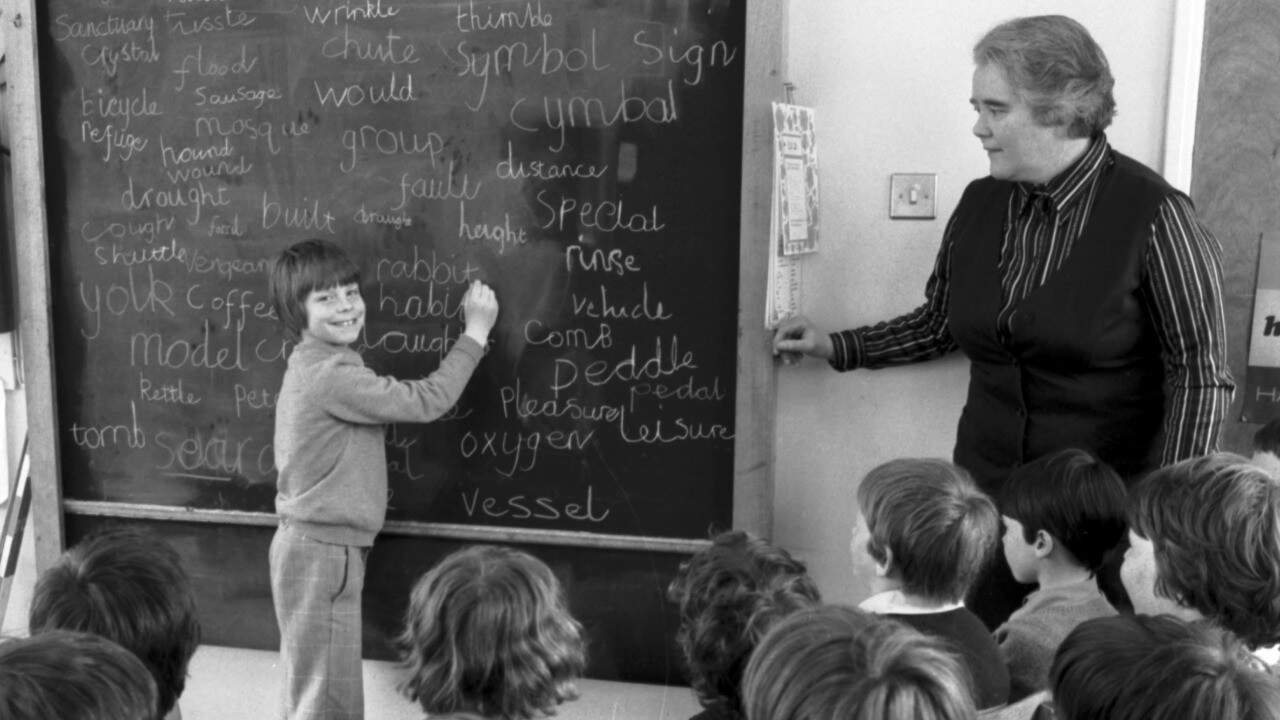
Parents who attended school in the 1960s or 1970s often remember classrooms where discipline was immediate, public, and rarely open to debate. Talking at the wrong time, wearing hair too long, writing with the “wrong” hand, or challenging a teacher could lead to far more than a warning. Depending on the school, a child might be paddled, isolated in a hallway, forced into an uncomfortable position, or embarrassed in front of classmates.
Many adults accepted these punishments because teachers were expected to act in place of parents during the school day. Even the Supreme Court declined to bring public-school paddling under the Eighth Amendment in its 1977 Ingraham v. Wright decision. However, discipline varied widely by region and school, and not every child experienced every practice on this list.
Today, many of these methods would prompt angry phone calls, formal investigations, or legal action. These 12 school punishments show just how dramatically ideas about authority, safety, and a child’s dignity have changed.
Choosing the Switch Used for Your Own Punishment

©Ovchinnikova Irina/Shutterstock.com
In some schools, especially in rural communities and strict religious settings, a misbehaving student could be sent outside to cut a thin branch from a tree. The branch became the “switch” used to strike the child across the legs or backside. Former students often remember the ritual as being almost as frightening as the punishment itself, since choosing a branch that was too small could mean being ordered to return for another. This was never a universal American school policy, but it survived in places where teachers were expected to discipline children much as parents did at home. Today, asking a child to help prepare an object used to hit them would likely trigger immediate complaints and an investigation.
A Ruler Across the Palms or Knuckles

©New Africa/Shutterstock.com
A wooden ruler or yardstick was always within reach, which made it a convenient disciplinary tool in some classrooms. Students might receive a quick strike across the palm or knuckles for talking, disobeying instructions, sloppy handwriting, or other minor offenses. The punishment could happen in front of the entire class, turning a brief physical sting into a public warning for everyone else. Rulers were especially associated with stricter parochial and traditional schools, although experiences varied widely by district and teacher. What once passed as ordinary classroom control would now raise serious questions about physical discipline, student safety, and whether humiliation has any place in teaching.
Being Sent to the Principal for the Paddle
©mikeledray/Shutterstock.com
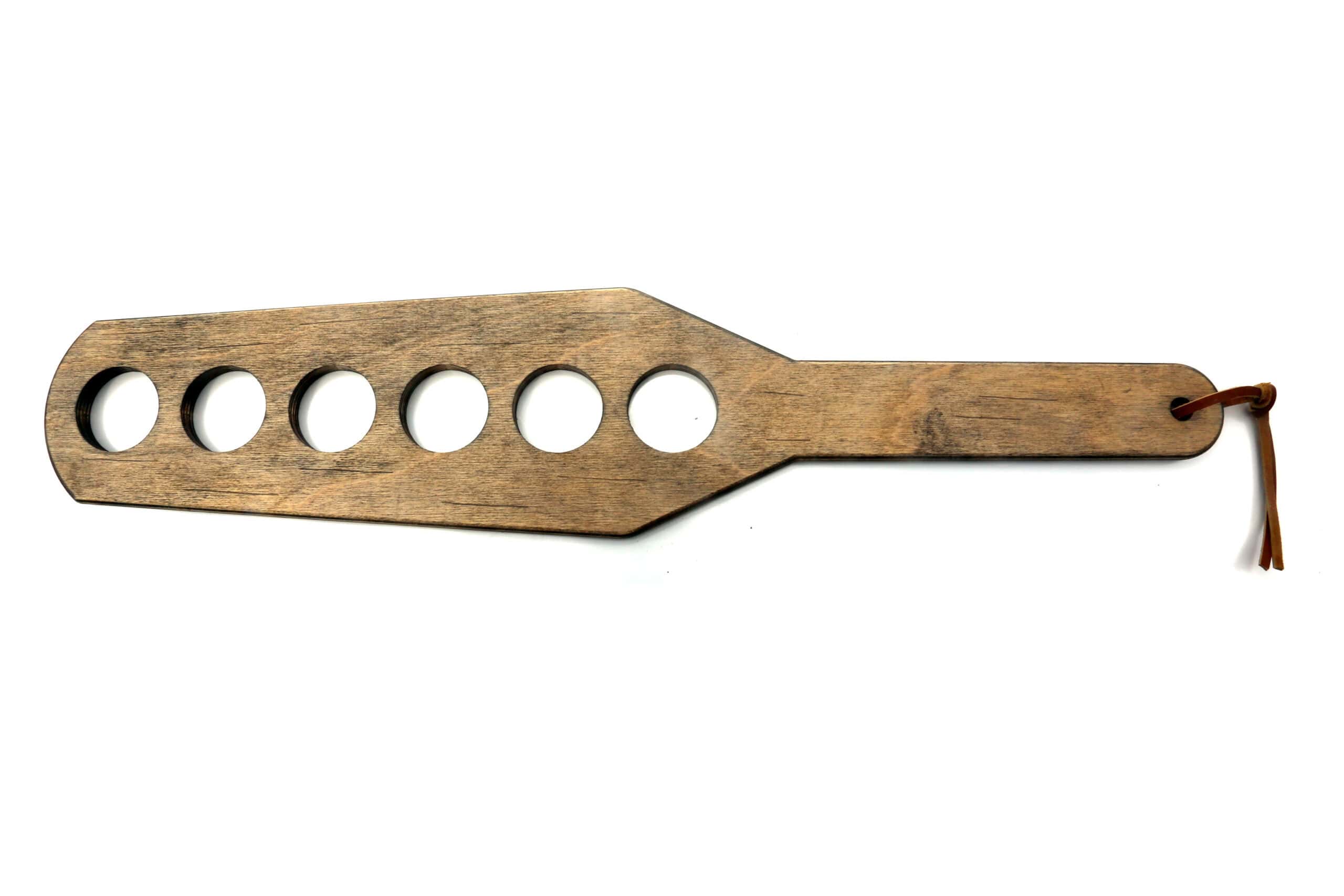
The wooden paddle was the most formal version of school corporal punishment. Many schools kept one in the principal’s office, and some paddles were drilled with holes, which reduced air resistance without making the punishment safer. The best-known legal challenge came from Florida student James Ingraham, who was struck more than 20 times and required medical attention. In 1977, the Supreme Court ruled in Ingraham v. Wright that the Eighth Amendment’s ban on cruel and unusual punishment did not apply to public-school discipline. The ruling did not require states to allow paddling, but it left the practice largely to state and local law, and it has never been prohibited nationwide.
Suspension Until a Boy Cut His Hair

©KlavdiyaV/Shutterstock.com
For boys growing up during the late 1960s and early 1970s, a haircut could become a school disciplinary issue. Many districts required hair to remain above the collar, away from the eyes, and no longer than the bottom of the ears. Students who arrived with styles inspired by the Beatles or the counterculture might be sent home, suspended, or barred from class until they cut it. Teenagers challenged these policies in court, but results varied around the country. In Karr v. Schmidt, the Fifth Circuit upheld a Texas district’s grooming rule and rejected the argument that choosing one’s hair length was a fundamental constitutional right. Rules this personal would face much greater resistance from families today.
Covering a Talkative Child’s Mouth With Tape

©Vadim Zakharishchev/Shutterstock.com
Some former students recall teachers placing masking tape across a child’s mouth as punishment for talking during class. The tape might remain in place for several minutes or, in more extreme accounts, through much of a lesson. Even when it did not block breathing, the purpose was unmistakably humiliating: the child was publicly displayed as someone who could not be trusted to speak. The practice is difficult to measure because it was usually informal rather than written into school policy, and it should not be presented as something every school allowed. Still, the stories have endured because they reflect an era when individual teachers often had far more freedom to improvise punishments without immediate parental review.
Being Labeled the “Dunce” in Front of the Class
©stockphotofan1/Shutterstock.com
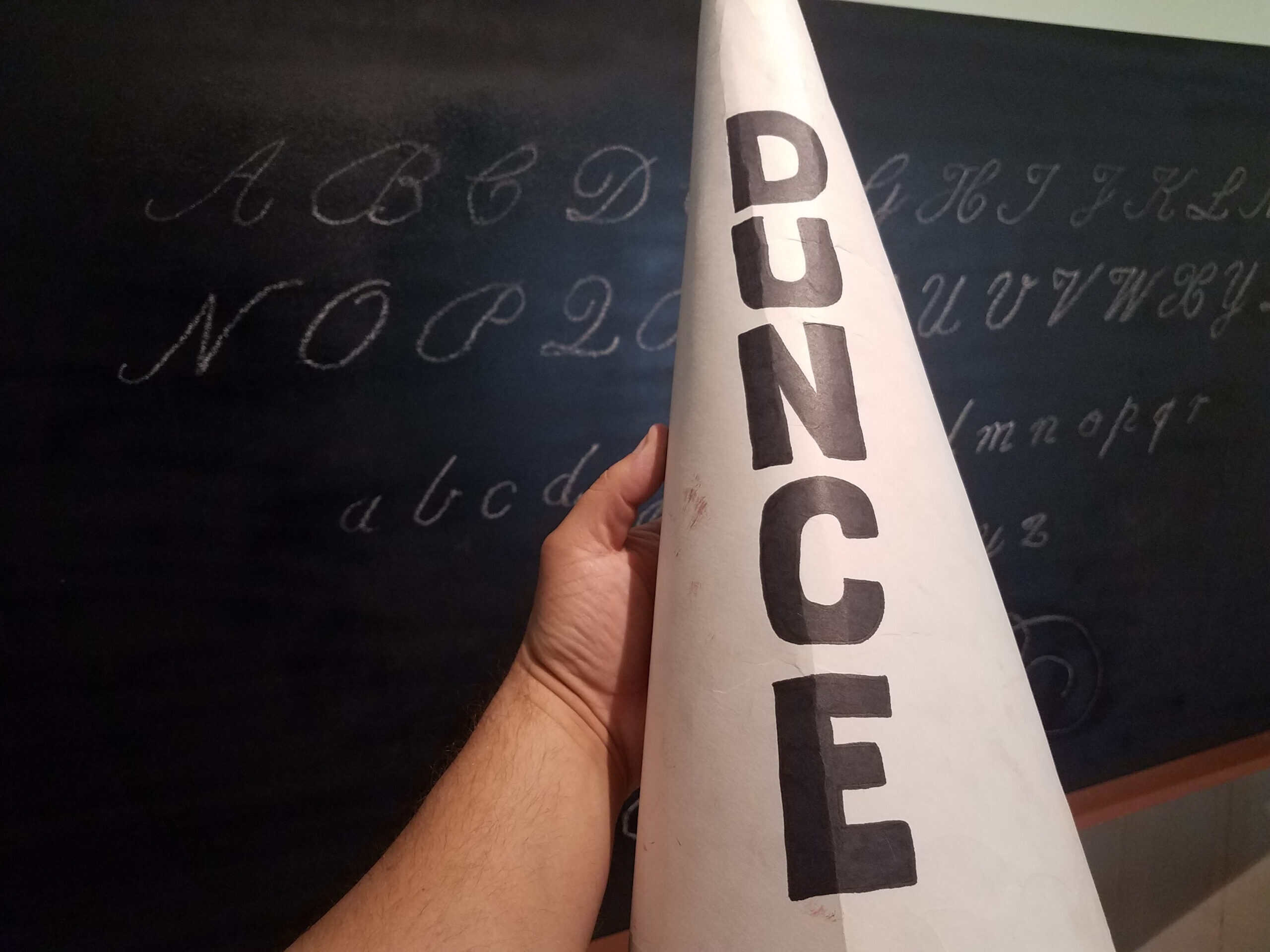
By the 1960s and 1970s, the literal pointed dunce cap had already disappeared from many American classrooms, but the punishment behind it had not vanished completely. Some teachers still singled out struggling students by placing them in a corner, moving their desk away from classmates, or labeling them as lazy, slow, or incapable. In a few old-fashioned schools, versions of the cap or a special “dunce” seat reportedly lingered. The goal was not to teach the missed lesson but to make embarrassment memorable enough to change behavior. Modern educators are far more likely to recognize that public labeling can damage confidence, discourage questions, and make a child who needs extra help even more afraid to participate.
Kneeling on a Hard Floor, Rice, or Corn

©SeventyFour/Shutterstock.com
Kneeling was used as a punishment in some strict schools, particularly religious, boarding, or military-style institutions. A student might be ordered to remain on a hard floor with an upright posture for an extended period. Some accounts describe uncooked rice, dried corn, or another rough material being placed beneath the knees to increase the discomfort. The practice was not a standard feature of every American public school, and its prevalence is difficult to document. Even so, the basic idea fit an older approach to discipline in which endurance and physical pain were treated as character-building. Today, forcing a child to hold a painful position would be viewed as corporal punishment rather than harmless classroom management.
Forcing Left-Handed Children to Use Their Right Hand

©Manuel Neiberger/Shutterstock.com
Left-handed children were often pressured to write with their right hand because right-handedness was treated as the proper or more manageable standard. Some students had their left hand corrected repeatedly, struck with a ruler, or physically restrained so they could not use it. The practice became less common during the second half of the 20th century, but it persisted in some classrooms into the 1960s and beyond. Older studies claimed that forced switching could cause stuttering, although later historical reviews found that relationship far less certain. Research has found that retraining could produce lasting changes in how the brain organized a highly practiced movement such as handwriting.
Washing a Student’s Mouth Out With Soap

©New Africa/Shutterstock.com
“Wash your mouth out with soap” was more than an expression for some children. Students accused of swearing, lying, or talking back could have a bar of soap rubbed across their lips or placed inside the mouth. Because the same punishment was also common in many homes, some adults accepted it at school without viewing it as unusual. Soap is not intended to be swallowed, and even a small amount can irritate the mouth and throat or cause nausea, vomiting, and diarrhea. The physical reaction was part of what made the punishment memorable, but so was the shame of having it administered by an adult in front of others. A teacher attempting this today would likely face immediate disciplinary action.
Standing Alone in the Hallway for Hours

©Kaito San/Shutterstock.com
Being sent into the hallway may sound mild beside paddling or switches, but the older version often involved more than a short cooling-off period. A student could be ordered to stand silently outside the classroom without a chair, schoolwork, or a clear idea of when they would be allowed back inside. In some schools, the child remained there for an entire class period or was repeatedly moved from lesson to lesson. The greatest concern was the lack of supervision, especially for younger students left alone in a corridor. Modern schools may still remove a disruptive child temporarily, but policies increasingly emphasize supervision, documentation, and continued access to instruction rather than simply making the student disappear.
Holding Heavy Books With Arms Extended

©GNT STUDIO/Shutterstock.com
Holding heavy books with both arms stretched straight ahead turned ordinary classroom materials into a stress-position punishment. At first, the task could seem manageable, but the shoulders and arms quickly began to ache, tremble, and drop. Teachers sometimes assigned it to one student and sometimes to an entire class until someone admitted to breaking a rule. Because it did not require striking a child and usually left no obvious mark, adults could describe it as an exercise rather than physical punishment. The distinction would not persuade many parents today. Forcing a student to maintain a painful posture for obedience would now be recognized as a form of corporal discipline and an unnecessary risk of strain or injury.
Writing the Same Sentence Hundreds of Times

©Thinglass/Shutterstock.com
Writing lines was one of the least violent punishments on this list, but teachers could turn it into hours of exhausting repetition. A student might be assigned “I will not talk in class” 100, 300, or even 500 times, either at a desk, after school, or at home. Some children filled an entire chalkboard, erased it, and started again. The punishment was supposed to make the broken rule impossible to forget, but it also caused cramped hands and replaced meaningful schoolwork with mindless copying. Versions of writing lines still exist, yet many educators now question whether repetition teaches better behavior. A reflective assignment or conversation can address what happened without making writing itself feel like a penalty.