

















10 Things Teachers Wish Parents Would Stop Sending to School
Every autumn, elementary teachers spend the first few weeks quietly cataloging the little things that will make the school year more challenging than it needs to be. Not the big issues like unexpected curriculum changes or classroom sizes. No, we mean the small things. The fruit cups. The slips of paper with parent messages. The kid who shows up on Monday running a fever because the weekend didn't feel like the right time to deal with it.
Teachers are probably not going to tell you these things face-to-face. But if you were a fly during a staff lunchtime conversation in October, you'd be aware of all of these little things in less than twenty minutes. Here are 10 things teachers wish parents would stop sending to school.
Fruit Cups in Syrup
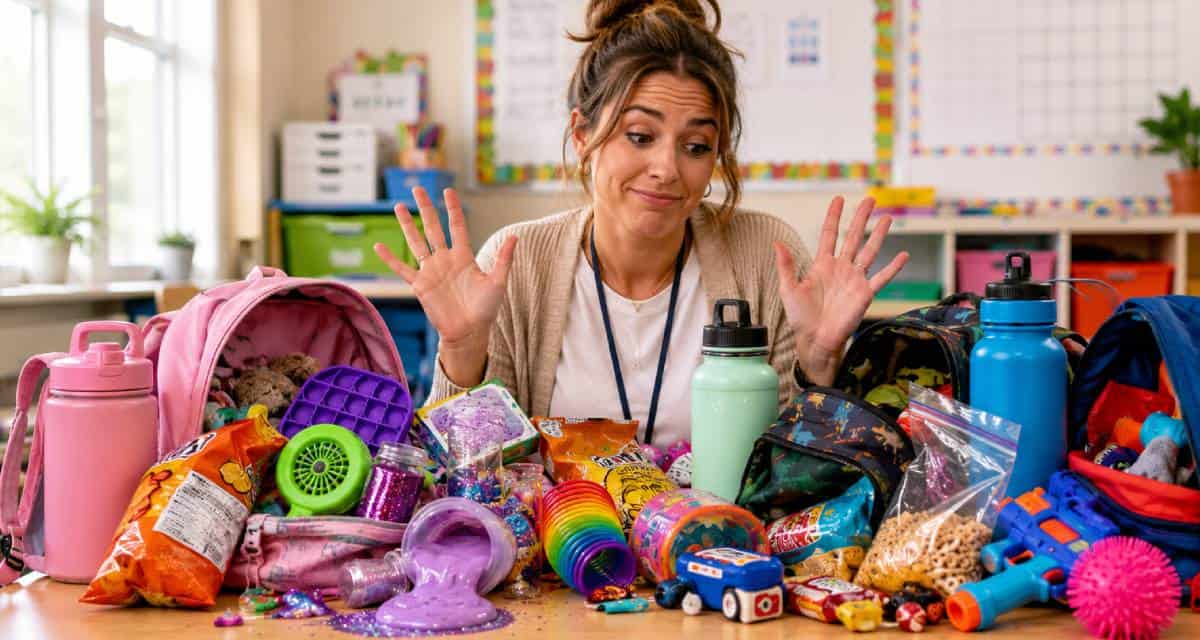
This one is a kindergarten classic. The pull-tab lid on those little fruit cups never opens cleanly. Pull too hard, and you’re left with the aftermath of what can only be described as a syrup explosion. It gets everywhere, all over the teacher's hands, all over the kid's tray, and sometimes on the floor.
Kindergarten teacher Amy McMahon went viral when she posted a PSA video holding up the fruit cup and complaining about it on TikTok. The comment section immediately filled up with teachers sharing nearly identical stories. The fruit cup isn’t the only offender. The same goes for the Go-Gurt tube and the Capri Sun pouch. They both have a tiny straw hole, approximately the diameter of a pin. If your child can't open it at home, that means he will need assistance at school, too. The difference is that at school, 24 other kids are waiting.
Sick Kids Dosed With Fever Reducer
This happens so often in class that teachers have a name for it. They call it the mid-morning crash. The child starts off looking okay, but by 10 o'clock, he’s begging to be sent to the nurse's office. That's because the meds he took at the start of the day wore off just before spelling time.
It’s uncomfortable for everyone, but most importantly, it exposes the other kids in the classroom to whatever the first child has. Teachers know it isn't always easy to keep a child home when you have your own work schedule, but sending him to school will just make matters worse for everyone. There’s also a good chance that you’ll end up needing to pick him up anyway.
Last-Minute Birthday Treats for the Whole Class
Teachers enjoy birthday celebrations. What they don’t enjoy are 25 cupcakes that show up unannounced at 8:45 in the morning. It forces them to figure out where to store them, how to work them into a packed schedule, and what to do about the two allergic kids whose parents weren't given any advance notice.
It’s not like this hasn’t been foreseen by administrators. Every school requires a 48-hour notice before you can send birthday treats. Most parents don’t know this because they haven't read the parent handbook. Next time, send a note ahead and ask about allergies. The teacher will thank you.
Notes Asking for Homework Exceptions
"He was in soccer practice until 8, so he couldn't do the math exercises." These notes put teachers in an uncomfortable position. They either risk coming across as inflexible by enforcing the rule, or they risk creating a precedent that will come back to haunt them later on.
Teachers know that life gets hectic sometimes. After all, most of them have children at home too. What they would appreciate is a quick email before the assignment is due, not a retroactive note that amounts to a request to look the other way. The distinction matters: one feels like proper communication. The other feels like an excuse.
Kids Who Haven't Slept
A kid who slept for six hours is very different from a kid who slept for nine. Studies have consistently shown that a tired child will have difficulty focusing, regulating his emotions, and retaining information. An unrested child will probably cry over trivial matters and end up losing control before lunchtime. Children ages 6 to 12 need 9 to 12 hours of sleep on school nights. Most teachers can tell within the first 15 minutes of the day which kids didn't get it.
Passive-Aggressive Notes to the Teacher
Leaving a note in the back pocket of a book bag is not what communication should look like. Teachers are left with two choices: sending a written response or tracking down the parent during pick-up time. Teachers know that families have a lot going on. That’s not the issue. But sending a quick email or making a phone call will at least allow them to discuss whatever is on the parent’s mind.
Notes that read like complaints tend to create tension that lingers long after the issue itself has been resolved. Teachers remember these notes, and they will remember who wrote them. It's simply human nature.
Kids Dressed for a Different Kind of Day
A child in flip-flops on PE day will not be able to do any physical activities. A child in a dress with no shorts underneath will sit throughout recess rather than climb the bars. Teachers aren't going to tell the kid why, but they'll quietly keep them off the monkey bars. The child is going to be left wondering what they did wrong.
Too Much Cash, Unsecured
A $20 bill tucked away carelessly in a backpack pocket during a field trip will end up getting lost more times than you can imagine. Teachers are not security personnel, and the classroom is definitely not a bank.
These days, a lot of schools have online payment methods available for field trips, school photographs, and lunch fees. Of course, cash is still the only option in some places. In those cases, just send exact change in a sealed envelope with the kid’s name and what the money is supposed to be used on.
Kids Carrying Conflicting Messages About the Teacher
If a parent speaks at the dinner table about how unfair a certain teacher is, that information is going to get passed on to school the following morning. Kids bring everything they hear at home into the classroom with them.
A child who has heard that their teacher is wrong or picking on them is going to behave accordingly, and the teacher is going to spend part of their day dealing with something that could have easily been avoided. If you have a concern about the teacher, talk to the teacher. Not the third-grader.
Overpacked Lunchboxes
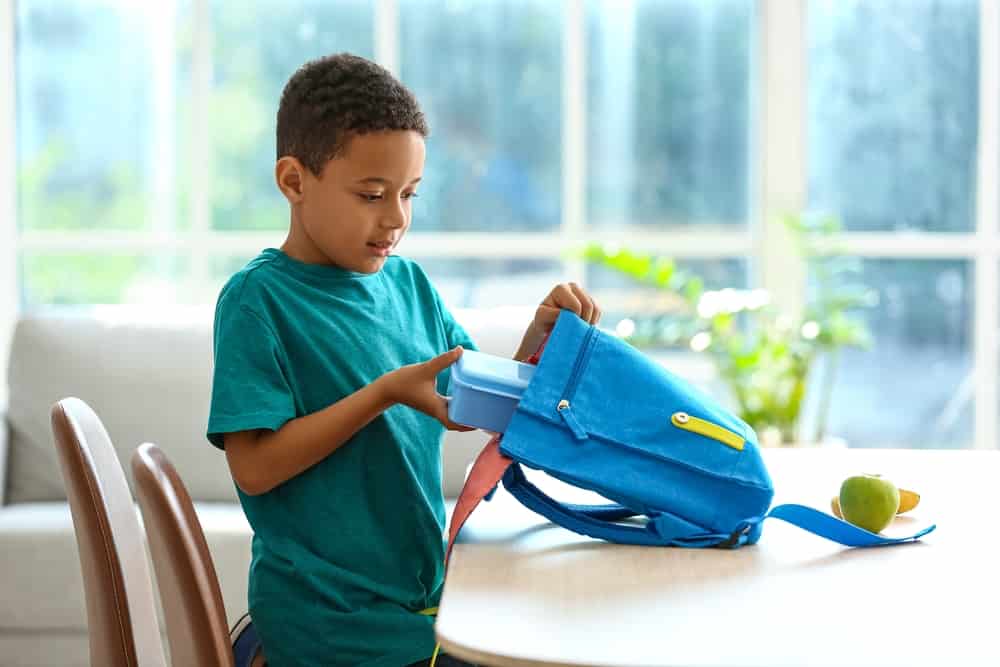
Teachers consistently report that the typical elementary school student ends up eating only two to three items out of everything packed in their lunchbox and ends up throwing the rest away. They’ve also noticed that the things students are most likely to eat are the ones they can actually open and handle on their own. A lunchbox filled with seven different items, three of which need adult help to open, is not a generous lunch. It's a chore for everyone involved.
The image featured at the top of this post is ©Andrew Clemente