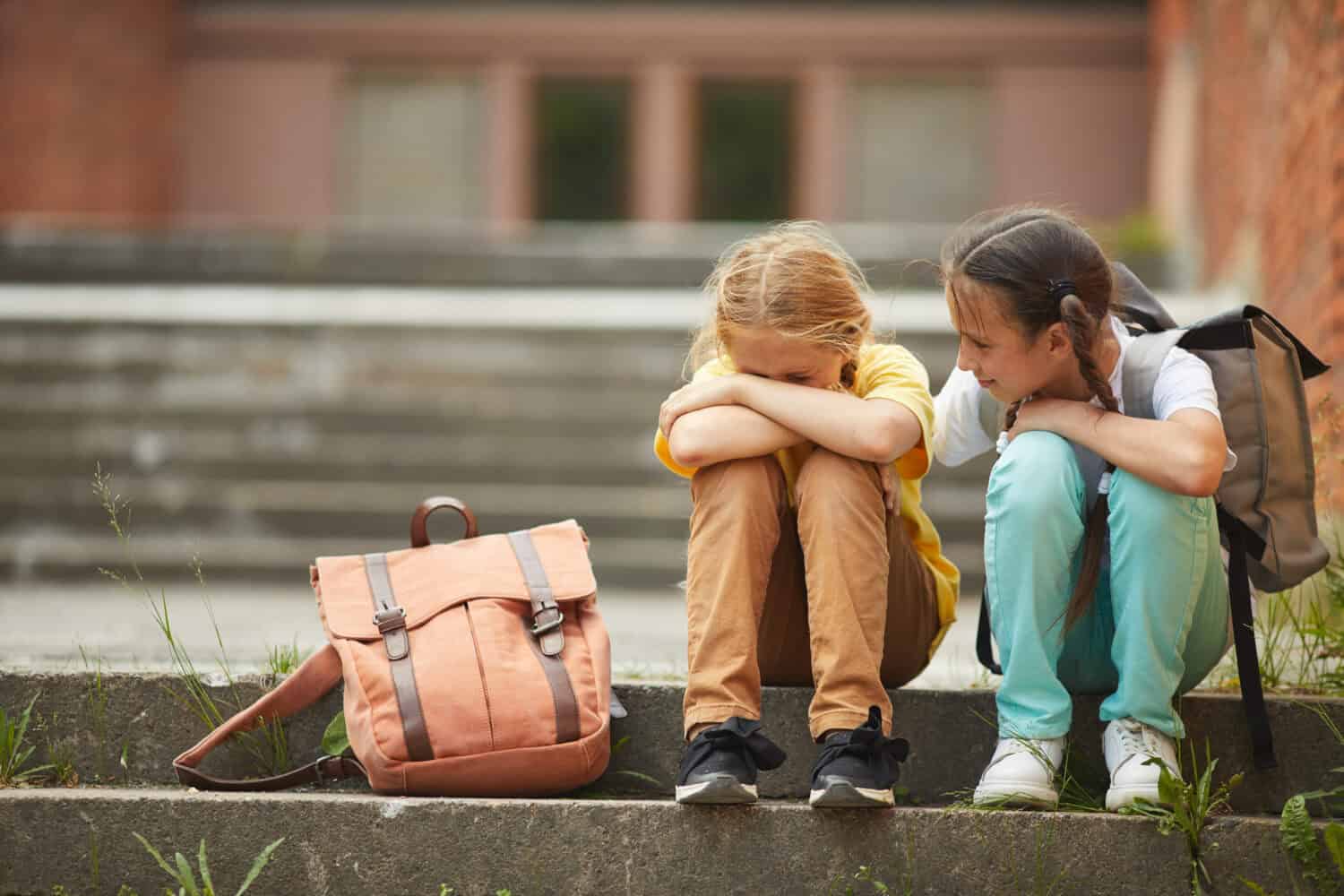
School exhaustion is something many parents have seen in their children. After a long day of learning, reading, writing, socializing, and schoolwork, many kids come home completely tapped. It takes effort to do all of these things, and it's a common misconception that kids have endless energy. Fatigue at the end of the day is especially common for neurodivergent children. Overstimulation and low social meters can zap their focus quickly, which leads to burnout as soon as they get home. Classrooms aren't always designed to make this easier, and some kids suffer in silence, masking their entire school day.
To better understand this, we speak with an expert. Amy Zembriski, a pediatric speech-language pathologist with 9 years of experience, provides guidance for worried parents.
What Causes School Burnout?

©Yuganov Konstantin/Shutterstock.com
Zembriski tells us that for any child, school operates in a highly structured environment for several hours. Most of the time, this happens without many built-in breaks. This alone can be tiresome, especially when you factor in disorders such as ADHD and autism.
“For neurodivergent children, this can be particularly challenging. Their nervous system is working overtime trying to manage all of the information in their environment while also having to ‘hold it together' to meet adult expectations,” Zembriski says.
“Think of a child’s nervous system as their inside helper for their body. The nervous system helps a child to notice what is happening in their environment. It helps them to decide, ‘Am I safe in this moment? Do I need to focus? Or do I need to take a break because I am feeling overwhelmed?” She explains that they tend to have more sensitive nervous systems because, many times during instances of overwhelm, they may be processing everything at once.
“By the time the end of the school day comes around, it is no surprise that many kids feel exhausted,” Zembriski says. “This is incredibly effortful for them to be ‘on' all day at school. In my work as a speech-language pathologist specializing in supporting neurodivergent children, it’s not uncommon for families to say their child unmasks the minute they get home. This looks different for every child, but it might look like a child who wants to be left alone in their room or a child who is overly active.”
Why Neurodivergent Children Are More Prone to Burnouts
In Zembriski's experience, neurodivergent children experience higher levels of overstimulation. This can be caused by sensory overload combined with the pressure to meet certain standards. “School burnout is likely to occur when the expectations consistently exceed a child’s capacity or the supports that are in place,” she explains. “Neurodivergent children spend a lot of their day masking to meet adult expectations to avoid getting in trouble.”
Neurodivergent children spend a lot of their day masking to meet those expectations, and that masking requires a significant amount of mental and emotional energy. “That constant effort of trying to fit in with the rest of their peers while ignoring their own needs leads to exhaustion, stress, and burnout,” she says.
Schools Are Overstimulating In Ways Many Don't Understand
For neurodivergent kids, things that don't typically bother a neurotypical child might bother them. Sensory input works differently for children with ADHD and autism, quickly leading to overstimulation from things an adult may not understand.
“For example, their nervous system has to filter out so much sensory input in a classroom: fluorescent lighting, crowded hallways, a lot of visual clutter, frequent transitions either within the classroom or outside of the classroom, and social situations that require their attention,” explains Zembriski.

©Dikushin Dmitry/Shutterstock.com
“Additionally, children are expected to demonstrate the ability to focus, refrain from reacting impulsively, and regulate their own emotions. At times, this can happen all at once. For neurodivergent children, this means that they have to manage a high level of sensory input while simultaneously being expected to have strong executive function skills.”
Here, Zembriski opens up about her own experience as a late-diagnosed ADHD woman. “In my work supporting ADHD and autistic students, I see how often these challenges are deeply misunderstood. Their lack of focus, impulsivity, or inability to follow directions is often mislabeled as ‘laziness,' rather than recognized as signs of overload. Having to manage information in an environment while also having to monitor internal demands is exhausting, and if I’m being honest, many adults struggle with this. It’s worth pausing to reflect and consider how much we may be asking of young children.”
What Are the Signs of School Burnout?
Neurodivergence and masking often go hand-in-hand. To fit in and survive the day, neurodivergent children often mask their burnout, stims, and/or overstimulation. However, this mask often slips as soon as they get home and feel safe. “Burnout does not always just look like a child who is overly exhausted. Many neurodivergent children appear to be ‘fine' at school and often spend the majority of their day masking,” Zembriski says.

©Xavier Lorenzo/Shutterstock.com
“Once they get home, they begin to unmask. Other signs that may indicate burnout in a child are increased irritability, anxiety, meltdowns after school, withdrawal from their peers and adults, or refusal to attend school. Many of these signs may be misunderstood as behavioral responses that need to be ‘fixed,' but this often signals that their capacity has been pushed beyond their limits.”
Factors That Cause Overstimulation Outside of School
While school itself may be the tipping point, sensory overload and overstimulation can also start at home. Zembriski expands on this, sharing what parents should be aware of. She lists these significant factors that can quickly add up and become overwhelming:
- Sleep: Sleep quality is so important for children. When children come in already feeling fatigued, it can make it harder for their brains to turn “on” and be in an optimal state for learning.
- Morning Rush: Many neurodivergent children may experience challenges with transitions. When there is unpredictability or mornings are rushed, that chaotic feeling may be very dysregulating for them. If this is how they arrive at school, it can set the tone for the rest of their day.
- After-School and Extracurricular Activities: Neurodivergent children often have busy, full schedules outside of school, including extracurricular activities, homework, and therapy appointments. These supports are often scheduled with good intentions, but when there are too many demands and no room for recovery, they can significantly drain a child’s energy and affect their ability to focus in school.
How Can Parents Reduce Their Child's Burnout?
It's stressful watching your child come home visibly exhausted. It's even worse when this fatigue creates irritability, isolation, and mood swings. However, Zembriski says there are ways parents can support their kids if this happens, from both a teacher and a parental standpoint. “For teachers, I’d say a great place to start is to invite more flexibility and curiosity into their students’ day,” she says.
“When a child is struggling to focus or refusing to complete tasks, it’s important to ask yourself why this is happening rather than assuming a lack of effort; this can allow teachers to come up with the appropriate accommodations some students might need.”

©anek.soowannaphoom/Shutterstock.com
She adds, “Additionally, if students are working closely with an occupational therapist, teachers can collaborate with those professionals to identify what sensory needs their students may benefit from. Having teachers who can adjust expectations and provide the right support can make all the difference for neurodivergent learners.”
Parental support begins once the school day ends — and the after-school hour is critical for kids experiencing burnout. “Many children require time for decompression before transitioning into homework, extracurricular activities, and even conversations with other family members. Acknowledging that your child has had a long day, co-regulating with them, and leaving space for rest and unstructured time can help restore the energy they need to start the next day,” she says.
Support Begins Before the Meltdown, Not During
Another crucial thing for parents to know is that burnout support is most effective when children are calm and relaxed. Zembriski recommends parents provide guidance before or after a meltdown or mood shift, rather than during one.
She also shares that it's okay to get external help, especially for neurodivergent children. “During these instances of overwhelm, their brains are not in a position to be taking in new information. The focus shifts from attempting to teach a skill to helping a child feel safe in their body,” she says.
“When a child is calm, I use many visual tools, such as social stories, videos, or pictures, to support learning self-regulation strategies. However, if self-regulation is a persistent challenge, a referral to an occupational therapist is often necessary to provide an in-depth assessment of a child’s sensory profile and identify their current needs.”
The image featured at the top of this post is ©SeventyFour/Shutterstock.com