
Picture the scene. Your four-year-old has collapsed on the kitchen floor, wailing, because their toast was cut into rectangles instead of triangles. Or your nine-year-old with ADHD is in full meltdown mode after a difficult day at school, throwing their backpack and unable to explain why. Your instinct, and possibly the advice you received growing up, is to send them somewhere quiet until they calm down.
But a growing body of developmental neuroscience suggests this approach, however intuitive, may be exactly backward. When children are in emotional crisis, isolation doesn't teach them to regulate. It simply leaves them alone with a brain that, in that moment, is biologically incapable of self-soothing without help.
Enter co-regulation, which is the practice of using your own calm presence to help a child's nervous system return to normal. Here's what experts have to say about it.
What Do the Experts Say?

Dr. James Thatcher of Forest Psychological Clinic in Portland, Oregon.
©Dr James Thatcher
We speak with Clinical Psychologist, Dr. James Thatcher of Forest Psychological Clinic in Portland, Oregon, to discuss the research behind overparenting. You can learn more about Dr. Thatcher's practice on Instagram and Dr. Thatcher on YouTube.
“Co-regulation is one of the most important and most misunderstood concepts in parenting, especially when it comes to toddlers and neurodivergent children,” says Dr James Thatcher
Co-regulation is not a parenting trend or a permissive philosophy. It is a neurobiological process, one that researchers have studied for decades, even though the term has only recently entered mainstream parenting conversations.
Co-regulation describes how one person's regulated nervous system can directly influence another person's dysregulated one. Our nervous systems are constantly and unconsciously scanning the environment for cues of safety or threat, and the presence of a calm, attuned caregiver is one of the most powerful safety signals a young nervous system knows.
Dr. Thatcher says, “At its core, co-regulation means that a child learns to regulate their emotions through a regulated adult. Kids aren’t born with the ability to calm themselves down. That skill develops over time, and it develops through relationships, not in isolation.”
The Case Against Time Outs

Timeouts are often considered detrimental because they can feel like abandonment.
©PeopleImages.com – Yuri A/Shutterstock.com
This is where the shift away from traditional time-outs comes in. Historically, the idea was that a child needed to be separated to “learn a lesson.”
Time-outs have long been used as a go-to discipline strategy, but many child development experts now question their effectiveness and potential downsides. While they may stop behavior in the moment, they can come with unintended consequences for a child’s emotional and social development.
One major concern is that time-outs can make children feel isolated rather than supported. When a child is sent away during a moment of distress or misbehavior, they may interpret it as rejection instead of guidance. Young children, in particular, often lack the skills to regulate their emotions independently, so being left alone can intensify feelings like anger, sadness, or confusion rather than helping them calm down.
Time-outs also tend to focus on control rather than teaching. They may temporarily stop unwanted behavior, but they don’t necessarily help children understand why their behavior was inappropriate or what they should do instead. Without that learning component, the same behaviors are likely to repeat.
Dr. Thatcher says, “But what we now understand from neuroscience is that when a child is in a meltdown or tantrum, their nervous system is overwhelmed. They’re not choosing that state. They are in it. And when the nervous system is overwhelmed, the thinking part of the brain is essentially offline.”
Thatcher explains that sending a child away in that moment can unintentionally communicate, “You’re on your own when things feel hard.” For some kids, especially neurodivergent kids, that can increase distress rather than resolve it.
“Co-regulation works differently,” says Thatcher, “Instead of focusing on behavior first, it focuses on safety first.”
Thatcher says co-regulation might look like:
- Sitting nearby and staying calm
- Using a steady tone of voice
- Offering simple, reassuring language like “I’m here” or “You’re safe.”
- Helping slow their breathing or reducing sensory input
Over time, the child’s nervous system begins to develop in a manner that mirrors the adult’s. Your calm becomes their calm. And Dr. Thatcher says this is really the key point. Co-regulation is not the opposite of teaching independence. It is how independence develops.
“I often tell parents that regulation comes before independence. When kids feel safe and supported in those overwhelmed moments, they gradually build the internal skills to regulate themselves later on,” says Dr. Thatcher.
This is especially important for neurodivergent children like those with ADHD or autism because their nervous systems tend to become overwhelmed more quickly and recover more slowly. Many of the behaviors parents see, such as meltdowns, shutdowns, and refusal, are not defiance. They are signs of nervous system overload.
“That’s also why co-regulation tends to be more effective than punishment-based approaches. If a child is already overwhelmed, adding consequences without support often increases anxiety and makes regulation harder, not easier,” says Dr. Thatcher.
What Are Parents to Do?
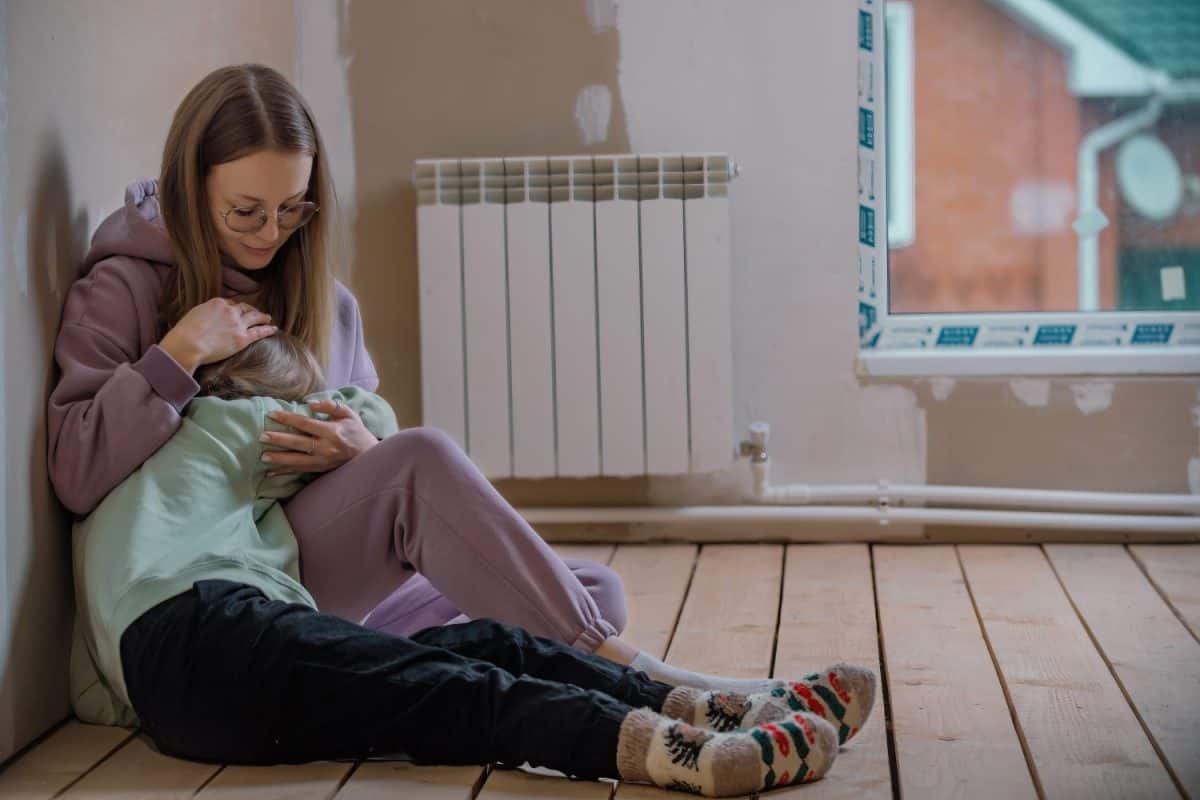
The lesson is that the boundary remains, but certain behaviors aren’t acceptable.
©olgaarmawir/Shutterstock.com
One important clarification is that co-regulation does not equal permissiveness. It’s not about letting behaviors slide or avoiding limits altogether. You can still hold clear, consistent boundaries; those are essential for children to feel safe and understand expectations. The difference is in how you hold those boundaries.
Instead of saying:
“Go to your room until you calm down.”
It becomes:
“I’m right here. We’re going to get through this together. And we still need to keep our bodies safe.”
In both cases, the boundary remains: certain behaviors aren’t acceptable. But in the second approach, the child isn’t left to figure out overwhelming emotions on their own. They’re supported through them. You’re not removing the limit; you’re changing the emotional experience around the limit.
What you’re really doing is combining structure with emotional support. You’re showing your child that big feelings are manageable, that they don’t have to face them alone, and that even when behavior needs to be corrected, the relationship remains steady and secure.
Over time, this approach teaches skills that go far beyond the immediate moment. You’re helping your child learn:
- How to recognize emotions
- How to recover from stress
- How to feel safe in relationships
And those are the foundations of emotional development. Dr. Thatcher says, “If there is one takeaway I would want parents to have, it is this: your child does not learn to regulate by being left alone in distress. They learn to regulate by being with you while they are in it.”
And eventually, that becomes something they can do on their own.
Because with enough repetition of that experience being supported, understood, and guided, those external supports gradually become internal skills. What begins as co-regulation slowly turns into self-regulation, something they can carry with them long after the moment has passed.
Moving Forward
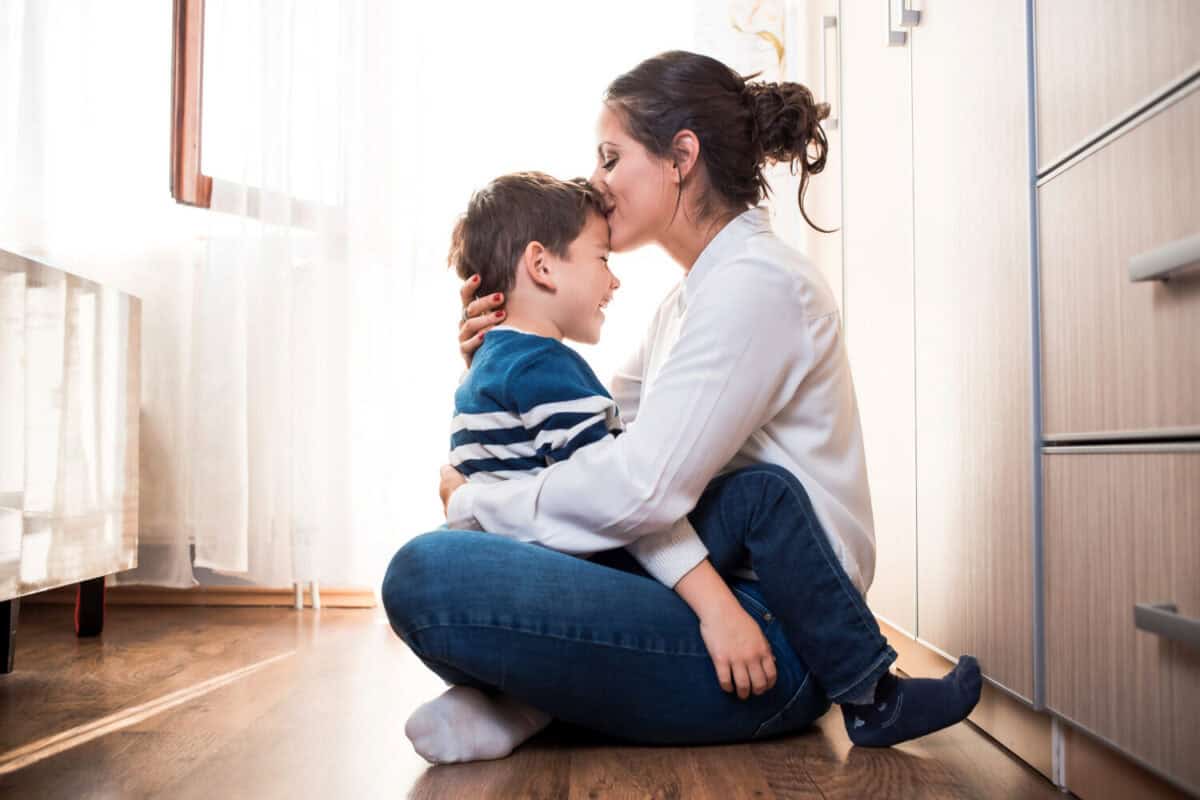
Co-regulation is a great way to set your child up for long-term success in handling their emotions.
©Stivog/Shutterstock.com
The shift away from traditional time-outs is not about removing discipline; it’s about rethinking what children actually need in moments of distress. When we understand that behavior is often the visible expression of an overwhelmed nervous system, the goal becomes less about stopping the behavior quickly and more about guiding the child through it safely.
Co-regulation offers a different lens. It asks parents to respond not with distance, but with presence; not with isolation, but with connection. This doesn’t mean abandoning boundaries or expectations. It means delivering them in a way that supports the child’s ability to eventually meet those expectations on their own.
Over time, these repeated experiences of being met with calm, consistency, and support begin to shape how a child responds to stress. They internalize what was once external. The steady voice becomes their inner voice. The calm presence becomes their own capacity to pause, reflect, and recover.
In that sense, co-regulation is not a short-term strategy; it’s a long-term investment. It builds resilience, strengthens relationships, and lays the groundwork for emotional independence.
Because ultimately, children don’t learn how to handle hard moments by being left alone in them. They learn by moving through those moments with someone who shows them how.
The image featured at the top of this post is ©fizkes/Shutterstock.com