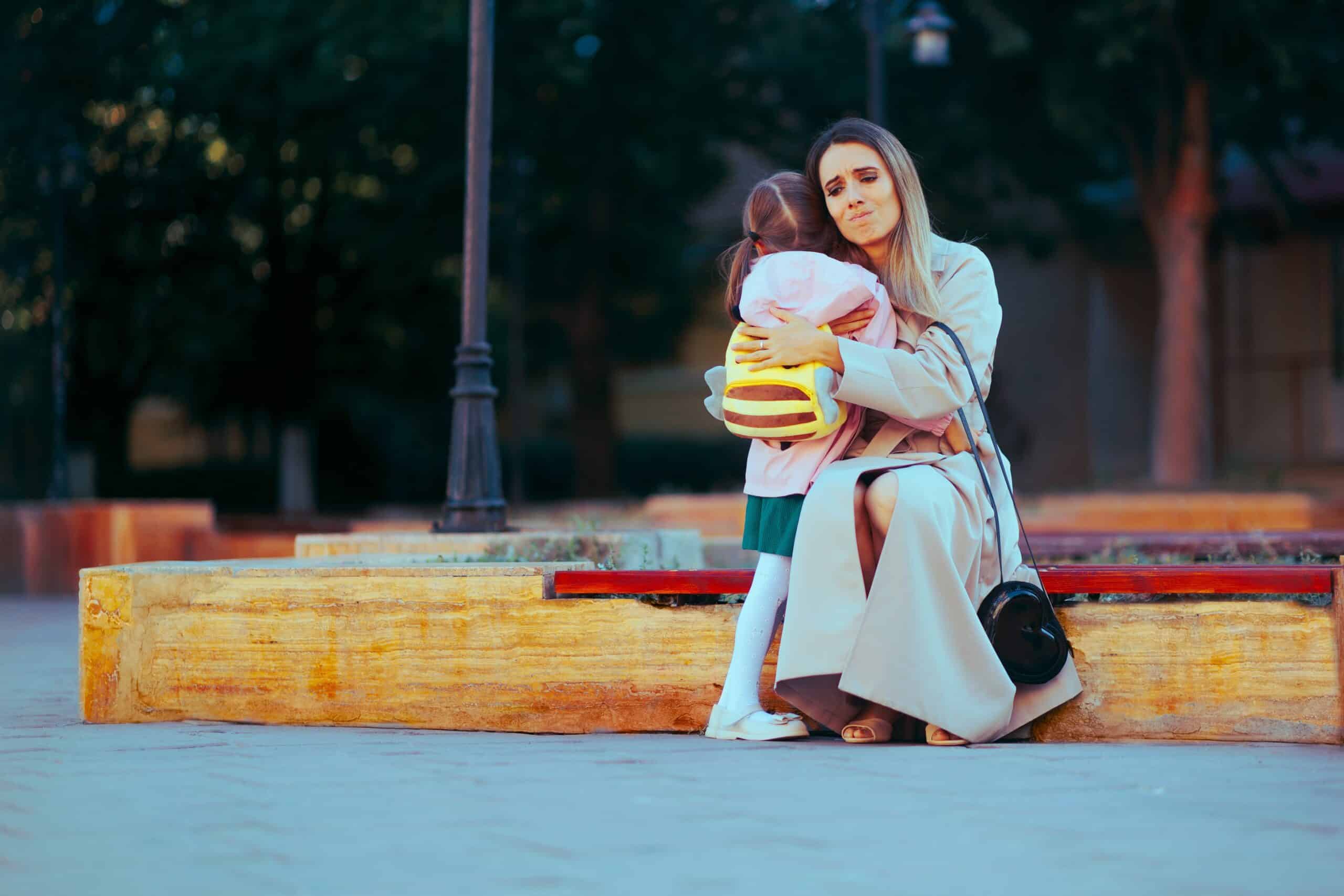
Many parents have been in this situation: You go to drop your child off at daycare or preschool, and they won't let go of you. Clinging and crying eventually lead to a full-on tantrum, and you require an extra teacher to pull your child off your body. By the time it's over, you're crying, too.
Separation anxiety can be a normal part of child development for children between the ages of eight months and three years. But how do you know if leaving your child will always be dramatic or if they might get over it one day?
What Is Separation Anxiety?
©MMD Creative/Shutterstock.com
Sophie Schauermann, MSW, LCSW, Co-Founder and CEO of Rooted Rhythm, says that separation anxiety is a baby or toddler's nervous system letting an adult know that they are a safe person, and that their little one isn't ok without them yet.
“In babies and toddlers, separation anxiety often looks like crying, clinging, reaching for a parent, refusing to be held by someone else, or becoming very upset when a caregiver leaves the room,” Schauermann says. “Toddlers, specifically, might throw tantrums at day care drop-offs, have trouble sleeping alone, or experience big emotions during transitions. Some children become loud and very distressed, while others might shut down and become unusually quiet.”
Separation anxiety usually starts in the second half of the first year of life, when babies develop the concept of object permanence. This means that even though you're not there, they still know you exist somewhere. The fear of a parent leaving usually peaks naturally around 10-18 months and completely disappears by age three. But it can come back as the result of a big life event, like a change in day care settings, a move, or a new sibling.

©DREAM INSPIRATION/Shutterstock.com
What Can Parents Do to Help a Child Experiencing Separation Anxiety?
Both of my children experienced separation anxiety when we moved them from day care to two-year-old preschool. Each of them cried for a full 15 minutes at every drop off for about six weeks. Their teachers always advised me to give them a hug and a kiss, tell them I would be back, and leave. Big, dramatic goodbyes can show the child that you don't think they can handle it, and maybe that you can't handle it either.
“The goal is to build enough safety so your child’s independence can grow. You can do this by creating predictable goodbye routines, like a hug and a clear message of return, like ‘I love you and I’ll be back after snack.' Keep goodbyes warm but brief. When you linger, your child’s nervous system might interpret your hesitation as the situation being something dangerous,” Schauermann says. “It also helps to regulate yourself as much as possible. If you’re feeling nervous or anxious, your child is likely to pick up on that.”
If your child still isn't calming down, you can try working up to the big goodbye by practicing smaller goodbyes throughout the day or on the weekends. Try telling them that you're going to another room in the house and that you'll be right back; then actually come back after two or three minutes. Work your way up to five or ten minutes at a time so that your child knows that you will be back.
Some kids also separate more easily if they have something to remind them of home. One of my children had a special stuffed animal that helped him over the hump, and both of them liked pacifiers, even if it was just for the first few minutes of each day. Sometimes, I would draw a heart on their hand and another heart on my own hand so they could look at it to remember throughout the day that I loved them and would be back.
How Do I Know If It's Separation Anxiety or Something Else?
Schauermann urges parents not to be too quick to “pathologize” their children, especially when it comes to something developmentally normal like separation anxiety. But, there are times when what looks like separation anxiety at first glance is actually something more complicated, like Generalized Anxiety Disorder or Panic Disorder.
©Nicoleta Ionescu/Shutterstock.com
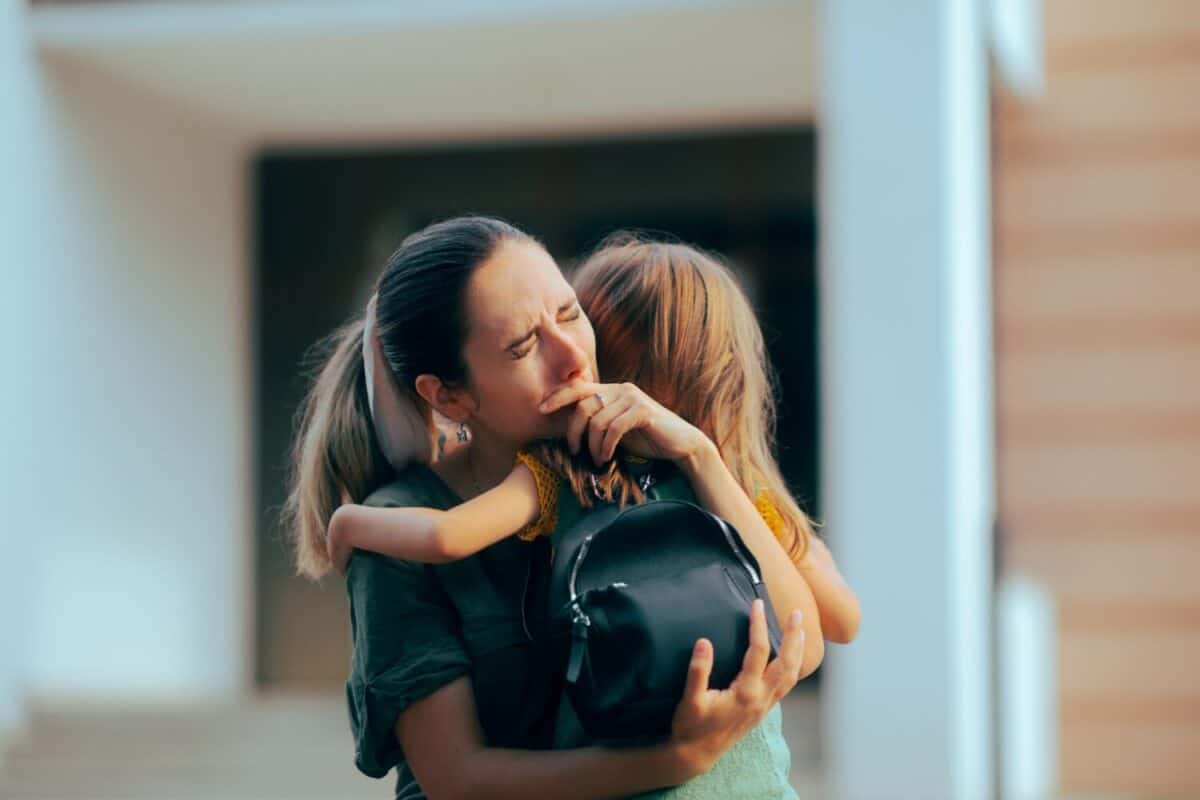
“You might want to consider support if their separation anxiety is intense, does not improve with support, or is interfering with daily life. Some examples of when to consider support are if your child is unable to attend childcare or school, becomes physically sick from the worry, or has panic-like distress,” she says. “If they refuse to sleep because of separation fears or the whole family’s routine revolves around avoiding separation and causes distress for everyone, those are some other examples you might consider (asking) for more help.”
Start by checking in with your childcare provider to make sure that your child isn't getting better soon after you leave. Sometimes children forget about their separation anxiety as soon as they become engaged in an activity or find a toy they really like. If their teacher is also concerned, talk to your pediatrician to evaluate further and recommend an appropriate provider or resources.
Further Reading for Parents
Child Mind Institute has a great video about separation anxiety and further reading to help you know what to look for. You can also find webinars and training at HealthyChildren.org.
Remember, you're not the only family to experience separation anxiety. There are people you can turn to for help. And many children outgrow separation anxiety — some at different paces than others.
The image featured at the top of this post is ©Nicoleta Ionescu/Shutterstock.com