
Parents with older children will often warn newbie moms to enjoy every hug your toddler gives you because one day they'll grow up to be a testy tween who may barely talk to you. (Don't worry, it's normal.) But your child? They're snuggly — and showing no signs of stopping. So when does closeness become too much? If your kiddo is constantly close to you, you might have a “Velcro” child. Here’s what it means, and how you can support their need for connection while gently helping them build their independence.
What Is a Velcro Kid?
©fizkes/Shutterstock.com
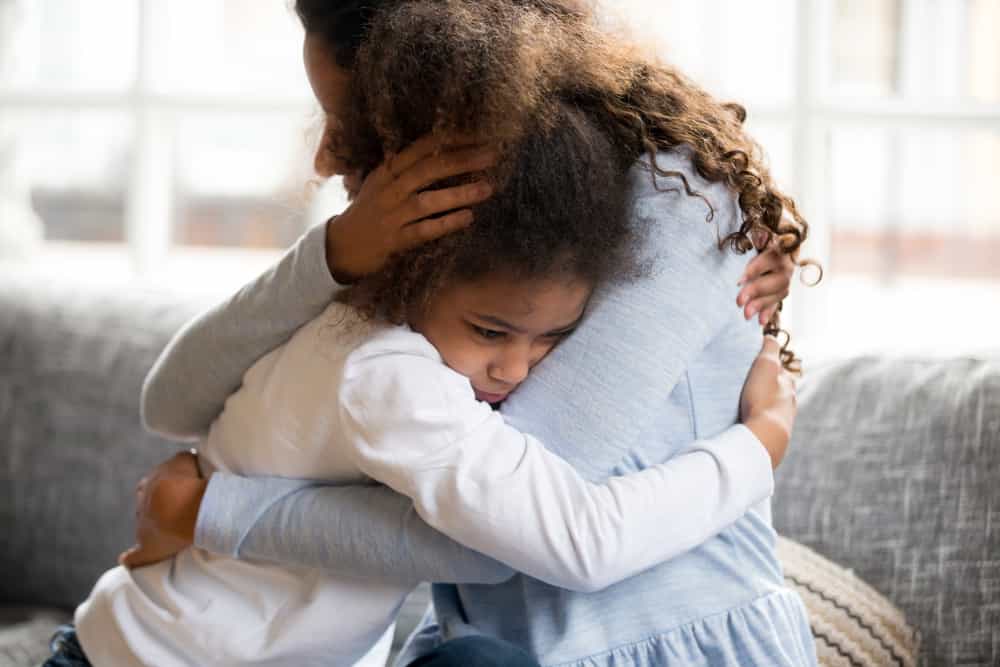
When you take your child to school, you’ve noticed that some kids happily run towards their classroom. Your child? Well, they’re glued to your leg. And in an overly simplified way, that’s what a Velcro child is. (And no, it’s not a clinical term.) “A Velcro Kid is a term that refers to a child who seeks a high level of proximity and reassurance from a caregiver,” explains Dr. Ari Yares, a licensed psychologist.
But physical closeness isn’t the only thing children with this temperament crave. “This child has a strong need for both physical or emotional closeness to a caregiver,” explains Dr. Lori Bohn, a Board-Certified Psychiatric-Mental Health Nurse Practitioner and Medical Director at Voyager Recovery Center.
So how can you tell the difference between a child who is quick to give you a kiss and one who is stuck to you like Saran Wrap? It all comes down to how your child reacts if they can’t be close to you. “The difference between a Velcro child and a ‘close’ child is based on the amount of distress the child will show when the caregiver is not right next to them,” explains Dr. Dakari Quimby, MA, PsyD, Clinical Advisor at New Jersey Behavioral Health Center and Clinical Assistant Professor of Psychiatry at the University of Southern California. “A close child is able to play independently, knowing that their parent is right there; however, a Velcro child cannot, even with their parent in the same room and in plain sight.”
©OlhaTsiplyar/Shutterstock.com
Are Velcro Kids Typically Clingy As Babies?
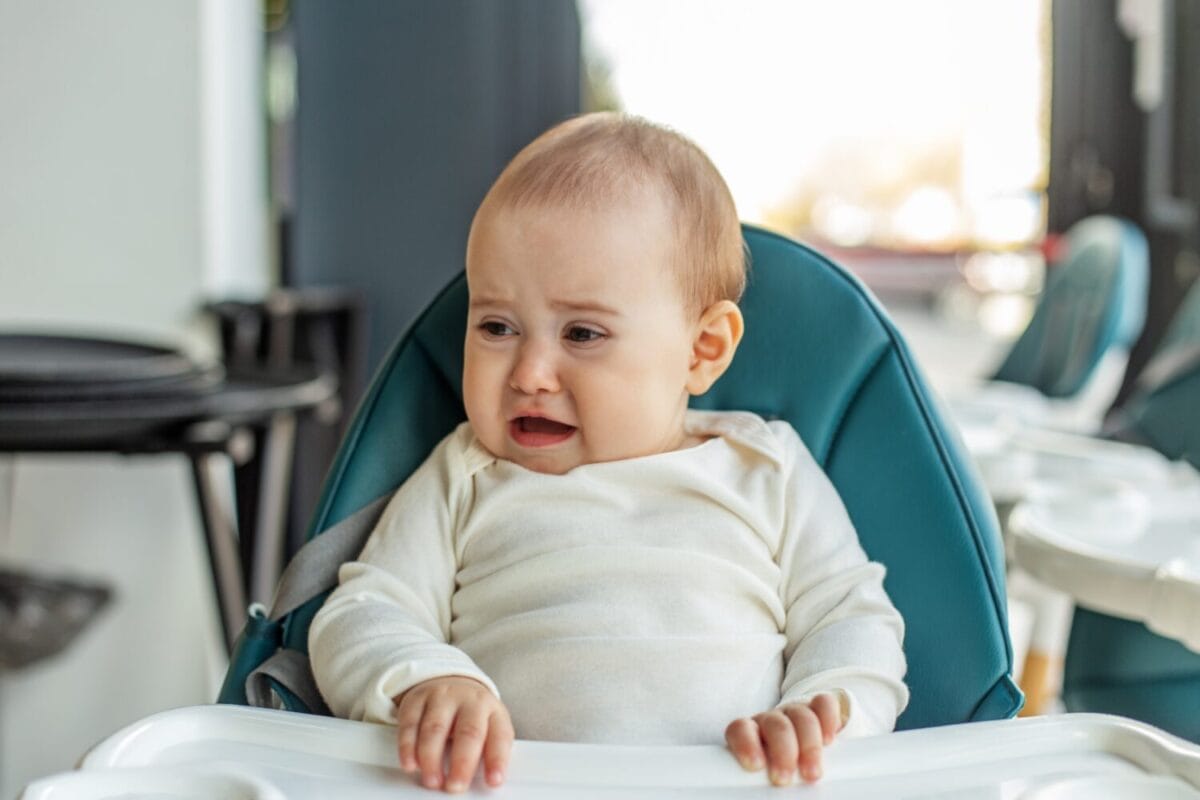
From the moment your baby was born, they soothed instantly when they were sleeping on your chest. While many babies prefer Mom’s cuddles to being in a cold crib, signs that your baby might be more prone to Velcro tendencies often start early. “Velcro Kids tend to be more difficult babies than average and have a low tolerance for stimulation, with a strong need for rhythmic soothing and physical closeness,” says Quimby. “They often show greater intensity of reaction through the stranger anxiety period and display a very strong preference for one particular caregiver from an early point in their lives.”
Thing is, a child showing Velcro-like tendencies can’t help it — it’s just who they are. “Children who are more connection-seeking, like a Velcro child, are often also highly attuned, empathetic, and relational,” says Yares. And that can be a huge strength over the course of their lives, even if it might not feel like it in the moment.
What Are The Signs That Your Child Could Be a Velcro Kid?
A Velcro child doesn’t just enjoy closeness — they often rely on it to feel safe and regulated. Christina F. Chick, PhD, a Licensed Clinical Psychologist and Founder and Clinical Director of Minds Matter Psychotherapy, says that Velcro children often display signs to let their caregivers know when they might be struggling. “Your child may look more anxious, wary, or reassurance-seeking,” she says. And if your child is frustrated by transitions, becomes easily overwhelmed — especially when tired or stressed— that could also be an indication that they need you more than other kids might.
“Additional ways that parents can tell are if their child displays panic-like distress at separation, a refusal to sleep alone, physical complaints around separation, and school drop-off struggles,” Chick adds.
What Makes a Child More Likely to Be a Velcro Kid?
Many factors can cause your child to cling to you. Some children are naturally more sensitive, which makes closeness something that they need in order to self-regulate, explains Chick. “Some children are biologically more cautious, sensitive, or anxiety-prone, and that can shape how strongly they respond to separation,” she says.
Although temperament is an important factor in how clingy a child is, their environment also matters. “Some children are wired to be more cautious or sensitive, and those traits interact with what’s happening around them,” says Yares. From changes at school, family stress, or even subtle shifts in routine, these can all affect your child’s need for extra bonding.
Trauma can also affect your child’s disposition, but unlike typical developmental clinginess or temperament-based sensitivity, the closeness your child needs in that instance is often more aggressive, intense in nature, and could start suddenly. “Trauma-related clinginess is more likely to come with hypervigilance, regression, irritability, sleep disruption, nightmares, or a sudden change in behavior after a stressful event,” says Chick, who explains that the intensity of your child’s behavior might be stronger, but it’s often tied to fear or safety concerns.
“In cases of trauma, the need for proximity is often driven by fear, unpredictability, or a general sense of increased danger,” adds Bohn. “It’s often accompanied by other symptoms like hyperarousal, sleeping problems, or regression. A non-traumatized child who prefers proximity is often seeking comfort in a more normative manner, even though they can also exhibit curiosity and independence.”
Yares notes that most clingy behavior is not trauma-driven. “It’s more often about regulation and reassurance than anything else,” she says.
©PeopleImages/Shutterstock.com
How Can Parents Help Ease The Separation Process?
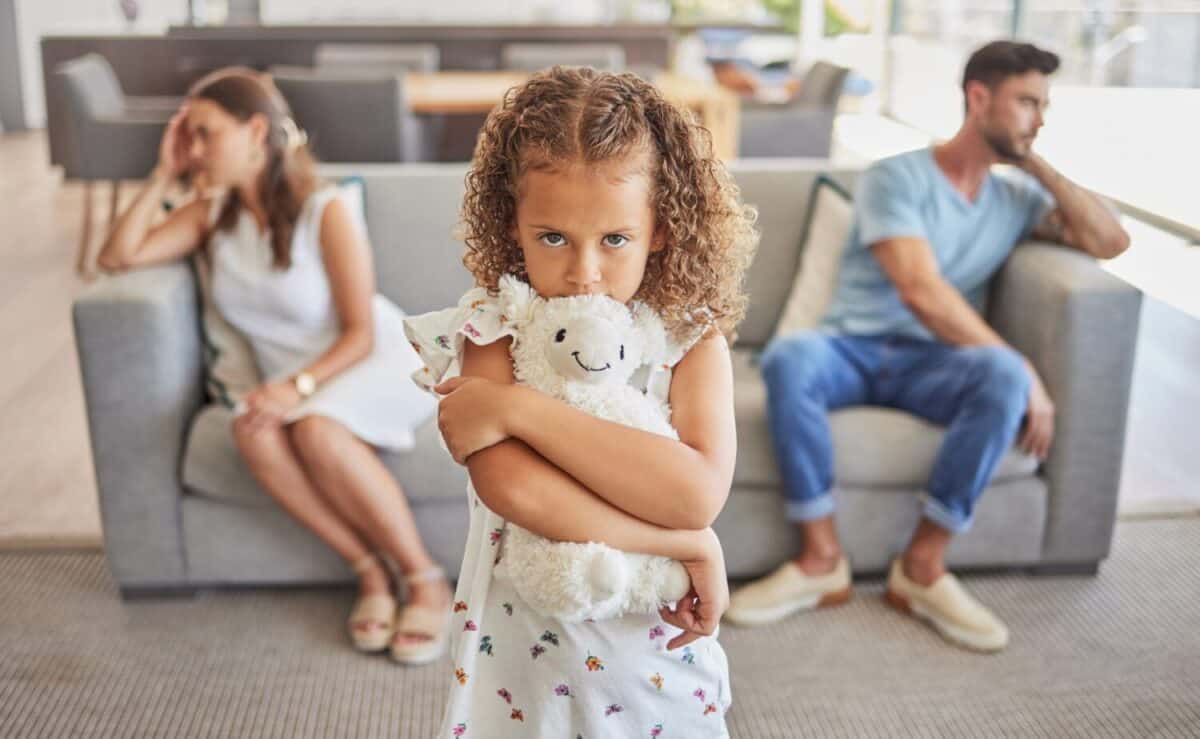
Sure, all those extra hugs are sweet, but there may come a time when your child’s behavior could interfere with their development. “Clinginess becomes more of a concern when it interferes with a child’s ability to function — going to school, separating for age-appropriate activities, or engaging with peers,” says Yares. “It’s less about how attached a child is, and more about whether they can gradually tolerate space.”
But if your child becomes very distressed when they are left with a trusted and safe caregiver, or if the behavior increases as your child nears school age, speak to your child’s pediatrician. They may recommend speaking with a child psychologist, particularly if the clinginess is negatively impacting your child's ability to sleep, eat, or learn.
“Addressing the problem proactively will provide the best opportunity for preventing other forms of greater anxiety from developing down the road. For parents, it helps to think in terms of expanding a child’s comfort zone rather than forcing independence,” says Yares. That means having predictable routines, clear transitions, and small, supported separations. And it’s okay to gently set boundaries around your own need for physical space — just reassure your child that you’re right there for them if they need you. Even giving them a lovey with your scent can offer reassurance and bridge the gap while you’re away.
Ultimately, what looks like clinginess is often a child needing to know if they’ll be okay if they’re separated from you. “They’re basically asking, in the only way they know how, ‘Am I safe enough to move away?’ says Yares. “The work is helping them gradually answer, ‘Yes.’”
The image featured at the top of this post is ©Inside Creative House/Shutterstock.com