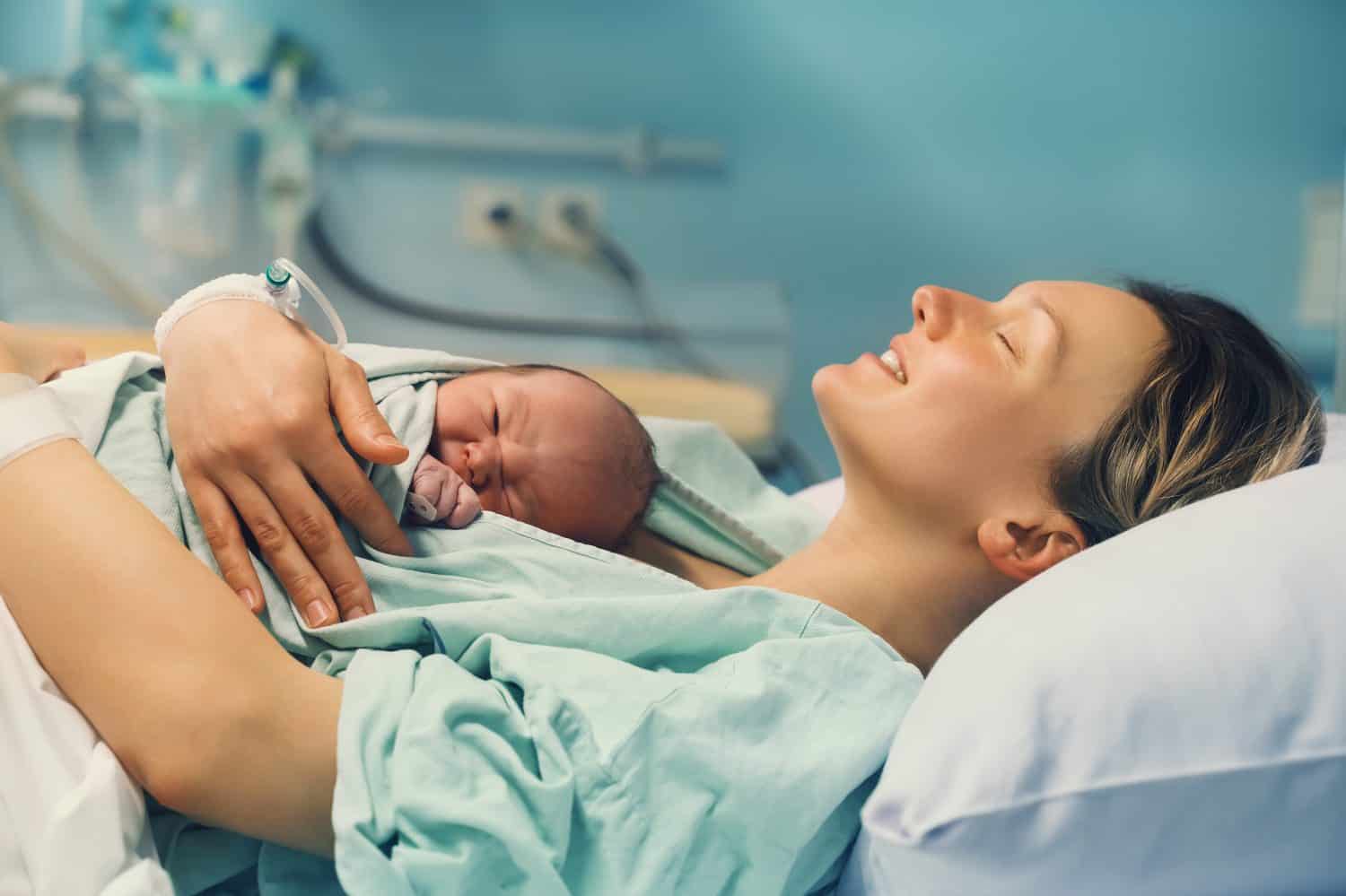
Touch is one of the strongest of our five senses. For a woman, this sense is heightened during certain times in her life. It's poetic to know that during ovulation, the sensation of touch is heightened by rising estrogen levels. A woman also becomes more sensitive to touch after having a baby. For a new mom, skin-to-skin contact is incredibly powerful, and the same is true of her newborn.
There's both science and emotion behind why this contact is so essential for mom and dad. To discover more about the magic that happens between parents and their new baby, we speak with Margot Del Rey, a Los Angeles–based Ayurvedic Postpartum Doula, Certified Lactation Educator Counselor, and Yoga Instructor.
Why Is Contact Immediately After Birth So Important?
©Oksana Shufrych/Shutterstock.com
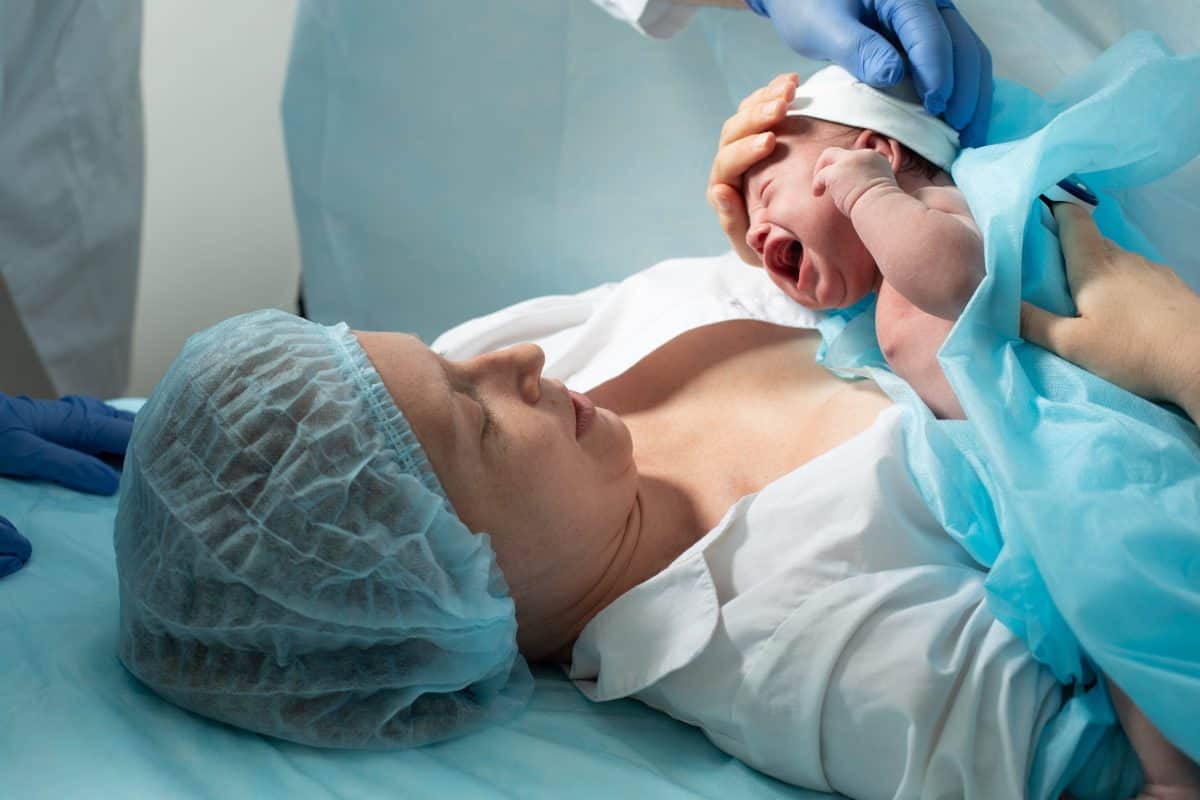
Once they have ensured the baby is healthy, the first thing nurses do after a birth is give the baby to the mother. This first contact is crucial for both mother and child, and is known as “kangaroo care.” It's especially beneficial for babies born prematurely or with low birth weight and evokes an almost immediate biological response.
“Skin-to-skin is one of the most instinctive and powerful things we can offer a newborn. It helps regulate baby’s temperature, heart rate, breathing, and blood sugar. It supports the first latch and milk production. And just as importantly, it tells the baby: you are safe, you are held, you are home,” says Del Rey. “For the mother, it releases oxytocin, the hormone of love, bonding, and healing, which supports the uterus, breastfeeding, and emotional connection in those first sacred moments.”
This initial contact is universal, as it's widely believed to be one of the most important moments of a mother's life. For her baby, it's a moment of pure connection, reassurance, and stability. From both a physical and an emotional standpoint, skin-to-skin contact is a source of healing and comfort.
This Healing Continues Even After Birth
Even after that initial contact, newborn babies continue to benefit from skin-to-skin contact. “Skin-to-skin is not only for the first hour after birth. It continues to calm the nervous system, improve sleep, support digestion, and deepen attachment for weeks and months,” Del Rey shares with us.
“Anytime a baby is unsettled, overstimulated, or simply needing closeness, skin-to-skin is like returning to their natural baseline. It works for big kids too! A bath together, a big hug, or falling asleep together is a great way to regulate both nervous systems.”
©NDAB Creativity/Shutterstock.com
She adds that skin-to-skin contact is both emotional and biological. It regulates stress hormones, stabilizes vital signs, supports brain development, and organizes the newborn nervous system. The benefits for a parent are equally impressive, helping to reduce anxiety, support mood, and create a profound sense of calm and purpose.
“In many ways, it is one of the first forms of mutual healing between parent and child,” says Del Rey.
Skin-To-Skin Contact Is Beneficial For Dads, Too
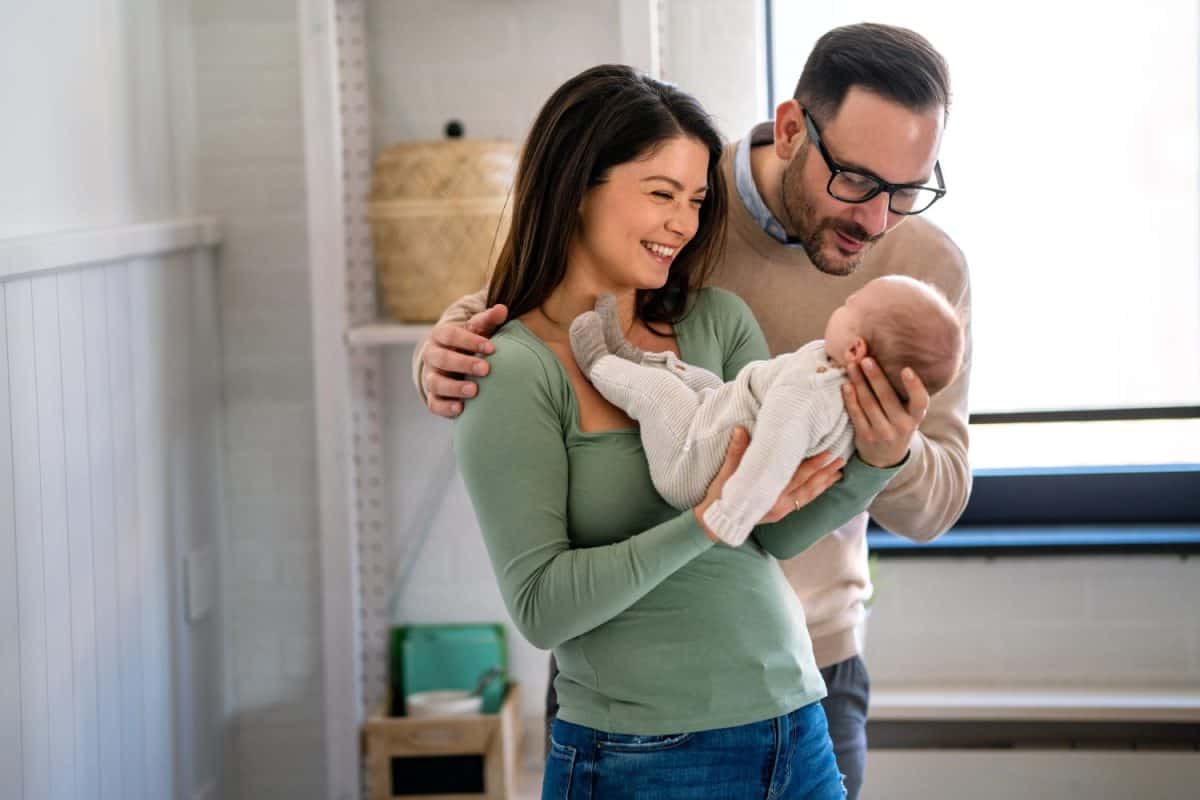
More maternity rooms are now including dads and non-birthing partners in initial skin-to-skin contact. It's surprisingly beneficial on a biological level, even for dads. Studies show that dads who hold their newborn immediately after birth have a significant reduction in physiological stress responses, including cortisol and blood pressure. This connection affirms the bond between dad and baby and encourages feelings of confidence and contentment.
“When a father holds his baby skin-to-skin, his body also releases oxytocin. His heartbeat slows. His nervous system softens,” Del Rey also explains. “This is often the moment many fathers feel the reality of becoming a parent: not as an idea, but as a physical, emotional experience. It creates confidence, tenderness, and a very real sense of belonging in the relationship with their baby.”
Using Skin-To-Skin Contact Beyond Simply Holding
While holding your baby is the most well-known form of skin-to-skin contact, Del Rey explains that it can be done in many ways. “Breastfeeding is skin-to-skin. Babywearing is skin-to-skin. Napping together safely nearby, bathing together, gentle touch, hand-holding as they grow, all of this continues the language of closeness. Connection evolves, but the message remains the same: I’m here. You’re safe. We belong to each other,” she says.

In truth, there is no such thing as too much contact between you and your baby. The stigma of “spoiling” a child or giving them too much attention as they grow is outdated. And, in some ways, according to Del Rey, a dangerous notion for new parents. “The idea of ‘spoiling' a baby with love is more cultural than biological, and it can create unnecessary fear for parents. What babies truly need is warmth, responsiveness, and presence. And from that safety, they naturally grow toward confidence and autonomy,” she says.
Del Rey adds that babies are not manipulative; they are communicating their needs. By responding with closeness, parents ensure secure attachment, emotional resilience, and long-term independence. As your baby grows, these are the things that will comfort and shape them for years to come.
The image featured at the top of this post is ©Natalia Deriabina/Shutterstock.com