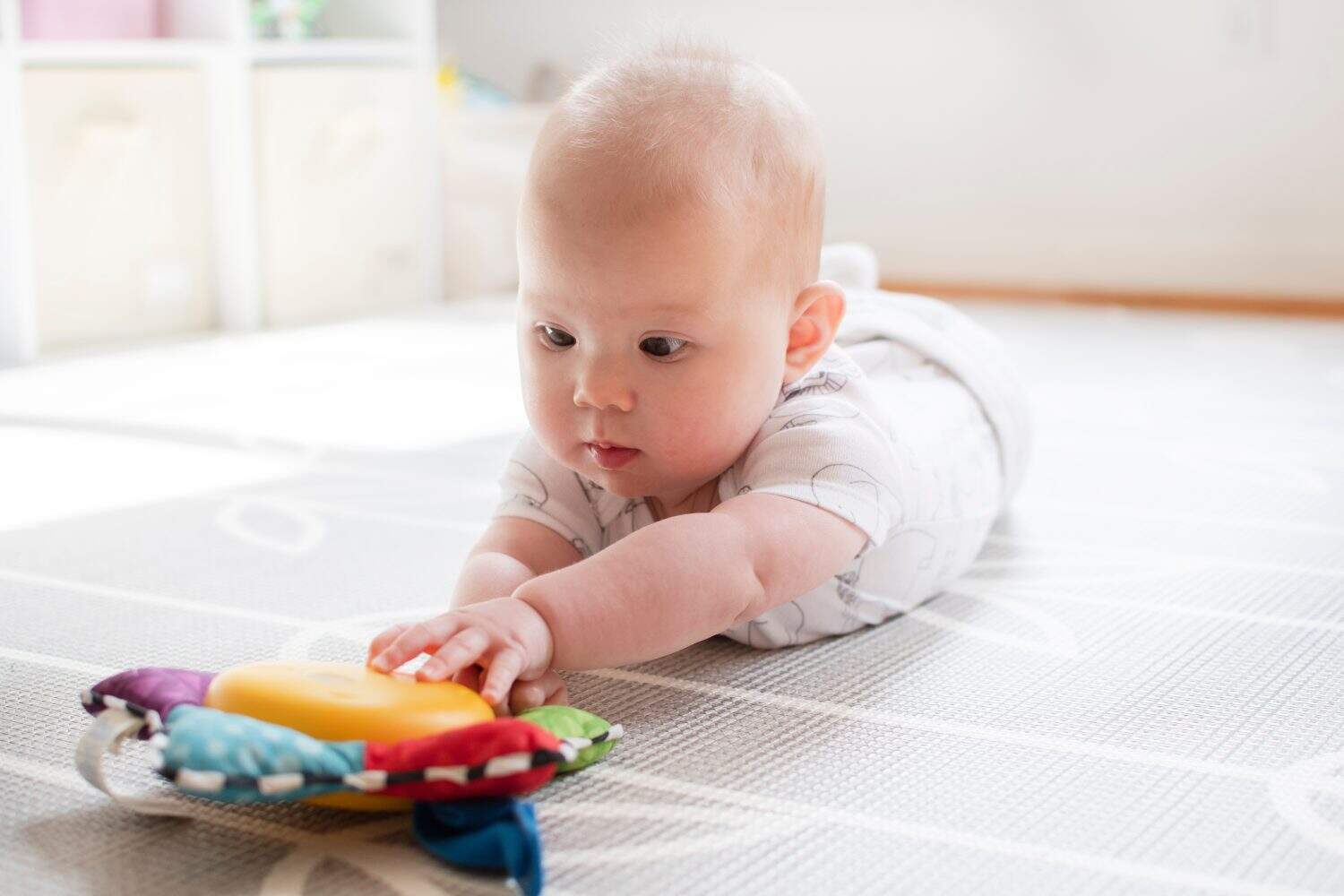
The first three years of a baby's life are essential for brain development. Parents support these years in many ways, from interactive games to STEM toys. All offer benefits crucial to learning, but there's one more tool parents can add to their arsenal: music. Studies show that music can improve a baby's cognitive and motor skills, even in the womb. That's right, your unborn baby can actually benefit from listening to music with you.
As a child ages, music continues to support social, emotional, and language development. One person who knows all about this and has seen it work in real time is Caley Rose. We speak with the Billboard charting singer, songwriter, and founder of Confident Concerts, to learn more.
How Does Music Affect Babies in the Womb?
It's no secret that playing music for your baby can be beneficial. Countless studies have shown that it stimulates their developing brains, supports speech and language as they grow, and improves motor function and cognitive recognition. While some believe it can actually make your baby smarter, there's little factual evidence to support this. However, its benefits far outweigh inconclusive studies. The reason for this is more sentimental than you might think.
“Many scientific studies have proven that babies benefit from hearing music in the womb. They heard the rhythm of their mother’s heartbeat as early as in utero, so rhythm is one of the earliest vibrations they experience!” explains Rose.

©New Africa/Shutterstock.com
Interestingly, calm, steady music affects babies in ways similar to how it affects adults. “Music with simple melodies, soothing patterns, and low tempos, around 60-80 bpm, is the most helpful,” she says.
“These sounds will then mimic the sounds they are already hearing in utero: blood rushing, heart beating, and breathing. Classical music is especially helpful for fetal brain development for similar reasons: repetitive, predictable melodic patterns and calming rhythms in sync with the mother’s internal rhythms.”
Although there are many benefits to playing music for your baby, you have to be cautious as well. Rose warns parents to avoid loud music with high frequencies. “Babies are protected a bit by the amniotic fluid, but they can feel stress and get overstimulated in utero,” she says. Music continues to show benefits into toddlerhood, and some studies show this is when it becomes an even more powerful tool.
A Personal Story of Motherhood and Music
“I wrote my song ‘Brave Ones,' — the long-awaited release of which happens Jan 9th — when my baby, Fitz, was in utero,” Rose shares, opening up about her musical motherhood journey. “I then performed 22 Confident Concerts assemblies while I was 9 months pregnant, so my baby definitely heard the song tons of times! This song is often the live audience’s favorite song, so he probably felt the positive response to it as well! He would kick a ton when he heard it while in my belly.”
What she shares next is nothing short of incredible and a true testament to the power of music from the moment a baby can hear. “When he was born, I noticed him turning his head to ‘Brave Ones' more than other songs. It was incredible to witness,” she recalls.
“I feel passionately about the music my children listen to, imparting empowering and self-affirming messages to them, because music infiltrates our subconscious on such a deep level, informing our sense of self. ‘Brave Ones' is chock full of affirmations, so my son and daughter are growing up learning that they are strong, can get through hard times, and that they’re ‘one of the Brave Ones!”
Music Activates Multiple Parts of the Brain At Once
Neuroplasticity is at its peak in newborn and toddler brains during this stage. Every experience, especially music, shapes brain architecture. Music activates more neural systems simultaneously than any other activity. Therefore, music benefits the development of the brain in other areas, Rose tells us.
“It also aids language development, because music and language share neural pathways. When babies and toddlers recognize melodic and rhythmic patterns in music, this lays a strong foundation for vocabulary, reading ability, recognizing speech patterns, and other communication skills.”
Music also benefits toddlers by helping regulate emotional circuits. It soothes the nervous system, giving them breathing and movement strategies to calm or energize themselves, as needed. “You can also use music to energize or get wiggles and giggles out, by working dance breaks into your day,” she says.
“This can shift a mood from less-than-ideal to playful and fun! In our Confident Concerts assemblies, I see this transformation happen immediately when we shift into empowering songs. Moods lift, bodies engage, and kids who were having a hard time focusing before suddenly become completely engaged.”

©MIA Studio/Shutterstock.com
During her Confident Concerts assembly, Rose uses this method with her younger students. “I get students’ wiggles out with fast-paced, engaging music, but always calm students down with a deep breathing exercise and an affirmation before releasing them back to their teachers! Educators always appreciate this calming shift in energy,” she shares.
Guiding children with a rhythmic mantra, such as “Breathe in slowly. Breathe in deeply. It’s time to calm our body. It’s time to calm our body,” helps slow heart rates down when sung softly and steadily. “Building songs into our routines helps children, as predictability can help them to shift states. Music is felt deeply in our bodies long before children can verbalize their feelings, so it helps them to connect emotionally as well,” Rose says.
Music Can Be Especially Helpful for Neurodivergent Children
Rose also explains how music benefits young neurodivergent minds. In some cases, especially with nonverbal children or those who struggle with communication, music becomes their primary means of communication.
“Music is a force that is felt deeply and transcends words, so feeling the rhythm and melody of a song can supersede the need for intelligible words in students who are special needs. Music can build a bridge between parents and children when it comes to neurodivergent learners, because it can unite without relying on language,” she says.

©Antonio_Diaz / Getty Images
She adds that many neurodivergent learners process and express emotions differently. Therefore, the external stimulus of music will enable children and parents to connect through something that feels safe and predictable.
“The empowerment of an anthem is felt, even if the lyrics aren’t understood. This unites divergent learners as it unites different cultures, singing, humming, or moving to a song because it feels good, safe, calming, or empowering,” Rose says.
Teaching Music Is Equally Beneficial
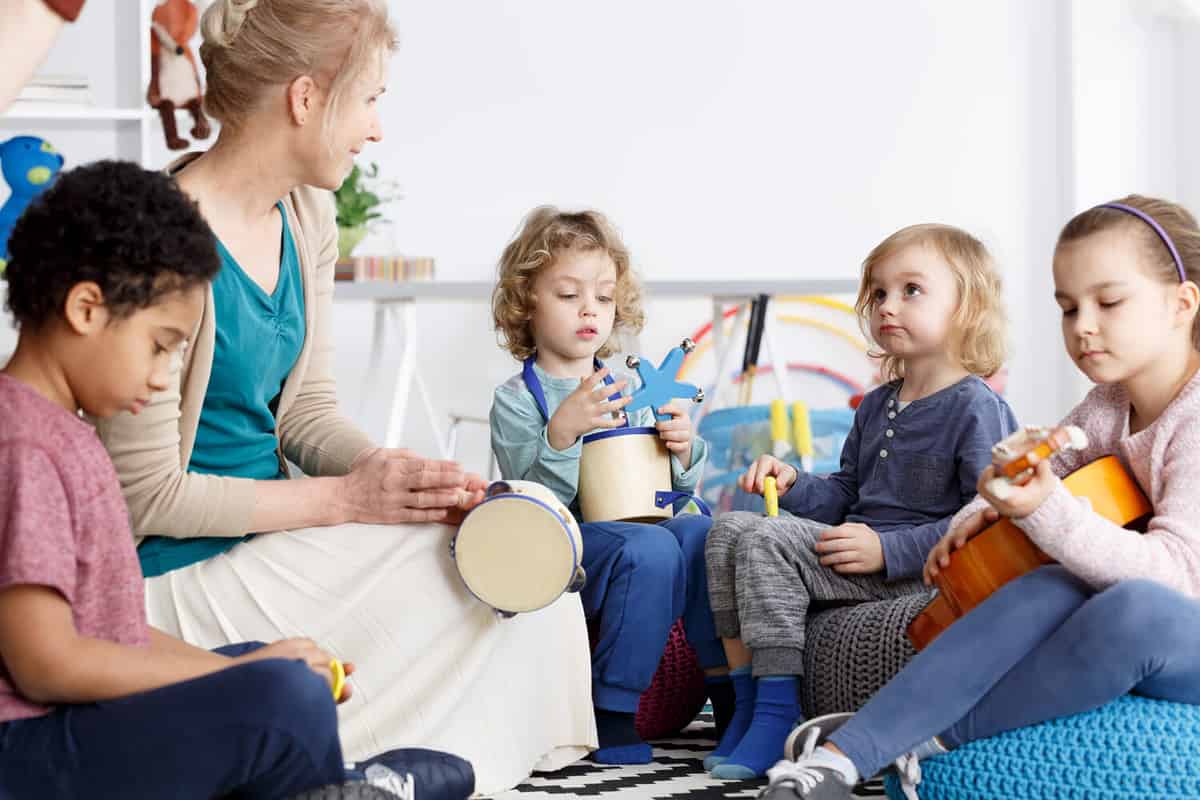
Rose hasn't only witnessed how music profoundly affects babies; she has also observed how learning it can open up a new world for them. “Teaching children to play instruments at a young age is especially valuable, as neuroplasticity is at its peak early in life. Singing from an early age helps children express emotion and unleash their own voice. This helps to build self-confidence,” she says.
“I’ve witnessed children who feel shy find their voice through my empowering music, watching them sing out the words ‘I’m one of the Brave Ones' along with the affirmations I’ve set to music. It transforms them.”
While confidence is not typically a factor we think about in brain development, it's a crucial building block. “When kids hear their peers bravely singing along to music, it inspires them to be brave. During our Confident Concerts assemblies, I encourage students who don’t feel comfortable singing out loud to start small by speaking out loud as quietly as they need to. This allows them to build this skill little by little,” Rose explains.
©Ground Picture/Shutterstock.com
“I often bring the microphone around the audience and ask if they’d like to speak their name into the microphone, even if they’re not yet ready to sing out. These small ‘brave acts,' as we call them in our Confident Concerts assemblies, grow into bigger acts of courage. First in the assembly, then in their day, and eventually rippling outward into every area of their lives. These small moments allow them to find and unleash their voice through music.”
Music Reaches Children on an Emotional Level
Rose tells us that music allows children of all ages to express themselves in a way that feels safe, uniting us in a safe space of rhythm and melody where we no longer feel alone. This is especially helpful for toddlers, who are just learning how to express their emotions.
“During one assembly, the music I played for students spurred a number of students sharing their own stories of being bullied and overcoming struggle, so I brought a microphone and mic stand into the center of the room, and invited student after student to share their stories,” Rose tells us.
“It united them, and it helped them to let these stories out. My songs gave them that safe space to share and support each other’s stories of resilience.” At a young age, tremendous acts of confidence such as this can help shape and often reframe a child's beliefs.
How Can You Incorporate Music Into Your Baby's Life?
As a parent herself, Rose has plenty of experience using music in her family's day-to-day life. “One way parents can incorporate this into their daily lives: Make simple lessons more memorable by setting them to rhyme and rhythm,” she says.
Rose mentions how they set empowering affirmations to rhythm and rhyme in her program. “Try speaking sentences in a chant, and use simple rhymes at the end of each line. Take the pressure off, because children benefit from simplicity, making important memories!”

©Tomsickova Tatyana/Shutterstock.com
She says she uses a combination of creative songs and rhythm with her own children, even to communicate serious messages. “Here’s one I use with my kids — I have a five and a 1-year-old — for body safety: ‘Hey! That’s not okay! This is my body, and I don't want to be treated that way!' Or for safety in parking lots: ‘When I’m getting your brother in the car, stay exactly where you are. Don’t run away, don’t hide or play, just stay exactly where you are.”
Parents can utilize music even before their babies are born. A pair of headphones or sitting near a speaker with softly playing music are equally beneficial. Classical music is the most common genre for babies, but studies show that any music with a steady rhythm, a constant beat, and soft sounds can calm a developing baby. Some believe that children can recognize songs they heard in the womb, making the music-brain connection that much more sentimental.
“Sometimes, it’s not even the spoken stories that reveal the impact. It’s the quiet moments: A child walking up to me after the assembly and simply wrapping their arms around me. No words, just a hug. Those moments remind me that transformation isn’t always verbal. Music transcends language, and so does a grateful embrace.”
Caley Rose, Singer, Songwriter, and Founder of Confident Concerts
The image featured at the top of this post is ©Ana Sha/Shutterstock.com