
It really doesn’t take much to tick off a toddler. Cut their PB&J diagonally instead of vertically, and you’d better brace yourself for a Stage 5 meltdown. Sure, life with a toddler is always entertaining, but it’s often a rollercoaster of intense emotions — for both of you. But why do toddlers have such big feelings? Let’s break it down before you have one of your own.
Do Toddlers Really Have Big Feelings?
©Anna Kraynova/Shutterstock.com
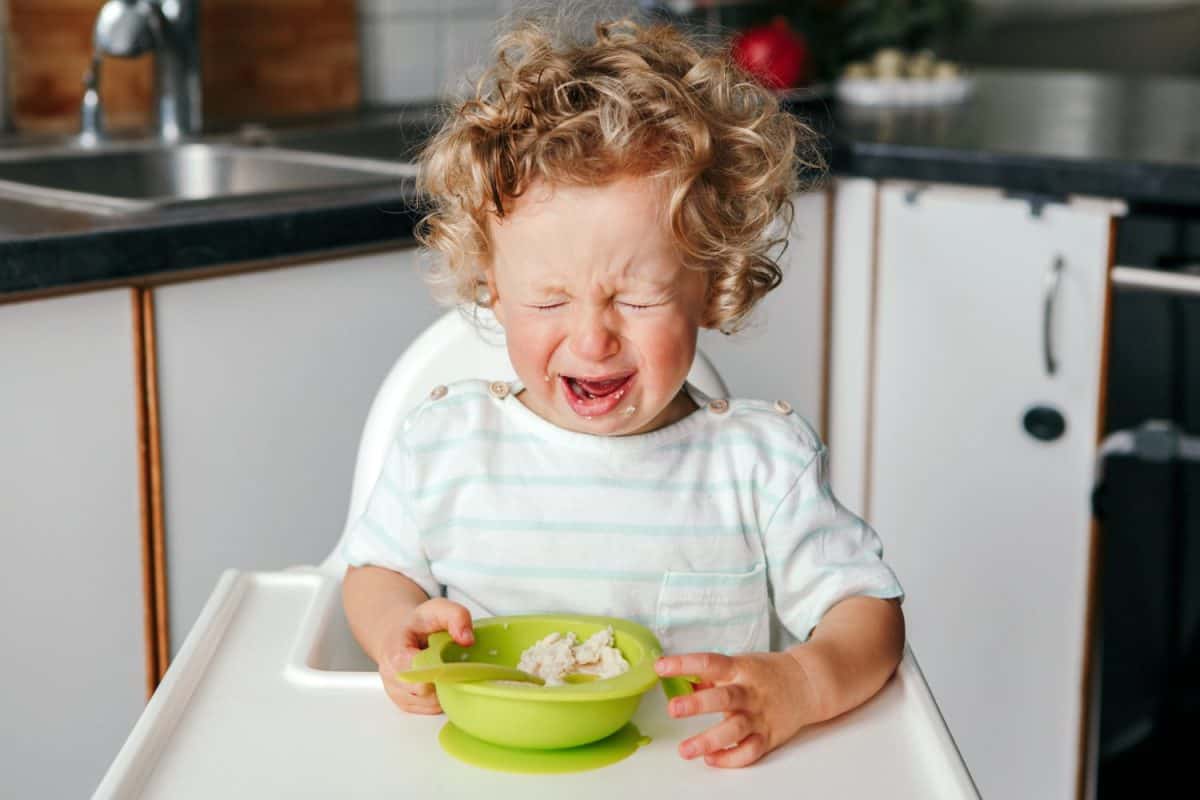
To say that toddlers are expressive with their emotions is a total understatement. They have strong feelings about almost anything, and they aren’t afraid to unleash them. “Many healthy toddlers feel deeply and strongly, which might be thought of as more raw, real, and unfiltered,” says Sandra Wartski, Psy.D., a licensed psychologist. “It’s normal and natural.”
But are their feelings really more intense than kids of other ages? It depends, according to Judit Merayo Barredo, a clinical psychologist. “It’s not that their feelings are bigger, but because their capacity for emotional regulation is non-existent,” she explains. “They are navigating a surge of new emotions and language development simultaneously, which leads to intense frustration and expressive crises.”
And that can be a lot for a toddler (who might still be mastering their sippy cup skills) to handle. “As children age, they begin to learn more about the ways of the world and the need/expectation to manage feelings more adequately,” says Wartski. “However, toddlers are just at the beginning stages of understanding and learning about these intense interoceptive sensations they are experiencing.”
What Big Feelings Do Toddlers Typically Express and Why?
Toddlers don’t have a large repertoire of emotions, but what they lack in variety they certainly make up for in intensity. Merayo Barredo explains that the core feelings for toddlers are rage, intense frustration, fear (especially separation anxiety), and joy. “These are often rooted in a clash between their desire for autonomy and their physical limits,” she says. Toddlers typically feel sadness and happiness, too, as well as developing emotions like jealousy and disappointment.
Toddlers often have very real reasons for unleashing their emotions, even if you don’t always understand them. “They have big feelings due to physical discomfort, being overstimulated or overwhelmed, unable to communicate, lack of predictability or consistency from caregivers, and stress,” explains Laura Todd, LPCC, a licensed professional clinical counselor and an Infant/Early Childhood Mental Health Specialist. “It’s the highest of highs and the lowest of lows.”

©Sharomka/Shutterstock.com
But Why Are Toddler Feelings So Overpowering?
Even though it might not seem like it when your toddler tosses a toy at their baby brother’s head, toddlers do have a reason for their outbursts, even if you don’t understand it in the moment. “They’re caused primarily by unmet needs — such as hunger, lack of sleep, overstimulation — or a perceived loss of control,” Mareyo Barredo continues. “A tantrum over a red cup is often a desperate plea for control over something in their small world.”
“Toddlers have a range of feelings, from incredibly excited to devastatingly disappointed,” Wartski says. They’re newly experiencing more nuanced sensations, like disappointment, jealousy, anticipation, and anxiety. “They often don't have fine-tuned words for these sensations, but that does not mean the sensations of the emotions aren't there,” she adds.
At the end of the day, it all comes down to regulation. “The ability to regulate and manage emotions comes from the prefrontal cortex, which hasn't really developed by this point,” says Todd. “Toddlers have an amygdala that is more developed, the emotional center, and they are now feeling all these feelings, but an underdeveloped prefrontal cortex that can't process, express, or regulate these emotions.”
What Can Parents Do to Help Their Toddlers Feel Seen?
Your toddler starts screaming because their cookie has fewer chocolate chips in it than the one you gave your older child. (And you get it — no one wants that cookie.) That’s why validating and reflecting back their feelings is the first step in tackling those tantrums.
“You can say something like, ‘I can tell you’re really sad about having to leave the park,’ or I can see you’re so frustrated that the toy broke,” Wartski advises. “These statements offer validation in calm, connected ways without trying to deny a feeling or over-control a behavior.”
Although it’s important to honor their emotions, that doesn’t mean that kicking you in the leg is okay. “Parents will have more success with statements like, ‘I know you’re angry at your brother, but hitting him is not ok,’ rather than ‘Stop that right now,’” says Wartski. And if your child is pushing boundaries, it’s a good idea to reflect on how you handle tough situations, too. “Parents also sometimes need to manage their own self-regulation to handle the ups and downs of toddler feelings,” she adds.
What If a Toddler Chooses an Inopportune Time to Express Big Feelings?
Even the most composed mom can lose their cool when their toddler drops to the ground and won’t walk. All eyes are on you, and you can just feel the judgment. But take a breath, and if you can, block out the opinions of others.
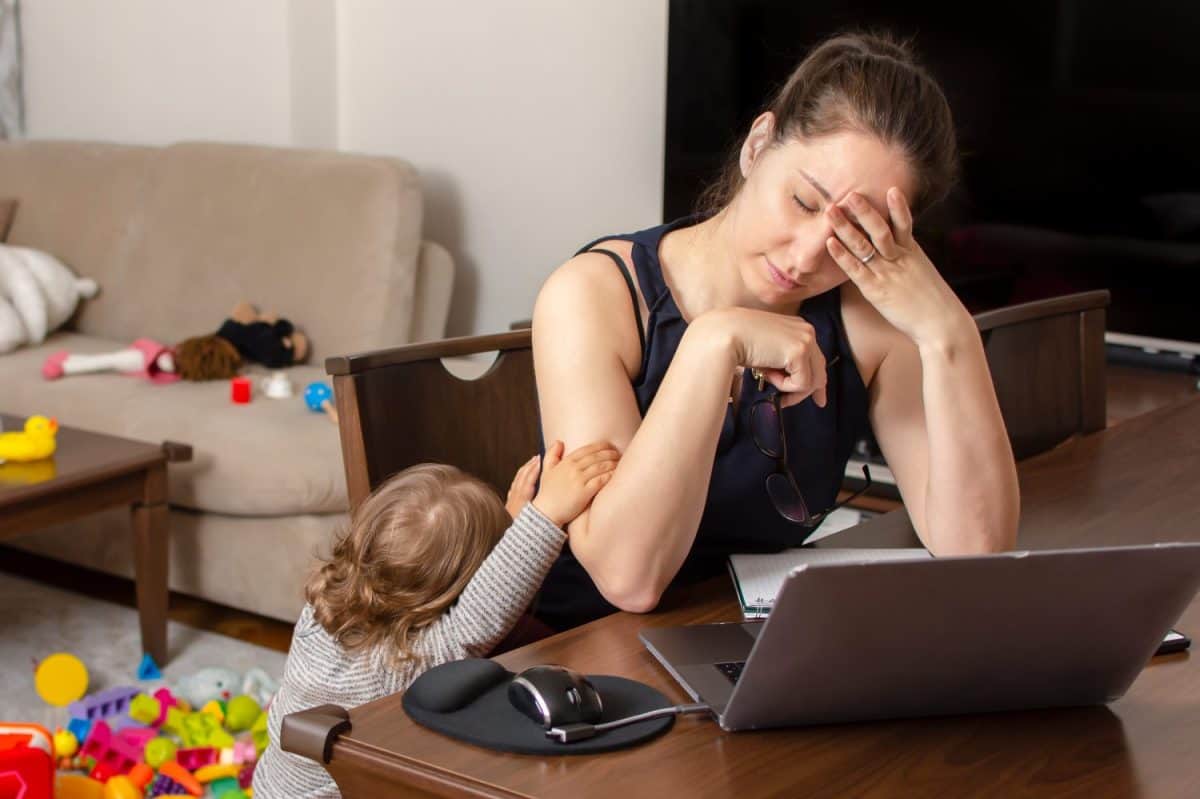
“Toddlers often choose inopportune times to respond, often not because they mean to be difficult but because they can sense that parents are stressed, rushed, or not listening adequately,” explains Wartski. It can definitely be embarrassing to manage a screaming toddler in public, but it's going to be most effective in these moments to respond in a calm manner.
To do that, Mareyo Barredo suggests finding a space so that both of you can decompress. “Your first job is to remove the audience and the immediate trigger,” she advises. “Calmly pick up the child and move them to a non-stimulating safe harbor like the car, or a quiet corner.”
Make sure that your child understands that this isn’t a time-out, but rather a way to honor their emotions while stopping the spectacle. “The rule is that the behavior must stop, but not the feeling,” she adds. By adding a boundary (i.e., “We can’t scream here. We will sit until our bodies feel calm.”), it gives your child both structure and clarity.
It's also a chance for you to assess your own self-regulation skills. “Parents should work on their own self-calming skills as they navigate these difficult scenarios,” Wartski adds. After all, if you start to escalate, your child will only become more agitated — and no one wins.
©ErsinTekkol/Shutterstock.com
The Toddler Stage Won't Last Forever
For many kids, those big feelings won’t be as (ahem) expressive as they get older. “With more maturity, skills, and experience, children can learn to manage their feelings more effectively,” says Wartski. “There is not so much a magical age when this is resolved, but rather a sense of children being able to make incremental steps of progress as they advance through different developmental stages.”
Moving past this stage often requires guidance. “If a parent has provided consistent support and practice with emotional regulation, children entering preschool should be able to better use those skills to better express themselves and regulate when big feelings arise,” says Todd. “However, if a toddler doesn't learn these skills, they may continue to have big feelings and meltdowns.”
When Should Parents Worry?
Some kids feel more deeply than others, and that’s okay. But if your child consistently struggles to manage emotions in healthy ways, speak with their pediatrician. “Contact your child’s pediatrician and/or a mental health professional if the dysregulation feels extreme, frequent, or very aggressive,” Wartski advises. “A toddler who can’t calm down or spends more time being stuck in more negativity might need some extra support.”
“While tantrums and struggles with big feelings are normal, there is a range of intensity and duration that is expected,” Todd adds. “If your child’s tantrums exceed that — lasting over an hour or causing destruction of toys, furniture, or other items — it’s important to meet with your pediatrician.” A therapist specializing in infant and early childhood mental health can support parents as they understand the root causes and tools to help toddlers manage big feelings.
Toddlers and tantrums often go hand-in-hand. And while it might not be comforting when these episodes occur, their big feelings are a sign that they’re deeply connected to their emotions — and in a world where so many people are disconnected from themselves, that’s a very good thing.
The image featured at the top of this post is ©antoniodiaz/Shutterstock.com