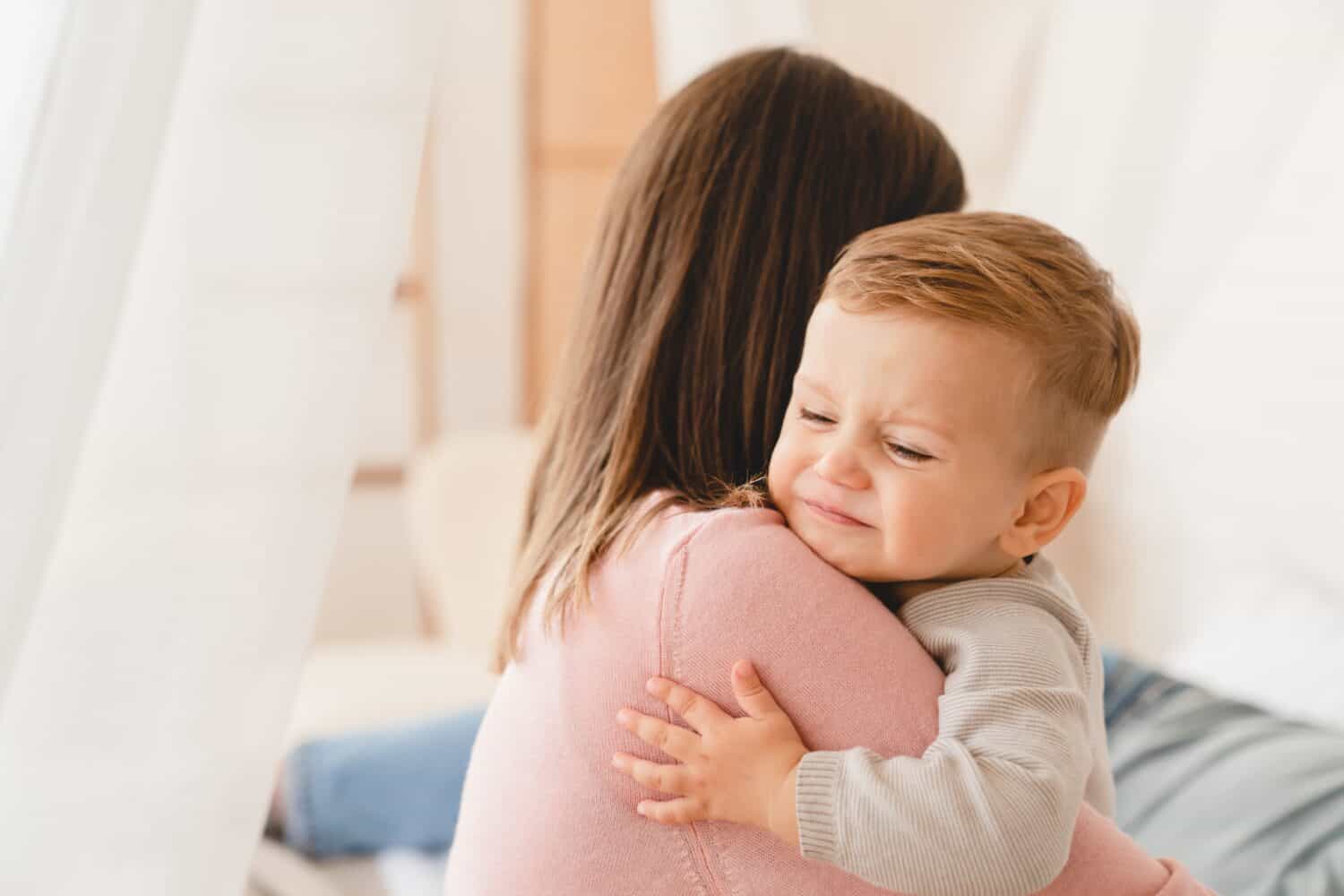
Toddlers know how to test us better than anyone. From throwing public tantrums to making you question every decision you’ve ever made as a parent, raising kids during the toddler years is not for the faint of heart. And sometimes, it comes with a huge emotional weight, like when your toddler sends barbs to your heart with hurtful, deeply cutting words like, “I don’t love you,” and “You’re the worst mommy ever!” (Yes, I’ve been there; and no, it doesn’t get easier, no matter how many times it happens or how many kids you have.)
When you're hearing these words for the first time from your toddler, it can be not only hurtful, but shocking as well. To encourage moms of littles, we dive into why this happens and what you can do about it.
Don't Worry, You're Not Alone
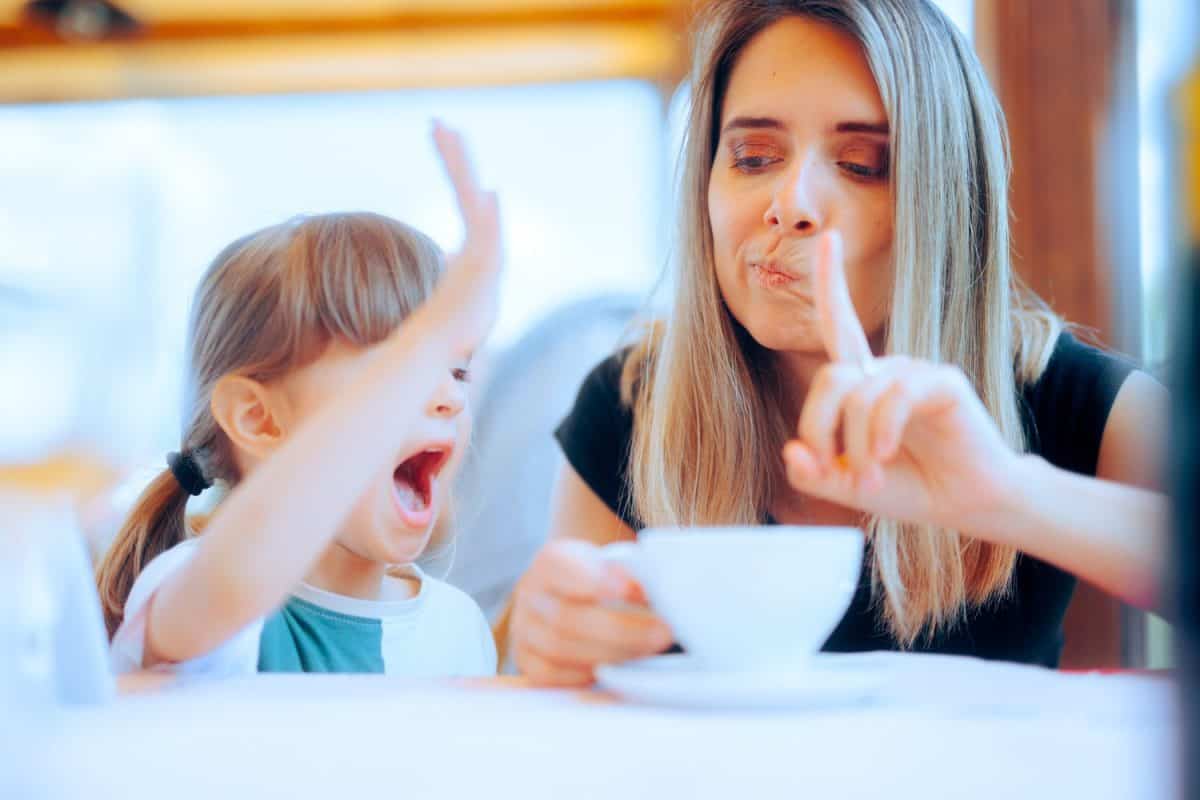
Raising a toddler isn't easy, but you're not the only one who faces these challenges as a parent.
©Nicoleta Ionescu/Shutterstock.com
If you've ever wondered why your child says hurtful phrases when they're angry, you're not alone. One frustrated mom on Reddit asked why her normally well-behaved 3-year-old son often makes her cry. “Whenever I tell him no, or do something he doesn’t like, [he lashes out] saying some pretty harsh things. For example, ‘I don’t love you, I only like dad’…” the mom wrote in part, adding, “And he’s just d*** mean!!”
Moms who have been there voiced support for this struggling mom. One person commented, “I've been in this exact position. My feelings about my kid saying ‘I don't love you’ are my problem, not the kid's. I tell the kid, ‘Ok, maybe you will tomorrow.’ Like 10 minutes later, they ‘love me’ again. Remember, they are still learning EVERYTHING.”
Another said, “My 3-year-old is the same, some days [I] feel like I’m negotiating with a tiny terrorist 😅 When he says things like that, I usually just respond with, ‘Well, I love you always,’ and leave it there. At this age, they’re gaining more independence and awareness, and a lot of it comes out as frustration.”
These all sound like good pieces of advice, but what do experts say? Since breaking down in tears won't help anyone in this situation, we speak with mental health experts to understand why toddlers might lash out this way and how parents can stay calm and get through it.
Why Do Toddlers Lash Out Like This?
Simply put, toddlers are just not great communicators.
“Toddlers do not have the verbal language ability to describe their feelings in nuanced language,” Katie Fries, LCSW, RPT, and owner of All of You Therapy in Center City, Philadelphia, tells us. “It is unlikely that they are going to use descriptive language such as ‘I feel disappointed because you said we could go to the park and now we can't.’ Instead, they experience the intense feelings of disappointment in their body and are using any language they have in an attempt to convey how upset they feel.”
Even adults can’t always fully articulate why they are upset right away, so expecting toddlers to do this — while also showing love and respect at the same time — is unrealistic. It may be hard to remember in the moment, but try your best to remind yourself that toddlers don’t know exactly how to express their feelings.
Toddlers Can't Always Communicate Effectively
Caroline Danda, Ph.D., licensed psychologist based in Leawood, Kansas, agrees. She tells us, “Toddlers' brains are still developing, and they are limited in how much they can communicate. Remember, it wasn't that long ago that crying was their only form of communication.”
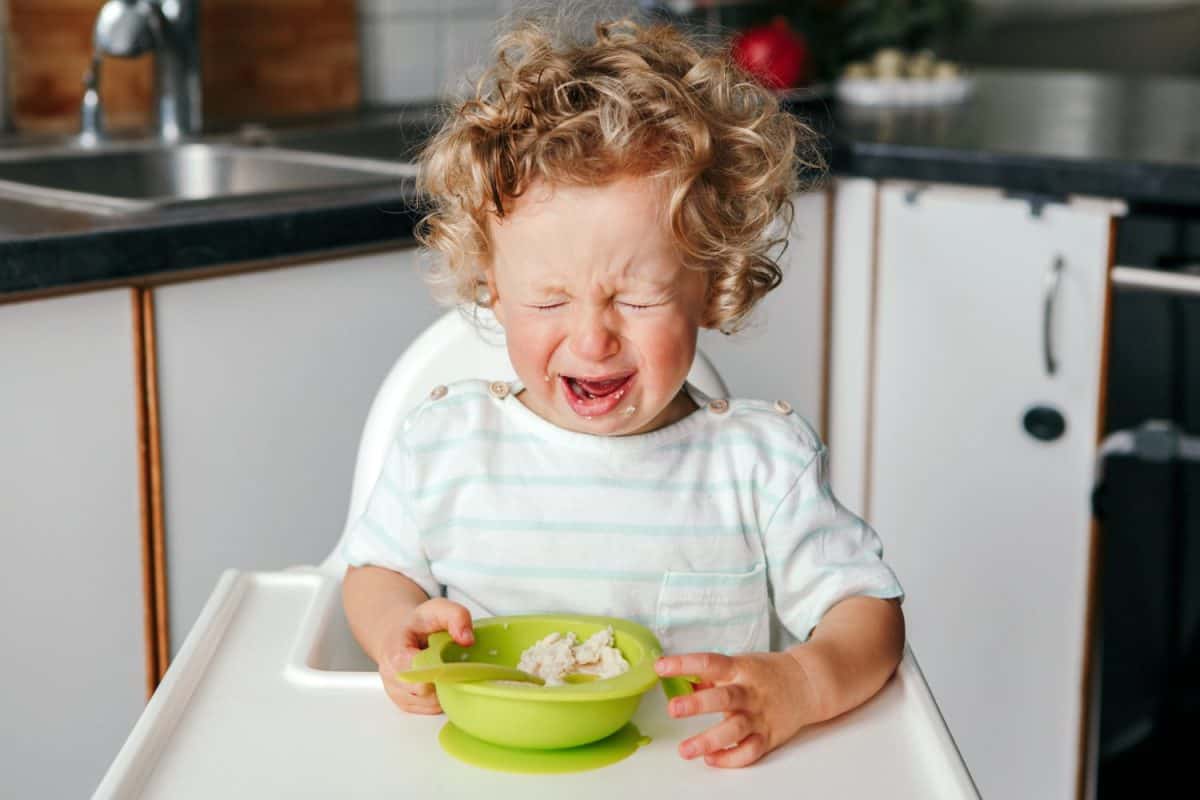
It's normal for toddlers to lash out and not know how to process their emotions.
©Anna Kraynova/Shutterstock.com
“When big emotions hit, they truly don't have the words or cannot access them to express what they're feeling,” Dr. Danda continues. “They're mad, usually because something didn't go their way, and it’s often because of an adult, which makes them an easy target.”
“Saying ‘I hate you’ or ‘I don't love you’ is essentially what I call ‘vomiting emotion,’” Dr. Danda adds. “They are simply trying to let you know just how mad they feel in the only way they know how. They don’t hate you; they really just hate the situation.”
It helps to know that our toddlers don’t actually hate us, but still — what are we supposed to do in these tense situations?
How Should Parents Respond When Their Toddler Is Mean to Them?
First, it’s important to stay calm and not necessarily try to correct in the moment.
“When your toddler is mean to you, it is a sign they are feeling overwhelmed in one way or another,” Fries explains. “Instead of trying to logic with them, such as by saying ‘It hurts Mommy's feelings when you say you don't love me,’ instead, attempt to reflect back the feeling underneath the ‘mean’ behavior.”
In practice, this could look like you saying, “I can tell how upset you are that we can't go to the park. I really see how big your upset is!” Or you could say it more playfully, by telling your child something like, “How big is your mad? Is it the size of this paper, the size of this room, the size of the house, the size of the WHOLE WORLD!” Fries adds, “And whatever they say, you can reflect back ‘Wow! That mad is SO big!”
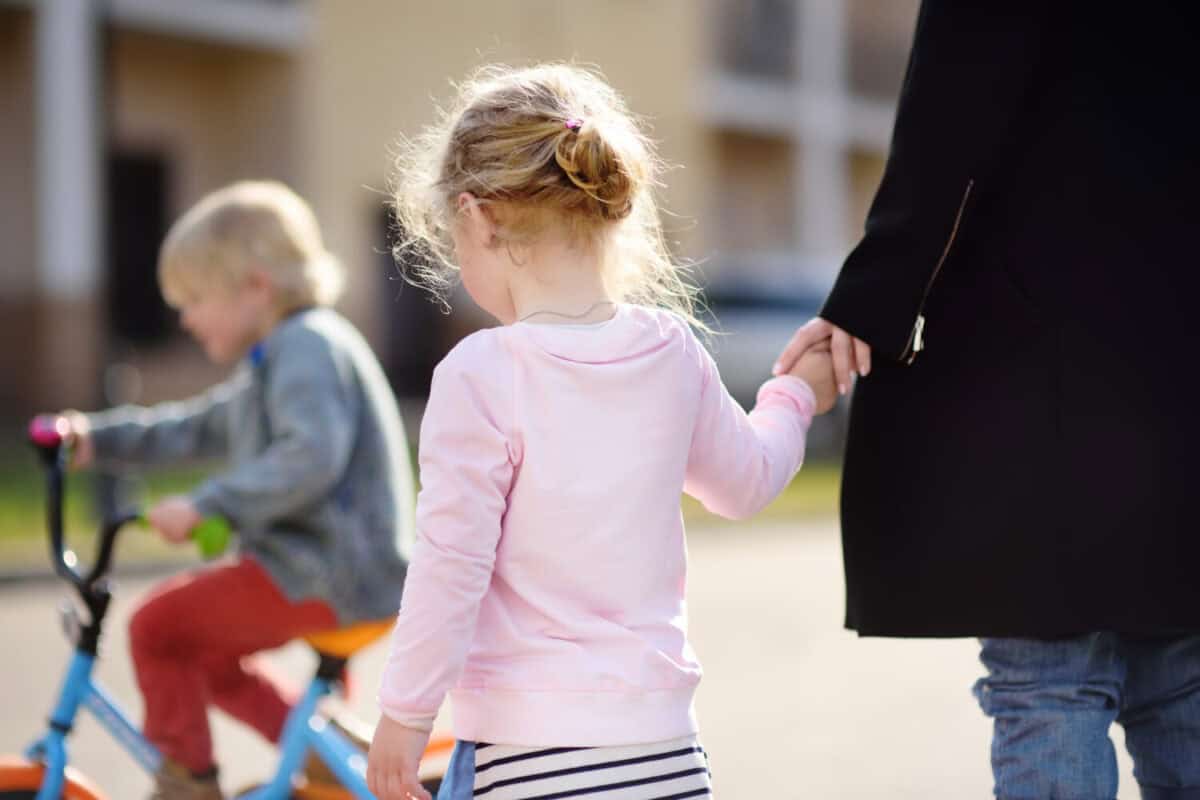
It's important to pause and not react to your toddler's wild words.
©Maria Sbytova/Shutterstock.com
No matter how you respond initially, the best thing you can do is not take their words personally. Dr. Danda says, “Don't get distracted or fall into believing hateful language that happens in the midst of a tantrum. If you start trying to convince your child or worry that’s how they really feel, you've gotten distracted from the actual problem.”
The best thing to do is actually ignore the outbursts in the moment. “Ignoring these tirades may seem harsh or counterintuitive, but limiting attention to them avoids accidentally reinforcing this behavior or getting distracted from the problem in the moment,” she adds.
So What Do You Say Instead?
Dr. Danda recommends that parents validate their toddler’s feelings and acknowledge the situation, rather than dismissing them or trying to fix it immediately. “Give them the words they haven’t yet figured out how to say: ‘You're frustrated because your sister took your toy,’ or ‘You're mad because you wanted to keep playing instead of picking up,’” she says.
Next, give your toddler some space. “Give them time to calm,” Dr. Danda says, adding, “You can breathe with them, offer a hug, or simply sit nearby. Once they're calm, set the limit: ‘It's okay to be mad, but it's not okay to be mean.’”
“If something hurtful was said or done, help them repair it,” she continues. “It might be an apology, saying something kind, or helping with a task. You can also role-play or have them practice different words to say. In the midst of a tantrum, keep your response brief and matter-of-fact, and give yourself a moment to settle if you feel your own emotions bubbling up.”
It May Be Frustrating, But It's Developmentally Appropriate
It may be frustrating, but your toddler lashing out or saying mean things isn’t a sign you are doing something wrong as a parent — it’s all developmentally appropriate.
“Toddlers do not have the language or emotion regulation capacity yet developed to more effectively and calmly express their emotions,” Fries explains. “This is completely normal. There is not a set age when this changes, but the more that you can offer opportunities for mirroring and validating your child's underlying emotions — rather than punishing, criticizing, or scolding in an attempt to [change] their behavior — the more you will have supported the internalization of regulation: the ability to notice their feelings and pause before responding.”
The ability to feel difficult emotions without hurting anyone else is a skill that you will need throughout your entire life, so don’t expect a toddler to pick it up immediately. However, you can help your child learn this by modeling the behavior yourself.
“The more a parent or caregiver can respond to a child's displays of upset feelings with connection, care, compassion, and [understanding], the more the child will be able to effectively learn how to regulate their own emotions,” Fries continues. “But this takes a long time! And no matter the amount of co-regulation a parent offers, it is not developmentally expected for a child to be able to regulate without the help of an adult.”
Blame the Prefrontal Cortex
Dr. Danda blames the child’s undeveloped prefrontal cortex for making it hard to control themselves. “Toddlers are still mostly focused on themselves and learning to use their words, but emotion often remains front and center,” Dr. Danda says. “The prefrontal cortex, which handles impulse control and emotional regulation, isn't fully developed until the mid-20s.” It typically reaches full maturity around age 25.
Luckily, we don’t have to wait that long for our kids to communicate with us better. Most kids develop significant emotional vocabulary and regulation skills between ages 2 and 7, with notable growth during the preschool and early elementary years. However, Dr. Danda says that they may still struggle to use those skills in a heated moment. “Some kids need more coaching than others, especially if they are neurodivergent or anxious,” she adds.
When Are These Outbursts a Sign of a Bigger Problem?
Sometimes, children may continue to have frequent mean outbursts and difficulty expressing their emotions well beyond the toddler years. Dr. Danda says experts look at frequency, intensity, duration, and interference to determine if this is a sign of a bigger problem.

Don't forget to take care of your own mental health during this time.
©Milkos / Getty Images
“A toddler who occasionally lashes out when frustrated is typical,” she says. “It becomes more concerning when the behavior is escalating rather than improving with age, happens frequently across many different situations, becomes consistently disruptive, or is accompanied by other signs like persistent sadness, withdrawal, aggression, or changes in sleep or appetite.”
“If hurtful language continues well into the school years without improvement, or a child seems to lack empathy or remorse afterward, those are signs worth discussing with a pediatrician or child psychologist,” Dr. Danda continues. “For kids with big emotions, parents often find that even a few sessions with a mental health provider can help them adapt their approach and help their children learn how to move through feelings rather than get stuck in them.”
Sometimes, Parents Need Their Own Mental Health Support
Knowing something is normal and not letting it affect you are two different things, which is why parents might need some mental health support during the toddler years (and beyond).
“I would want parents to know that while this behavior is completely developmentally typical, it is also completely understandable if this behavior is triggering or activating,” Fries assures us. “Being pushed away, called names, or told that you are not loved by the child that you brought into the world can bring up feelings of grief, hurt, or sadness — especially if you, as a parent, have a history of emotional abuse or neglect.”
It’s completely understandable, but you don’t have to suffer because of it. Fries explains, “If you find yourself struggling to stay regulated when your child expresses hurtful words, you may benefit from seeking out your own mental health support. You deserve it!”
“The most important thing parents can do is stay regulated themselves,” Dr. Danda adds. “Kids will catch your distress or your calm. When you take a moment and respond with steady, matter-of-fact warmth instead of with hurt or anger, you're teaching them how to manage big feelings so they don’t lead to big reactions.”
For more information on this topic, Fries recommends reading parenting books such as “Parenting from the Inside Out” and “No Drama Discipline” by Daniel Siegel, “Raising a Secure Child” by Hoffman, Powell, and Cooper, “Good Inside” by Dr. Becky Kennedy, and “Raising Securely Attached Kids” by Eli Hartwood.
The image featured at the top of this post is ©Inside Creative House/Shutterstock.com