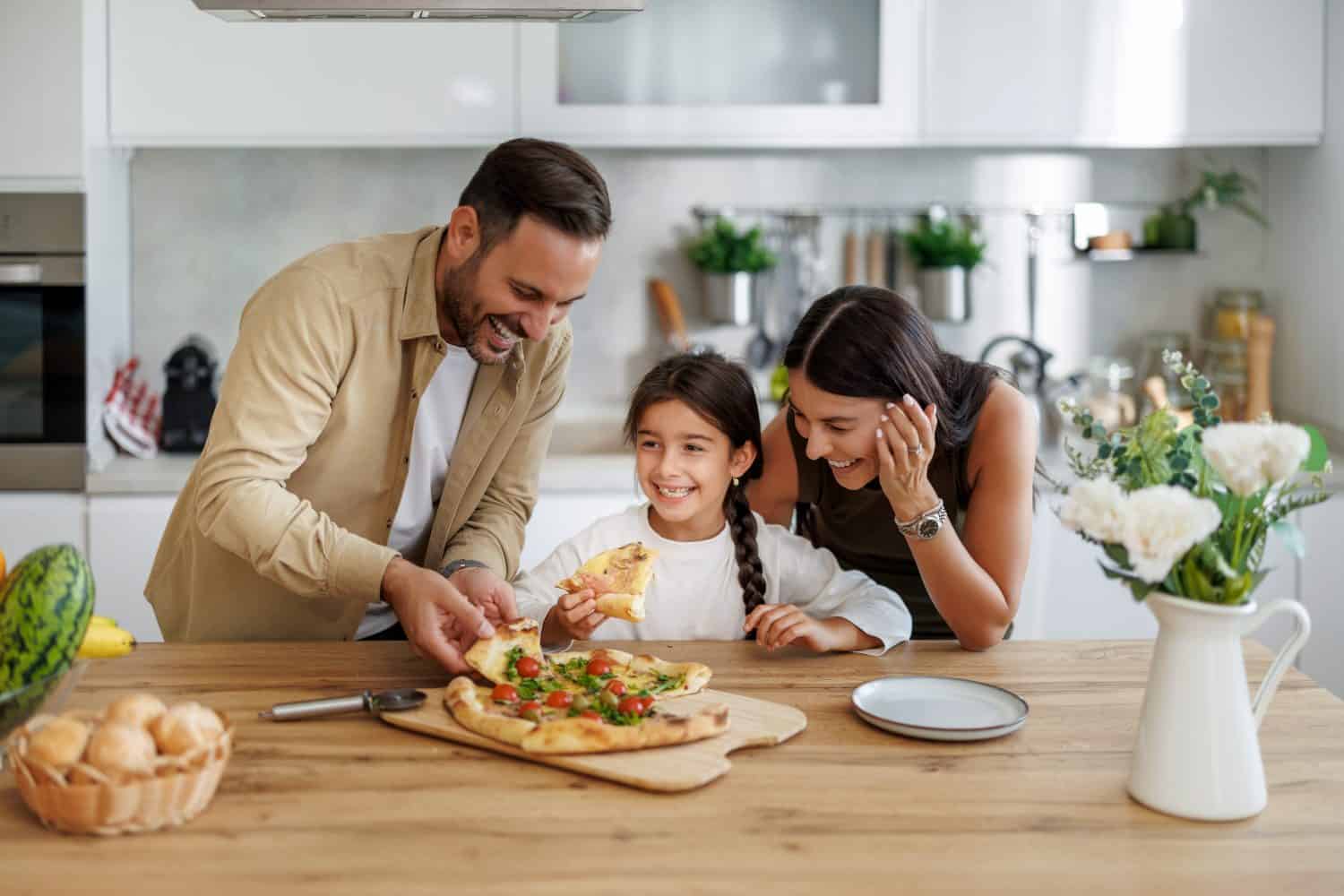
As adults, many of us have had a challenging relationship with the food we eat. We've lived through diet culture, fad diets, and trendy nutritional supplements. Combined with the pressure of social media and so many opinions on what's healthy or not, it's nearly impossible to know what's best for your family. Kids are attuned to even the slightest changes in perception, especially when it comes to food. Having a good relationship with it begins with those they look up to most: Their parents.
We speak with an expert to learn how food relationships can be nourishing, wholesome, and positive. Dr. Charlotte Markey is a clinical health psychology professor at Rutgers University and the author of The Body Image Books. Here's how she recommends parents foster healthy relationships with food.
Skip the Common, Outdated Phrases You Heard Growing Up
Sometimes, one simple sentence can completely change a child's mindset. When you use outdated terms or phrases at the dinner table, it reinforces negative beliefs about certain food groups and snacks. Dr. Markey shares what to avoid, starting with things we likely heard from our own parents. Breaking the cycle begins with the words we choose and recognizing their effect on kids.
©EB Adventure Photography/Shutterstock.com
“I’d avoid language that moralizes food or links eating to weight, such as ‘good' or ‘bad' foods, ‘you don’t need that, that will make you fat,' ‘earn your dessert,' or ‘be careful or you’ll gain weight,” she says. “Even seemingly small comments can teach kids that eating is something to feel guilty about and that their bodies should be judged constantly. I’d also avoid commenting on a child’s body, appetite, or portion size in ways that make them feel watched. Kids do best when food is presented as nourishment, enjoyment, family connection, and part of normal life, not as a test of willpower.”
The goal is ultimately to use positive statements instead of negative ones. Instead of implying a certain food causes weight gain, consider saying, “This food will help you grow strong,” or “This snack is yummy and gives us energy.” When you're introducing children to new flavors and foods, offering additional options is a great way to add variety.
I’d also avoid commenting on a child’s body, appetite, or portion size in ways that make them feel watched.
Dr. Charlotte Markey, clinical health psychology professor at Rutgers University and the author of The Body Image Books
Stop Polarizing “Good” and “Bad” Foods
It can be easy to tell your child that a certain snack is “bad” for them. Using strong language like this instills fear or apprehension about a certain food. This only serves to polarize the world of nutrition, encouraging the idea that everything is inherently good or bad, making the act of eating feel restrictive.
“One helpful approach is to stop treating snacks like forbidden objects. When parents make certain foods seem off-limits, those foods become more emotionally charged and desirable. Instead, parents can offer a wide variety of foods regularly, including fun foods, while keeping the overall tone neutral,” Dr. Markey says.

©FamVeld/Shutterstock.com
She adds that you can normalize healthy foods like fruits, vegetables, and whole grains without turning cookies or chips into something shameful. “The goal is not perfection. It’s helping kids learn that all foods can fit, while also helping them notice how different foods make them feel in their bodies. That kind of flexibility tends to support a healthier long-term relationship with eating than rigid rules do,” she explains.
Moderation: Necessary or Unintentionally Harmful?
We often hear the term “everything in moderation.” When it comes to kids, Dr. Markey recommends avoiding this phrase. “Instead of saying, ‘You need to learn moderation,' I’d model balance and talk about variety: we eat different foods for different reasons. Some for fuel, some for enjoyment, some for comfort, some for celebration,” she says. “That approach helps kids understand that eating is not supposed to be perfect. It also avoids making them feel that every choice is being judged. Moderation works best when it is modeled gently and consistently, not imposed in a way that makes kids anxious or ashamed.”
Combat Societal Pressures at Home
Social media can have both positive and negative effects — it can either be very good at promoting acceptance or very bad at encouraging negative mindsets. In a world where it's difficult to control what your child consumes, Dr. Markey shares some advice. She recommends that parents encourage dialogue, talking openly about how social media often promotes unrealistic appearance ideals, food trends, and ‘wellness' messages. In reality, these are really just diet culture in disguise. The message may seem positive, but the underlying tone is that you must sacrifice something to achieve the idea of “healthy.”

©DimaBerlin/Shutterstock.com
“It can help to name what is happening. Comparison, editing, filters, marketing, and the pressure to equate eating a certain way with being a better or more worthy person. Parents can also intentionally shift the conversation back to what bodies do rather than how they look, and encourage kids to follow people who make them feel informed, strong, joyful, or connected, instead of inadequate,” Dr. Markey shares.
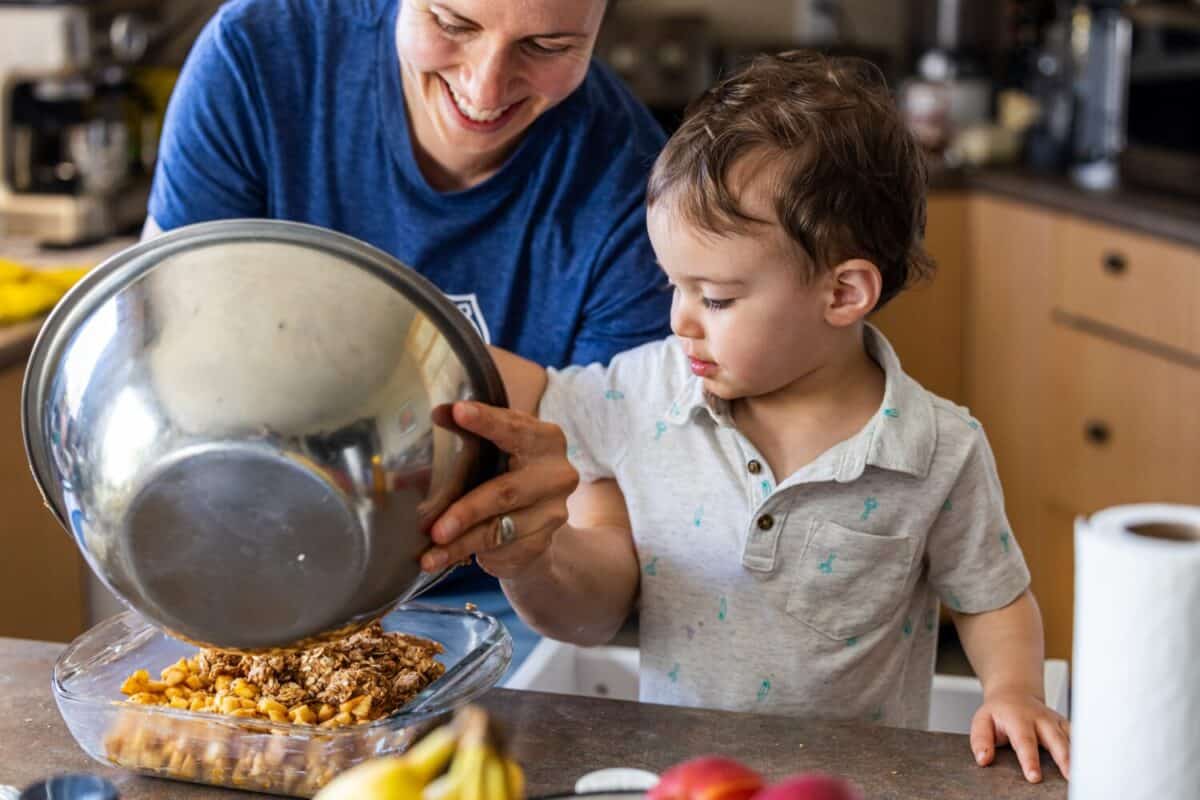
She also encourages getting them involved with food offline. “Inviting kids to participate in grocery shopping, meal planning, cooking, gardening, or choosing a new recipe can help food feel empowering. It gives them a sense of competence and autonomy, and it makes healthy eating feel like a life skill,” she shares. “I also think it helps to frame this as caring for oneself, not ‘fixing' oneself. When kids learn to prepare food, notice hunger and fullness, and think about what helps them feel energized and satisfied, they begin building trust in themselves. That is a much more body-positive foundation than teaching them to micromanage calories, carbs, or body size.”
Picky Eaters? Patience Goes a Long Way
It's entirely normal for kids to be picky eaters, especially when they're younger. The urge to supplement their diet might be strong, but it can also reinforce negative feelings toward food. Instead, Dr. Markey recommends a softer approach. Having patience is often key when dealing with sensitive subjects during mealtime. “Pressure usually backfires,” she says. “Kids are more likely to expand their eating over time when they feel safe, not coerced. Parents can keep offering a range of foods without forcing bites, bribing, or turning meals into a battle.”

©PeopleImages/Shutterstock.com
Dr. Markey adds that low-pressure exposure, involving kids in the preparation, and ensuring at least one familiar food is available can all help. “It is also important not to treat picky eating as a character flaw or failure. A calm, patient approach protects the parent-child relationship and makes it more likely that kids will stay open to trying new things over time.” In time, picky eating is something most kids naturally outgrow.
When In Doubt, Stick to the Basics
“Keep the focus on health, energy, and well-being rather than weight or appearance. Avoid labeling foods or bodies in moral terms. Model a balanced relationship with food yourself. Make family meals as pleasant and low-pressure as possible, and remember that kids are always absorbing what adults say about their own bodies, too,” Dr. Markey recommends.

©maxfluor/Shutterstock.com
Building a positive relationship with food begins with us. As kids watch adults put good things into their bodies — and even treat themselves occasionally — they learn by example. Hating or villainizing food is not something kids are born knowing. It's taught, even if it's unintentional. When left unaddressed or corrected, these negative beliefs can breed low self-esteem, negative self-image, and even eating disorders.
Because of this, Dr. Markey also emphasizes that parents should pay attention to the larger culture their children are growing up in. “Kids do not learn about food only at home. They are learning from peers, social media, school, advertising, and diet culture more broadly. That means parents do not need to be perfect, but they can be a powerful counterweight by creating a home environment where food is not feared, and bodies are respected,” she says.
The image featured at the top of this post is ©Ivanko80/Shutterstock.com