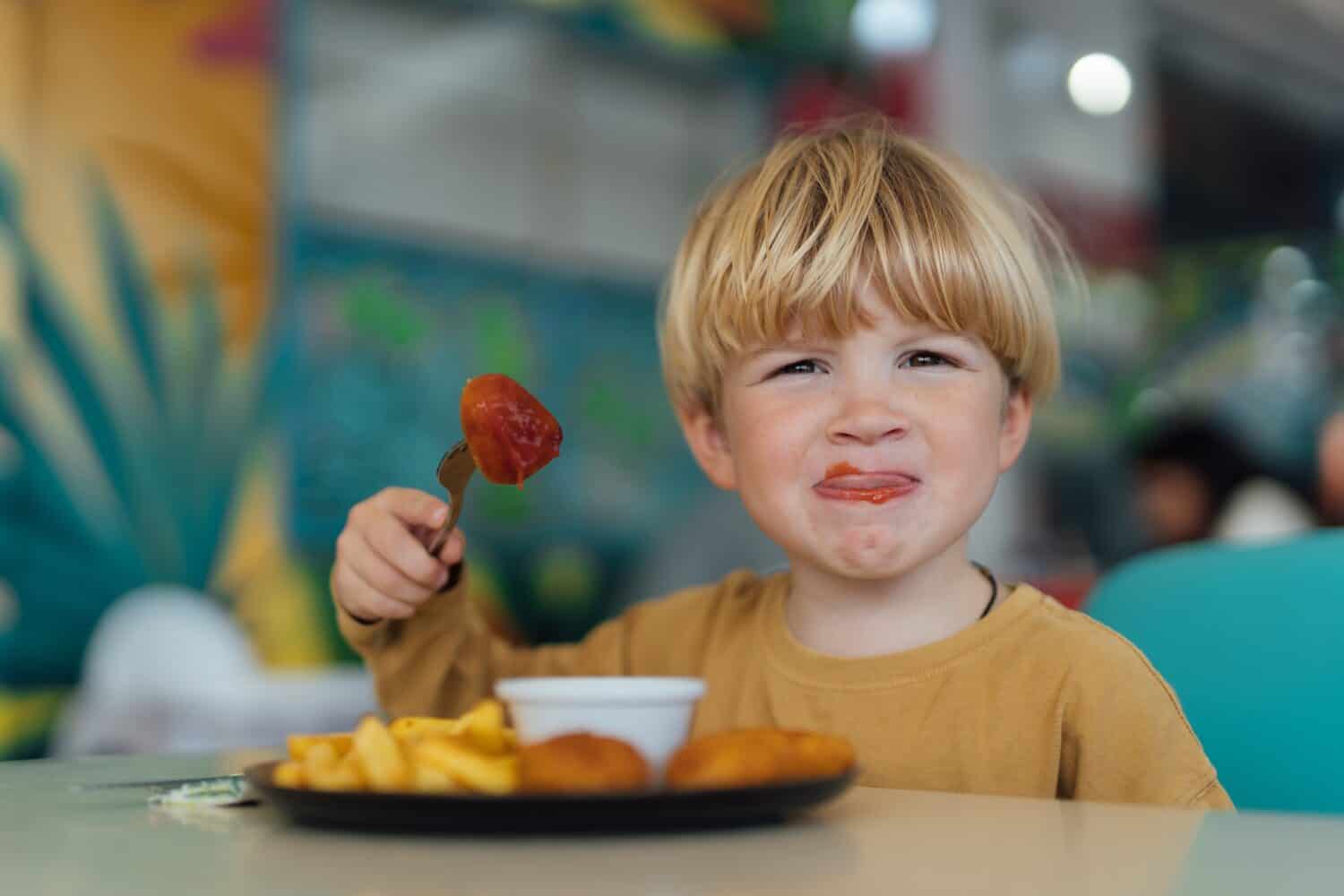
If you're feeling parenting is harder than ever before, it could be due to an upswing of what psychologists call “intensive parenting.” Some experts explain this as “the desire to anticipate and solve children’s problems as well as to enroll them in numerous, structured activities that might enhance their physical, cognitive, and social abilities.” This intense pressure to be a “perfect” parent can make parents feel guilty about many things, including the way they're feeding their kids.
Mom guilt is real, and it happens to some of us when we feed our kids convenient foods, like frozen or premade dinners, rather than cooking elaborate meals. We speak with a pediatric dietician for advice on what parents should prioritize at mealtimes and how to prevent unnecessary feelings of pressure from social media or their own expectations. Dani Lebovitz, MS, RDN, is the founder of Kid Food Explorers and co-author of Food Positivity: How to Ditch Diet Culture and Talk to Kids About Food.
Q: Do you see parents feeling guilty about offering convenience foods like frozen meals, packaged snacks, or eating out? What would you say to these parents?

By making food pressure-free, kids are more likely to have a positive relationship with what they eat.
©fizkes/Shutterstock.com
A: Yes, I hear and see this guilt every day. One thing I know for certain is that every parent wants to raise healthy, thriving kids. The reality is that feeding kids happens within the constraints of real life — work schedules, budgets, energy levels, and access to food.
Convenience foods can absolutely help parents nourish their kids in the everyday rush between school and bedtime. It’s not about getting every meal “right.” I encourage parents to stress less about frozen meals and packaged snacks and focus more on establishing healthy patterns, offering a variety of nourishing foods across days and weeks, so kids get the nutrients they need over time.
Q: Do you think social media is influencing the way parents feel about feeding their kids, i.e., creating pressure around unreasonable expectations?
A: Social media has dramatically increased the pressure around feeding kids and created unreasonable expectations for families. We’re constantly exposed to algorithm-driven viral hooks that push beautifully curated lunchboxes, elaborate homemade meals, and rigid ideas about “clean” or “perfect” eating, often leaving parents with the endless feeling of “I’m doing it wrong.”
The problem is that these snapshots rarely reflect the reality of the creator’s own family life or whether their child even ate the meal being shown. Yet they can leave the impression that “good” parenting means picture-perfect meals, and that raising a “good” eater comes down to turning vegetables into fun shapes.
In reality, children don’t learn healthy eating habits from perfectly plated meals or optimizing every bite. They learn through repeated exposure, predictable routines, and how they feel around the table.
Q: If parents feel overwhelmed about feeding their kids “the right way,” what should parents prioritize instead of perfection?
A: I think it’s important for parents to understand that there is no such thing as perfection. There is no single “best” way to feed kids and no one-size-fits-all approach, because no two families (or kiddos) are the same. But if I could offer one simple piece of advice to help parents nourish their families, it would be to try to include a fruit and/or a vegetable at every meal and snack.
Fruits and vegetables support optimal growth and development, yet only a small fraction of U.S. children meet daily fruit and vegetable recommendations — about 7% meet fruit guidelines, and just 2% meet vegetable guidelines. The good news is that fresh, frozen, canned, dried, freeze-dried, and even 100% juice can all count toward those recommendations.
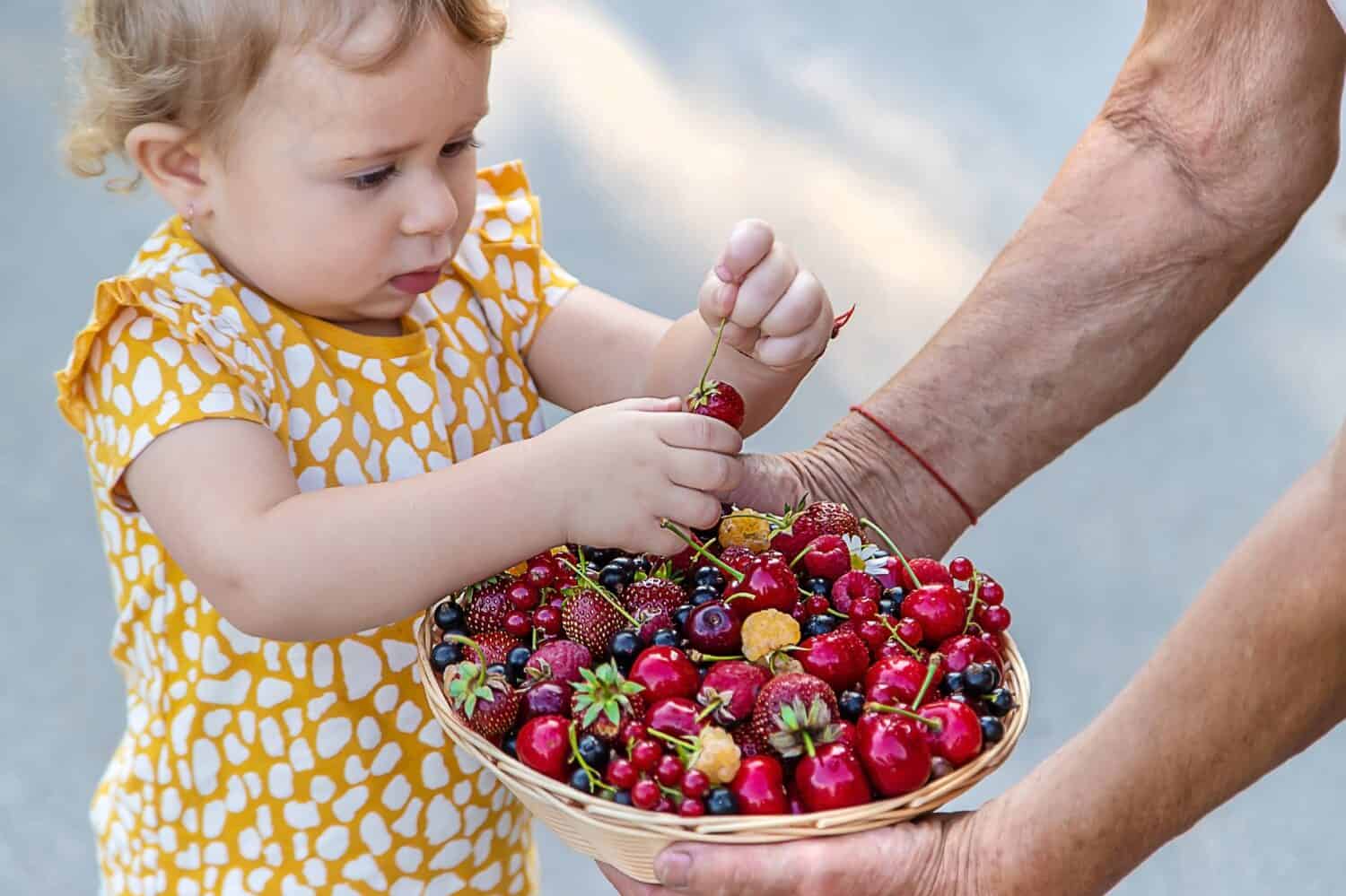
According to the CDC, only around 7% of kids are meeting their fruit intake guidelines.
©Tatevosian Yana/Shutterstock.com
On an average school day, this could look like: a fruit smoothie at breakfast, carrot sticks and dried mango with lunch, an applesauce pouch as a snack, and cucumbers and strawberries with dinner.
Q: What tips do you have to help parents encourage healthy eating habits in kids without creating shame or anxiety?
A: Something many parents don’t realize is that they’re always teaching their kids about food and bodies, whether they mean to or not. Kids are constantly learning through what I call the Invisible Curriculum of Food and Body Learning, or the 3 Ms: modeling, messaging, and moments. Parents play a powerful role in shaping lifelong eating habits in the rhythm of everyday life.
One of the most effective ways to support healthy eating habits is actually very simple: keep food emotionally neutral. Parents can do this by:
- Offering meals and snacks on a predictable schedule
- Including a mix of familiar foods and new foods over time
- Modeling enjoyment of a variety of foods themselves
- Calling foods by their names instead of labeling them as “good” or “bad”
- Avoiding pressure like “just try one bite”
- Avoiding using food as a reward, punishment, or bribe
- Encouraging kids to tune in to their own hunger and fullness cues
If we want to raise healthy kids from the inside out, we can’t just focus on what they eat; we have to transform how they experience food.
Q: Is there any language parents should try to avoid when talking about food with their children?
A: One helpful shift parents can make is moving away from labeling foods as “good,” “bad,” “junk,” or “real.” When foods are moralized this way, kids can start to believe that eating certain foods makes them good or bad, too. Instead, it can be helpful to discuss how different food helps our bodies (or tummies) feel or how our bodies need a variety of foods to help our bodies grow.
Q: In your book, you talk about “food positivity.” Can you explain how that concept helps kids develop a healthy relationship with food?
A: Food positivity is really about the environment kids grow up in around food. Kids don’t learn healthy eating from rules; they learn from the conversations they hear, the way meals are offered, and how they feel in everyday moments around food.
When eating feels predictable and pressure-free, kids can approach food with curiosity instead of fear. That’s what helps them trust their bodies, explore new foods with ease, and develop habits that support a positive relationship with food that lasts a lifetime.
Q: Is there anything else you would like our readers to know?
A: If there’s one thing I want parents to know, it’s this: your child doesn’t need a Pinterest-worthy rainbow of organic produce on every plate. They need positive experiences with food. When we shift our focus from getting every bite ‘right’ to creating calm, connected moments around food, children learn to explore, trust their bodies, and build healthy habits that last a lifetime.
The image featured at the top of this post is ©sutulastock/Shutterstock.com