
When parents are struggling with their mental health, they may try to hide it from their children. But is that really the best policy? Or does being honest actually benefit kids by modeling acceptance around mental health issues? We speak with an expert about whether parents should talk to their kids about their own mental health issues and how to go about it.
You're Not Alone
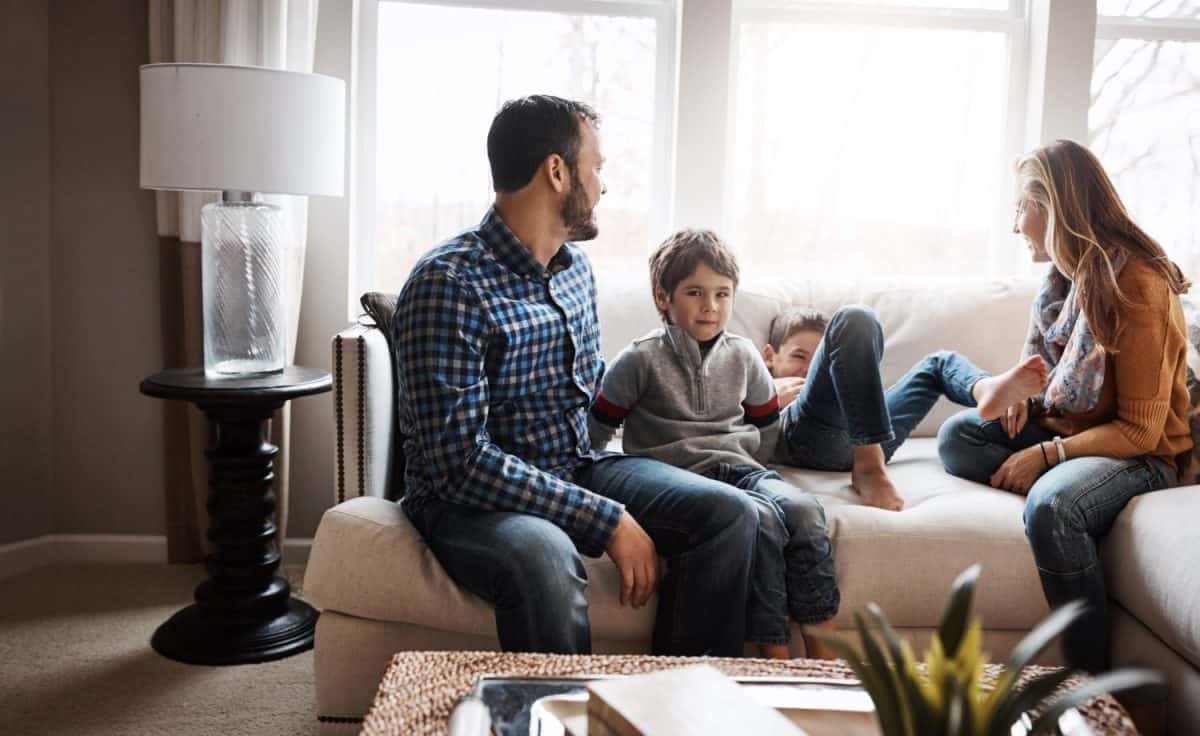
Talking with children about your own mental health issues, in an age-appropriate way, can help them learn empathy and better understand their own feelings.
©PeopleImages/Shutterstock.com
Research from the U.S. Department of Health and Human Services revealed that 33% of parents reported high levels of stress in the past month compared to 20% of other adults. Further, 48% of parents said most of their days contain “overwhelming” amounts of stress compared to 26% among other adults. According to the National Alliance on Mental Illness, in 2024, 5.6% of U.S. adults experienced serious mental illness, and 23.4% experienced any mental illness in the past year.
The data is clear: millions of parents are affected by mental health issues, some of which can be serious. When a parent faces mental health struggles, kids are likely to notice. But what's the best route for a parent to take?
We speak with Dr. Deborah Gilman, a clinical psychologist and owner of Fox Chapel Psychological Services, for some answers. Dr. Gilman specializes in the topics of child development, trauma, and parenting. She is also the author of Anchored: Helping Your Child Feel Steady, Secure, and Seen in a Two-Home Family.
Kids Can Sense a Parent's Emotions
If you've ever thought you were keeping your struggles secret from your child, you may be surprised to learn what Dr. Gilman has to share. When asked if it's a good approach to try to hide mental health issues (such as anxiety or depression) from your kids, she says, “Nope. Kids are tiny emotional surveillance systems with juice boxes.”
Dr. Gilman explains, “Research in developmental psychology shows that children are extremely good at detecting emotional shifts in caregivers — tone of voice, facial expressions, routines. When parents pretend everything is fine while clearly acting different, kids often fill in the gaps with their own explanations. And spoiler: their explanations are usually ‘this must somehow be my fault.'
“So hiding everything isn’t protective — it’s confusing. The healthier approach is contained honesty: acknowledging that you’re struggling without making the child responsible for fixing it.”
Dr. Gilman suggests saying something like, “I’ve been feeling really sad lately. It’s something adults sometimes experience, and I’m working on getting help.” She says, “Kids handle truth surprisingly well. What they struggle with is mystery emotional chaos.
How to Talk to Younger Kids
Metaphors may help younger children understand if you're suffering from depression or anxiety. Dr. Gilman says of metaphors, “Humans adore them because our brains are basically storytelling machines.”
Here are some examples she provides of phrasing you can use for your kids:
- Depression: “Sometimes my brain gets stuck in a cloudy mood that makes everything feel harder.”
- Anxiety: “My brain has an alarm system that goes off too loudly sometimes, even when things are actually safe.”

Younger kids might understand mental health issues better when you use metaphors.
©Inside Creative House/Shutterstock.com
She continues, “Younger kids especially benefit from framing it as something the brain does, not who the parent is. That separates identity from the struggle.” Dr. Gilman also suggests not to overshare. “Avoid dramatic oversharing about symptoms or adult worries. Your child does not need the full documentary version of your nervous system meltdown.”
Consistently Reassure Your Kids They Are Not Responsible for Your Feelings
It's natural for kids to blame themselves when things go wrong in the family. Dr. Gilman urges parents to communicate; it's not their fault. When asked how to reassure kids they aren't responsible, she says, “You say it. Explicitly. Repeatedly. Like a broken record. Children are egocentric by developmental design, meaning they instinctively assume events revolve around them.”
She says parents can clearly state the following:
- “This is not caused by you.”
- “Kids cannot cause depression or anxiety.”
- “It’s my job and other adults’ job to handle this.”
It also helps to reassure them by adding, “What helps me most is spending normal time with you.” These words can help kids understand, “you’re not the therapist, the fixer, or the emotional support hamster.”
Openness About Mental Health Teaches Kids Powerful Lessons
Dr. Gilman says, “Mental health is health. When parents discuss mental health openly, children learn several powerful lessons.”
These lessons include:
- “Emotions are normal biological experiences, not shameful secrets.
- Asking for help is strength, not failure.
- Difficult feelings can be managed and treated.”
Dr. Gilman shares that kids also learn an important lesson: “feelings are safe to talk about.”
She continues, “When a parent names their emotions in a calm, responsible way, it gives children permission to do the same. Instead of hiding sadness, anger, or worry, they learn that these feelings can be shared, understood, and worked through.
“Open conversations also reduce stigma. If children grow up hearing that anxiety, depression, and stress are common human experiences — not personal flaws — they’re much more likely to seek help when they need it later in life. In other words, you’re modeling emotional literacy (instead of the classic family tradition of bottling everything up until someone yells during Thanksgiving dinner.”
Watch for These Signs Your Child Might Be Struggling With Their Own Mental Health
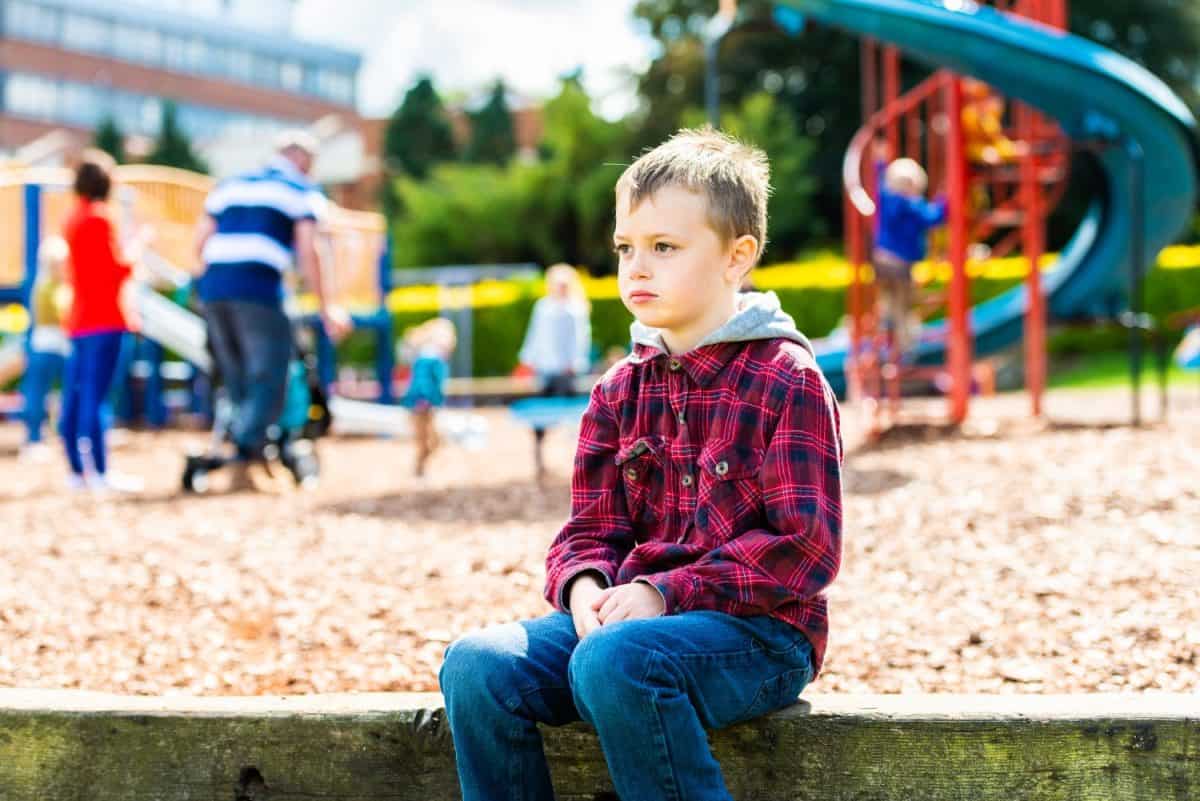
Changes in behavior may be a red flag that your child is struggling with anxiety or another mental health issue.
©RMC42/Shutterstock.com
If you're worried your child might be struggling with their feelings, they probably aren't going to volunteer the information on their own. Sometimes kids can struggle with processing their own feelings and also with having the words to explain them. However, there are signs you can watch for.
Dr. Gilman explains, “Children rarely walk up to a parent and calmly say, ‘I’m having a difficult time managing my emotions and would like to talk about it.' Their brains are still developing the skills needed to name and process complex feelings. Instead, emotional distress often shows up indirectly through changes in behavior, mood, or physical symptoms.”
Watch for Behavior Changes
“A child who was previously easygoing might become more irritable, withdrawn, or prone to emotional outbursts. Others may become unusually quiet or disengaged from activities they once enjoyed, such as hobbies, sports, or spending time with friends.
Changes in Sleep or Appetite Can Signal a Problem
“Changes in sleep or appetite can also signal that something is going on emotionally. Some children may have trouble falling asleep, experience nightmares, or seem unusually tired during the day. Others may eat significantly more or less than usual.”
Physical Complaints Without a Medical Cause
“Parents might also notice physical complaints without a clear medical cause. Headaches, stomachaches, and general fatigue are common ways that stress and anxiety show up in children, particularly when they don’t yet have the language to describe their feelings.”
Look for Increased Anxiety or Clinginess
“Another signal can be increased worry or clinginess, especially toward a parent who is struggling. A child might ask frequent reassurance questions, become nervous about being separated from caregivers, or try to ‘take care' of the parent emotionally.”
Notice if Your Child Starts Struggling in School
“Finally, changes in school performance or concentration can sometimes indicate that a child is dealing with emotional stress. Teachers may notice difficulty focusing, declining grades, or shifts in behavior in the classroom.”
Children Probably Aren't Hiding Their Feelings on Purpose
If you notice signs your child is struggling, but they can't put in into words, Dr. Gilman explains it's most likely unintentional. “In many cases, children aren’t hiding their feelings intentionally — they simply don’t know how to express them yet. Their behavior often becomes the way those feelings show up.
“Paying attention to patterns, creating space for open conversations, and gently checking in can help children feel safer sharing what they’re experiencing. Because when kids can’t say, ‘I’m struggling,' their behavior often ends up saying it for them.”
Don't Fall For the Pressure of Being a ‘Perfect' Parent
Thanks to social media, there are more examples than ever before of parents who seem to have everything together. However, social media often doesn't represent reality. Dr. Gilman says, “Brace yourself for a shocking revelation: You do not need to be a perfect parent to raise emotionally healthy kids. What actually matters more — according to decades of attachment research — is something psychologists call repair.”
She describes the following scenario:
- “You mess up. (You will.)
- You acknowledge it.
- You reconnect.”
Kids Learn Empathy When Parents Acknowledge Their Mistakes
Dr. Gilman explains the repair process, “teaches kids something incredibly valuable: relationships can survive mistakes. In fact, those repair moments are where children learn empathy, accountability, and emotional resilience. Turns out kids benefit more from seeing adults fix problems than from watching adults pretend problems never happen.”
It’s Okay to Not Be Happy All of the Time

You don't need to feel happy all the time, nor do you need to feign it. Kids appreciate authenticity and honesty.
©Josep Suria/Shutterstock.com
Rather than faking that everything is alright, Dr. Gilman explains that what kids need is for you to be real, safe, and responsive most of the time. “Psychologists sometimes refer to this as being a ‘good enough' parent — meaning present, caring, and willing to try again tomorrow,” Dr. Gilman says.
She adds, “If you’re struggling with mental health and still showing up for your child, you’re already doing something important. Not glamorous. Not Instagram-ready. But meaningful.”
Show Your Kids That Taking Care of Your Mind is Important Too
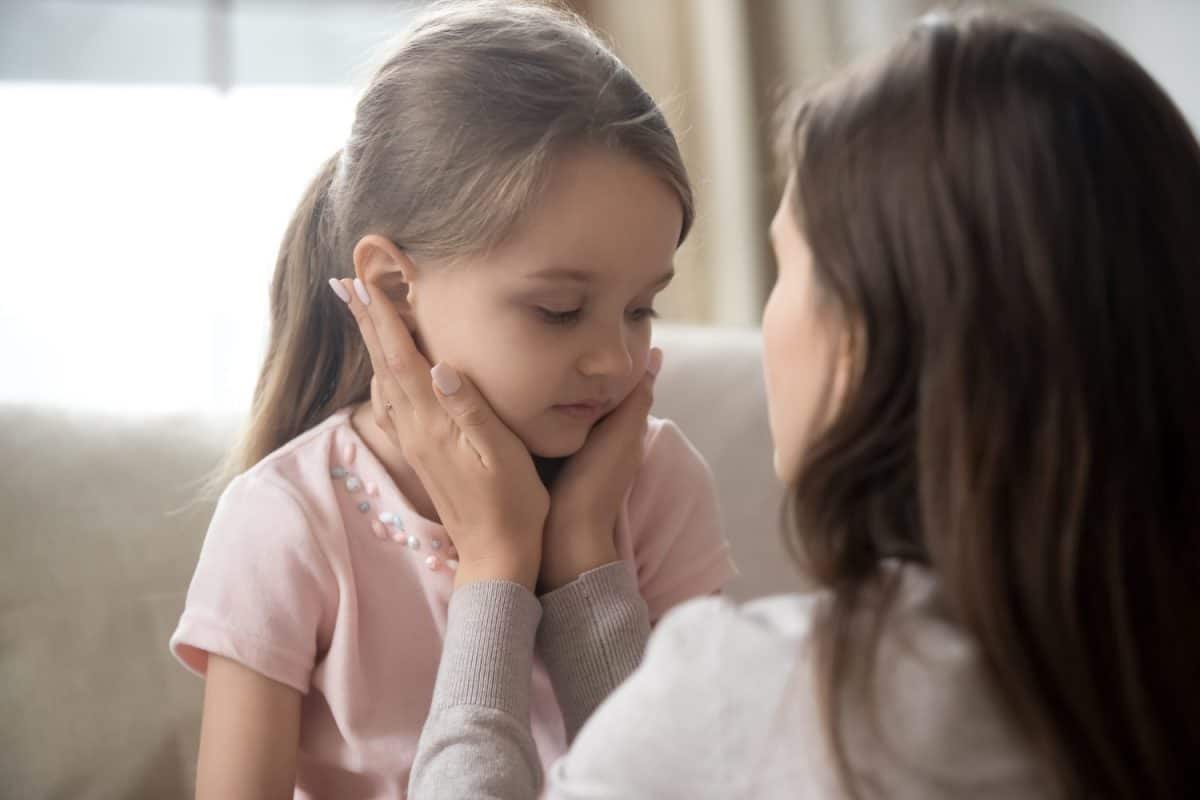
Mental health experts tell us the important part of parenting is being there for your kids, being honest, and acknowledging when you mess up.
©fizkes/Shutterstock.com
According to Dr. Gilman, “When parents talk openly about getting help — therapy, support from friends, medical care — they teach kids that taking care of your mind is just another part of taking care of your body. Which is deeply practical information for children who will someday become adults with their own complicated brains.”
Dr. Gilman admits there is a lot of unnecessary pressure on parents showing up online.
“Unfortunately, that message competes with a lot of online content suggesting good parenting involves color-coded lunchboxes, organic kale muffins, and never raising your voice. Science says something simpler: show up, be honest, repair when needed, and keep going.”
Dr. Deborah Gilman, clinical psychologist and owner of Fox Chapel Psychological Services
And finally, she explains the reality that sharing how you're feeling with your kids can be beneficial. “[It's] messy, human, and far more effective than pretending you’ve got everything perfectly together. Your kid doesn’t need a flawless parent. They need a real one. And lucky for you, that’s the one thing humans are extremely good at being.”
The image featured at the top of this post is ©DimaBerlin/Shutterstock.com