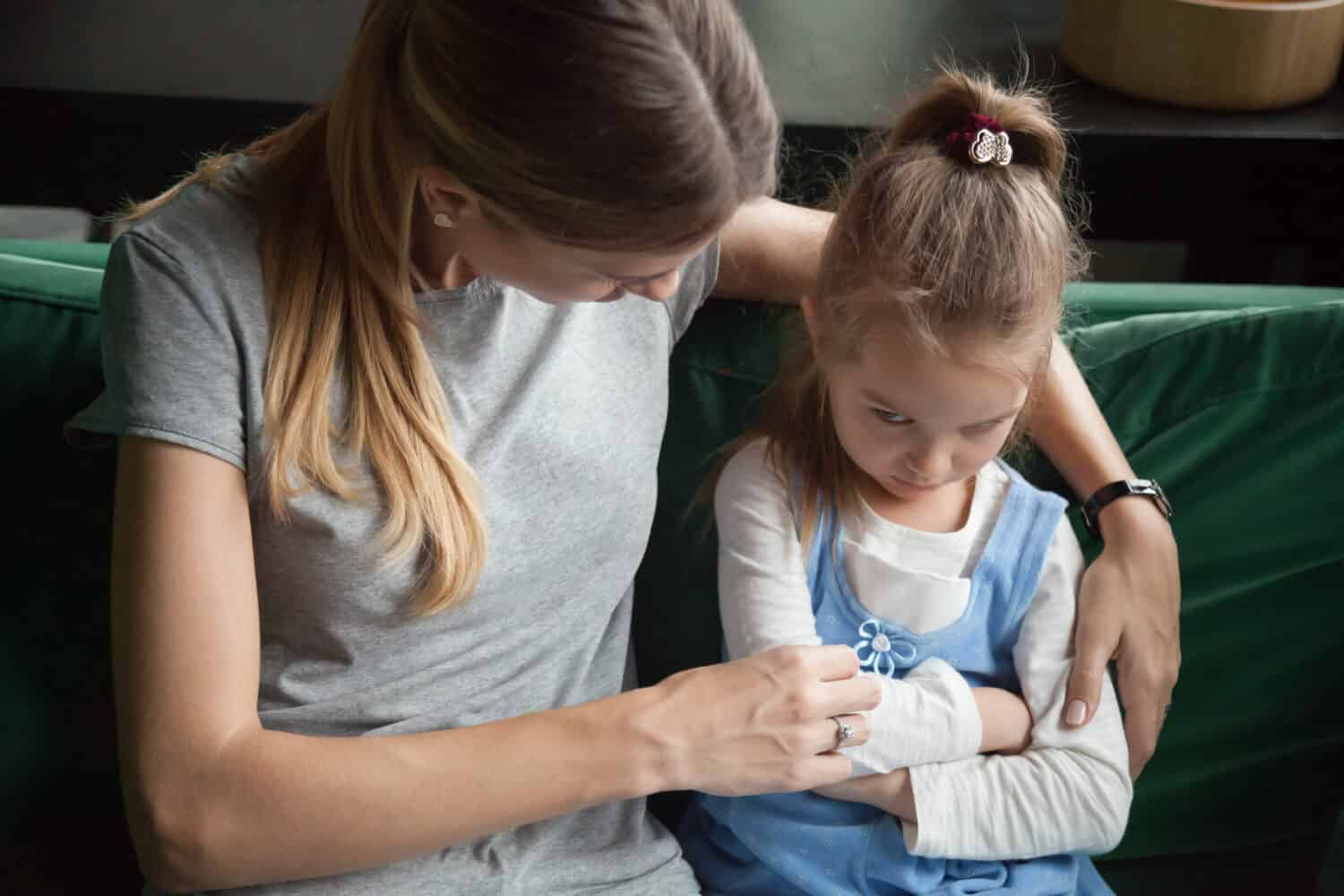
If putting our kids in a bubble would protect them from any harm, we would do it in a heartbeat. Unfortunately, that’s not realistic, and living in a bubble would be its own kind of harm, wouldn’t it? Sometimes, kids experience hard things. Your child might feel trauma from bullying in school or from child abuse or violence at home.
Or they might live through a natural disaster, a frightening health situation with a parent, or another event that will deeply affect them. It’s our job as parents to recognize these signs of trauma and do our best to help them heal, whatever that might look like. To understand how parents can help their children recover from trauma, we speak with mental health experts about trauma and its potential impact.
What Qualifies as Trauma in Kids?

©fizkes/Shutterstock.com
Trauma isn’t the same as everyday stress. “Although the word trauma is thrown around haphazardly, trauma is a distinct term used to describe an experience above and beyond everyday stress or hardship,” Dr. Sarah Loftin, MS, LPC-S, RPT-S, clinical therapist for Children's Health, tells Moms Who Think. She points to the National Child Traumatic Stress Network’s definition: “A traumatic event is one that is dangerous, violent, or frightening [and] may threaten a child’s life, body safety, or that of a loved one.”
“Trauma also depends on a child’s response,” Dr. Loftin explains. “A child may experience an objectively traumatic event (e.g., child abuse) yet exhibit resilience in the face of adversity and not have a trauma response.”
How Does Trauma Make Kids Feel?
Figuring out if your child has experienced trauma has a lot to do with how your child feels. Shebna N. Osanmoh I, PMHNP-BC, board-certified psychiatric nurse practitioner, tells us, “Traumatic events evoke intense fear, helplessness, or horror, and cause strong emotional or physical reactions that persist long after the event ends.”
“Unlike everyday stress or hardship, trauma is overwhelming and exceeds the child's capacity to cope, interfering with their functioning and sense of safety,” Osanmoh continues. “Stress and hardship may be challenging but are usually manageable and temporary, whereas trauma has deeper, long-lasting impacts on the child’s emotional and physiological state.”
Common Types of Trauma Children Experience

©DavideAngelini/Shutterstock.com
Here are common types of trauma children experience that parents may not realize, according to Osanmoh. These include:
- Medical trauma: Severe illness, painful procedures, or hospitalization.
- Divorce or family separation: Especially if accompanied by conflict or loss of a caregiving parent.
- Experiencing or witnessing violence: Abuse or violence aimed at the child, or seeing domestic violence, community violence, or accidents.
- Neglect or emotional abuse: Even subtler forms, such as emotional unavailability or instability, are traumatic.
- Discrimination: Racism, bullying, and community instability are significant but sometimes unrecognized sources of trauma.
How Can Trauma Affect a Child’s Development?
According to Dr. Loftin, experiencing trauma as a kid can have a lasting impact.
“Childhood trauma can impact the development of a child’s brain, including the prefrontal cortex, which involves problem-solving and emotion regulation,” she says. “Trauma can lead to cognitive deficits and impact emotion regulation. This can result in longer-term anxiety and depression.”
Signs Your Child Is Struggling With Trauma

©Sharomka/Shutterstock.com
Your child may not come out and tell you they’ve experienced something traumatic in their life, but you can look for clues. Osanmoh shares the following signs to look for:
- Emotional: Anxiety, fearfulness, mood swings, depression, sudden emotional outbursts, withdrawal, or numbness.
- Behavioral: Regression to earlier behaviors (thumb-sucking, bedwetting), trouble concentrating, academic decline, aggression, risk-taking behaviors.
- Physical: Sleep disturbances (nightmares, insomnia), unexplained aches or pains, somatic complaints. Older children may use substances or engage in unhealthy sexual behaviors.
How Can Parents Create Safe Spaces for Their Kids After Trauma?
Everyone wants to support their kids, but it may not be easy to navigate helping them process trauma. The best thing you can do is keep it simple. According to Dr. Loftin, showing up for them doesn’t necessarily mean you have to find the right words to talk to them about it — just being there helps.
“Depending on the age of the child, it may not be important to verbally discuss the trauma,” she says. “Younger children benefit from playing, which is their natural language. If the behavior does not impair functioning, it may be helpful not to set a limit when a child is attempting to play out a traumatic event.”
Play-acting a traumatic event might look like your child recreating the death or funeral of a loved one. It might make you sad to see, but it’s actually healthy and normal. “This is the child’s way of communicating and making sense of what has occurred,” Dr. Loftin explains.
Another way to create a safe space? Let your child know that they can always talk to you. “Children need to know they are able to discuss the traumatic event,” Dr. Loftin says. “Often, caregivers do not wish to discuss the matter so as not to further worry the child. However, children may receive the message that they are not allowed to discuss the event, which can lead to further trauma symptoms and complicated grief.”
If and when your child does want to talk about it, do your best to listen. “Adults can create safe spaces by listening without interruption or judgment; providing consistent emotional support and reassurance; allowing children to share at their own pace without pressure; using age-appropriate language and tools (art, play, storytelling) to facilitate expression; and ensuring physical and emotional safety in the environment,” says Osanmoh.
Be Careful Not to Re-Traumatize Them

©fizkes/Shutterstock.com
Even with the best of intentions, sometimes parents can inadvertently hurt or re-traumatize their children by pushing too hard for a conversation or by caregivers oversharing and giving developmentally inappropriate information regarding the trauma.
“Helpful support includes sustaining communication, providing appropriate information, maintaining a routine and boundaries, utilizing safety language (e.g., ‘you are safe;’ ‘you are being taken care of’), prioritizing connection, and helping a child feel understood by reflecting their feelings,” says Dr. Loftin.
Osanmoh adds, “Helpful support respects the child’s cues and pace, focuses on emotional safety, and emphasizes empowerment and resilience.”
Be careful not to minimize their feelings, use harsh discipline, repeatedly expose them to reminders of their trauma, or fail to provide predictable safety, as these actions could potentially re-traumatize your child. “Sensitivity and trauma-informed approaches are critical to avoid causing further harm,” Osanmoh adds.
How Else Can Parents Help Their Kids Heal From Trauma?

©Yuganov Konstantin/Shutterstock.com
Children thrive on routine, especially after going through something traumatic. Dr. Loftin points out that limits can help your child feel safer, even as parents tend to stop maintaining routines or boundaries after a traumatic event.
“A child needs to feel connected and safe to be resilient,” she explains. “Resilience is not an innate characteristic. It is born from facing and bouncing back from adversity.”
“Helping a child feel connected with a safe adult is of the utmost importance,” Dr. Loftin adds. “This can occur through a regular, special, child-led playtime for younger children or safe interactions with various activities (e.g., bracelet-making, arts and crafts) or conversation for older children.”
And don't expect your child to heal overnight. Yes, kids can bounce back quickly, but it may not happen on your timeline.
“Healing is a gradual, non-linear process needing time and consistency,” Osanmoh says. “Trauma-informed care involves recognizing trauma’s widespread impact and integrating this awareness into parenting and caregiving.”
Osanmoh recommends finding support networks (this could be family, schools, or professionals) to help with recovery, as well as taking time to focus on your own self-care so you don’t burn out when supporting your children.
Finally, do your best to get your child help right away. “Early intervention greatly improves outcomes, reducing risk of chronic mental and physical health problems,” Osanmoh says.
For more information on helping your child through trauma, the Child Mind Institute offers a detailed guide on helping kids based on their age. The National Child Traumatic Stress Network also has additional resources. And don't hesitate to reach out to your child's pediatrician or mental health counselor for help.
If you, your child, or someone you know is in immediate distress or is thinking about hurting themselves, call or text the Suicide & Crisis Lifeline at 988. You can also text the Crisis Text Line (HELLO to 741741) or use the Lifeline Chat on the National Suicide Prevention Lifeline website.
The image featured at the top of this post is ©fizkes/Shutterstock.com