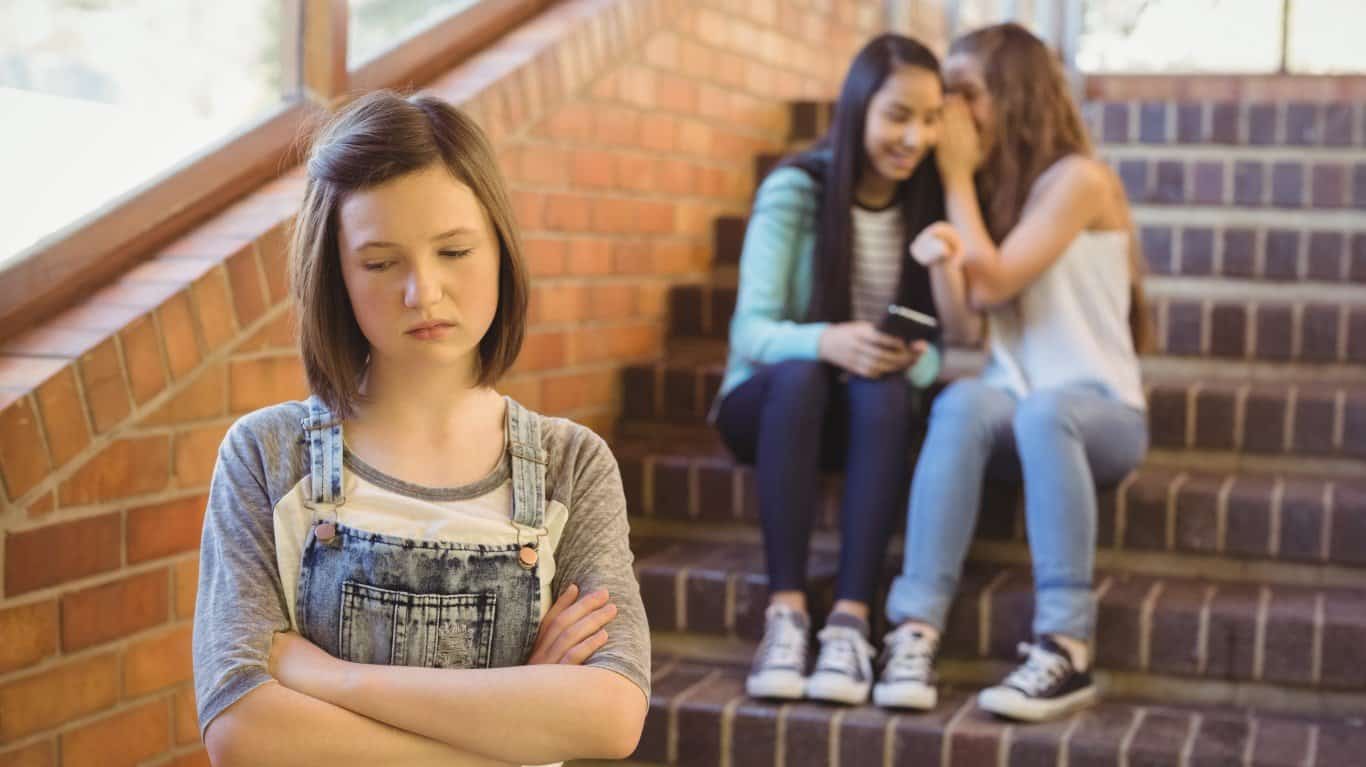
One in five children is bullied each day in the U.S. While alarming, this statistic hits differently when it's your own child doing the bullying. As a parent, you feel a range of emotions upon realizing this: worry, panic, fear, and even shame. And when it comes to confronting your child, it feels like dozens of questions flash through your mind.
Are they going through something you can't see? Did another child start it? Should educators or even a therapist be involved? Do you need to confront the other child's parents? Who should issue the apology? And this is just the tip of the iceberg until you get down to the real story.
The truth is that bullying happens for several reasons. We speak with Laurie Singer, a licensed Psychotherapist and Board-Certified Behavior Analyst who founded Laurie Singer Behavioral Services, to learn what those might be. But when it comes to your child being the bully, rest assured: you're not alone, and you can change the situation for the better.
What to Do When Your Child Is Caught Bullying

©jabejon / Getty Images
As with any tense situation involving children, Singer recommends staying calm first and foremost. Then, calmly, but clearly, explain the differences between right and wrong. She says that sometimes, flipping the script and asking, ‘How would you feel?' allows a child to experience things from someone else's point of view.
“For instance, if a parent sees their child pushing past another child at the playground to get on the slide, that’s the time to intervene and stop the behavior,” Singer says. “They can say something to the child like, ‘It’s not okay to push past other people to get to the front. It isn’t fair to those waiting in line, and it makes others upset when you go in front of them. How would you feel if someone pushed you out of line?”
From here, Singer encourages parents to follow through with the appropriate response. In this case, guiding their child to the back of the line. “If the child protests, you can let them know they have a choice: go to the back of the line or take time away from play until they can make a good choice. Children then learn that actions have consequences,” she says, adding that apologies are also a necessary step.
“Children should be made to apologize to the individual they bullied. The person bullying needs to be taught responsibility. If a parent observes bullying in the moment, the parent should intervene and have the child apologize,” Singer encourages. “If the child is older, he or she needs to write a letter of apology for their behavior. We face consequences for our actions throughout our lives as adults, and the sooner children learn this and understand how choices matter, the better.”
Learning the “Why” Behind Your Child's Actions
For a child, every action is the result of something they feel or experience. Most children only begin to grasp the concept of right vs. wrong by age three, and this is not fully cemented until at least age five. By the age of seven, most children enter the “age of reason,” when their conscience kicks in to help them make moral decisions. But even after this, kids may still struggle when other personal or environmental factors affect their emotional reactions.
©fizkes/Shutterstock.com
“Each situation is different, and there are a number of reasons why a child engages in bullying behavior. If the child has used bullying behavior from a young age, and it’s gone unaddressed until he or she starts school, most likely it has to do with emotional regulation. The child does not have the social skills to recognize his or her emotions and therefore engages in bullying to get his or her needs met,” Singer explains to us.
“In a nutshell, social emotional regulation is learning to manage our emotions and actions in whatever setting we’re in. It’s something that can be taught and should be worked on in every environment of the child,” she adds. “In cases of bullying, where a child is seeking to have their needs met, parents should consider those needs and have the child explain what other paths towards reaching their goal would look like.” Here, Singer emphasizes that the phrase, “You catch more flies with honey than vinegar,” carries significant weight.
Consequences: What Does Discipline For Bullying Look Like?
Underneath the weight of acknowledging your child bullied another, also exists the stress of disciplinary action. Actions have consequences, but can some be too harsh, even in the case of bullying? Singer says that in addition to correcting the behavior, parents can also consider using praise as a tool.
“Praise is a much better teaching tool than punishment, so work towards praising the child when they engage in the desired social behavior,” she tells us. “Be specific and let the child know what the behavior was that you liked. For example, ‘I like the way you stood in line and waited your turn for the slide. Good job.' This doesn’t mean that praise should be bestowed without earning it.”
©ANNA GRANT/Shutterstock.com
She adds that punishment vs. reward can encourage longer-lasting good behavior, rather than constantly punishing a child for poor choices. “This doesn’t mean that discipline is off the table. But it needs to be applied as a clear response to a consequence of actions. Without praise when the child does the right thing — and is only seeing the punishment for doing wrong — then anger, fear, and resentment can be the outcome,” she says.
Should Educators Be Involved?
Singer tells us that by the time most kids reach elementary school, more red flags may pop up. Some things parents may have overlooked or not noticed can become more apparent in a classroom setting.
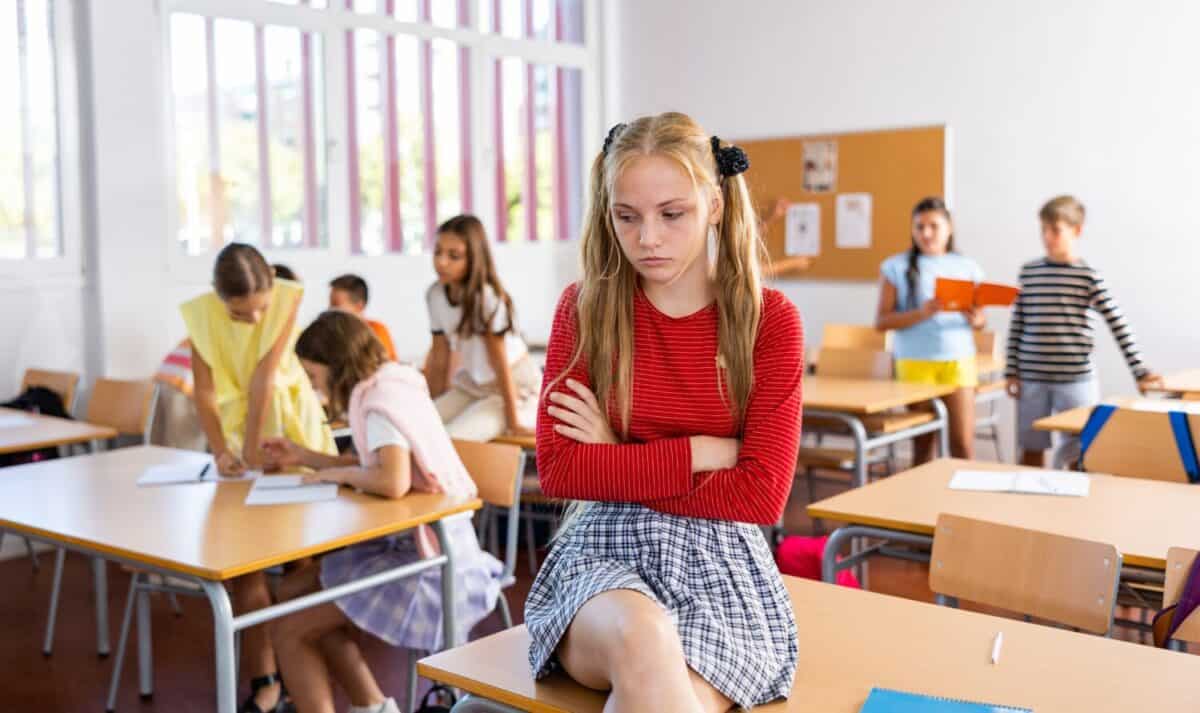
“Most likely, there will be trouble interacting on the playground or in other social school settings,” she says. “The child will be sent to the principal’s office, notes to the parents, or meetings will take place. And other children will start to distance themselves. Maybe in the form of not being invited to a classmate’s birthday or picked for games. This then exasperates the bullying child’s frustration, and the behavior can escalate.”
©BearFotos/Shutterstock.com
Singer explains that close attention should be paid to school pick-ups, interactions with friends, and behavior toward other adults. “The key is to look at the situation objectively. Pay attention to the child’s behavior at a park, a school pick-up, playdates, sports they may be involved in, and any time they’re with their peers,” she says.
If any signs of bullying are present, Singer also recommends leaning on other adults, including educators. “The phrase ‘It takes a village to raise a child' is something to remember when trying to change poor behavior like bullying. Parents should let each adult in the child’s life know that they’re working on a specific behavior and ask that they also contribute,” she encourages.
The image featured at the top of this post is ©Wavebreakmedia / Getty Images