
You might love soaking up those newborn snuggles or embracing your older child’s bear hugs. But while you savor those squeezes, being manhandled all the time can get tiresome — and that’s when being touched out enters the chat.
Sure, it’s a touchy topic, because admitting that all that physical touch might be too much can feel taboo. But does feeling touched out mean you’re a bad parent, or that you’re scarring your 6-year-old if you decline yet another kiss? Not at all. We speak with multiple experts to find out more about why this happens and what moms can do about it.
What Does Being Touched Out Mean?

©Tomsickova Tatyana/Shutterstock.com
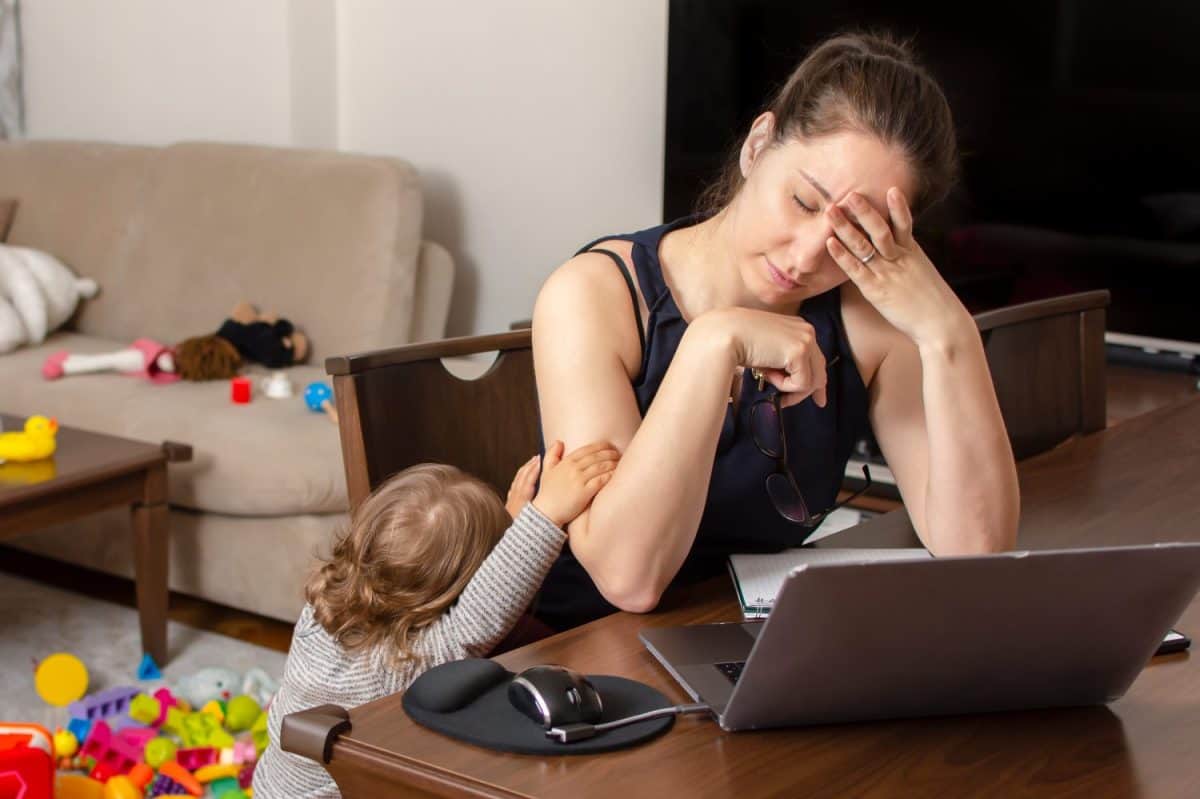
Yes, you love when your toddler climbs into your lap to tell you about their day in preschool, but sometimes your inner agitation starts to bubble up. And that, moms, is the definition of being touched out.
“To be touched out means that you’ve hit your capacity for physical stimulation,” explains Jessica Foley, MA, LMHC, a psychotherapist. What it doesn’t mean, though, is that you love your child any less. “We all have different thresholds,” Foley continues, “but moms sometimes have to exceed their own boundaries because of the needs of young children.”
Is One Type of Touch More Triggering Than Others?
Being touched out looks different from mom to mom. It might be nonstop nursing sessions, or a kid who is literally breathing down your neck. “It really does vary so individually,” Foley explains. “Some moms feel touched out from having to hold their children a lot, but I also hear more about this in the toddler years when children are exploring and more mobile.”
Laura Petix, MS OTR/L, a pediatric occupational therapist, explains that everyone’s sensory profile is unique. “All of these kinds of touch are imposed touch, which means that they’re not within the person’s control,” she says. “That can be a little more triggering to the nervous system.’’ Even a light, unexpected touch can be just as uncomfortable as an endless embrace from your exuberant preschooler.
©ErsinTekkol/Shutterstock.com
When Does Being Touched Out Become Stressful?
Sleeping next to your child who only falls asleep with you might have been okay in the beginning, but now it’s exhausting for you. Petix says your body will tell you when you’ve reached your cuddle quota. “Tactile is one of our eight senses that our brains and nervous system process at all times of the day,” she says.
“Some people are more sensitive to touch than others — even those with an average tactile processing system can experience dysregulation, too.” That imbalance can trigger irritability, overheating, and moodiness.
“For moms, being touched out often is a result of your kids using you as a jungle gym, playmate, baby carrier, food source, or all of the above,” adds Foley. “And because motherhood is a full-on contact sport, moms often can feel overstimulated by the sheer amount of hands-on time they have with their kids.” That might explain why picking up your toddler for the umpteenth time ticks you off, or why you feel trapped when your baby will only sleep on your chest.
How Do You Protect Yourself From Being Touched Out?
Feeling touched out isn’t something that happens in an instant. It often builds over time until you feel like you no longer have autonomy over your body. In those moments, be mindful of what you’re feeling — and honest about it.
The key is recognizing your body’s boundaries. “When you feel that you might be reaching your limit, start setting boundaries, and tag team it with your partner or another care provider,” says Foley.
Start by doing a mental review of a typical day to find a pattern of when you start feeling frustrated, and schedule touch-free times around feedings or naps. Even if you’re feeling fine, honor yourself and take that break anyway. “There is nothing wrong with you, and by implementing some planned touch-free breaks, you can assist in extending your tolerance when perhaps you cannot escape a touched-out moment.”
Petix suggests building in short 1–2 minute breaks every hour — washing your face, smelling a soothing scent, or simply sitting alone in another room once your children are safe. Even a quick call or text with a friend can reset your system.
Having firm boundaries (and sticking to them) also models healthy limits for older kids. “For example, you can say things like: ‘Let’s cuddle for 2 more minutes, then Mommy is going to sit on her chair all by herself. You can sit in this chair, or on the floor,” Petix says. It might not be easy at first, but being consistent makes a big difference.

©Vaillery/Shutterstock.com
How Do You Handle Being Touched Out Without Hurting Your Child’s Feelings?
Kids are remarkably perceptive. They can sense when you’re stressed out, and without an explanation, they might think it’s their fault. That’s why it helps to be open: explain that while you welcome hugs and cuddles, sometimes moms need a minute to herself, too.
You can also give your child closeness in ways that work for you. Instead of carrying a child who can walk, try holding hands. “It’s okay for moms (and all parents) to set loving limits around their children and when kids might need to be held,” says Foley. That way, you’re not rejecting your child’s need for affection — you’re simply shaping it in a way that also honors your own boundaries.
Another option is redirection. Offer your child an independent activity, and praise them for playing on their own or being quiet while your newborn naps. “Having regularly scheduled touch-free times prevents you from getting so overwhelmed that you end up lashing out,” says Foley.
Like every mommy milestone, those feelings of being touched out will eventually lessen as your child grows older and more independent. Until then, don’t lose touch with what matters most — your own well-being. And you never know: one day, you could be the one hoping for some extra hugs from your tween.
The image featured at the top of this post is ©Alena A/Shutterstock.com