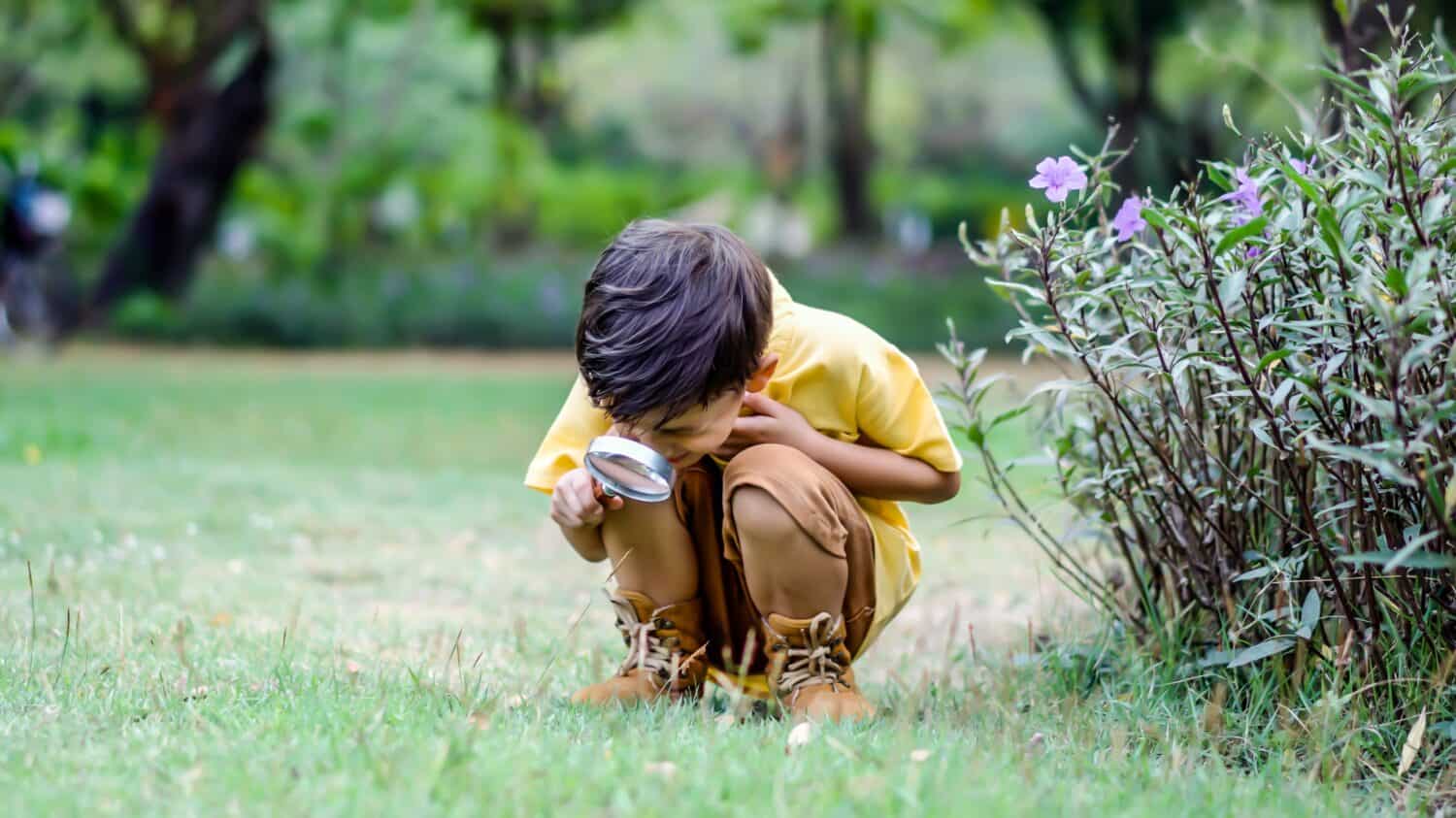
Life with a toddler is a trip. One minute, they’re having a tantrum because you won’t let them draw all over their baby sibling’s face (and with permanent marker, no less). Next, they’re snuggling with you. But in between, they’re asking questions — lots of them, and they almost all start with the word “why.” While the “why” questions seem endless, their curiosity might start showing up less than it used to as they get older. And that can leave you asking a why question of your own: “Why isn’t my child asking me more questions?” Thankfully, we have the answer.
Why Are Kids Curious?

©Yuganov Konstantin/Shutterstock.com
It’s a brave new world, and your child is naturally curious about how it all works. For the most part, curiosity (like wanting to know why things happen or how something works) is how they learn about the world. “Curiosity is early childhood’s learning system,” says Christina F. Chick, PhD, a licensed clinical psychologist and Clinical Director at Minds Matter Psychotherapy. “Kids are wired to chase novelty or test cause-and-effect.”
When it comes down to it, kids can’t help being curious; it’s just part of their biology. “Young children are wired for exploration,” says Colette Lopane-Capella, LMHC, a New York–based therapist and founder of New Day Vitality Mental Health Counseling PLLC. “From a developmental standpoint, early childhood is a period of rapid brain growth, especially in areas related to language, executive functioning, and social understanding. Curiosity is how children learn to make sense of the world.”
But being inquisitive isn’t just about learning why their shadow follows them everywhere, or why the sky is blue instead of, say, purple. For many children, asking why questions is a way for them to feel safe in a world where everything is big, loud, and sometimes scary.
“Children also ask questions to make the world feel predictable and safe,” Chick adds. So even if it might feel that your child is trying to drive you crazy by asking the same “why” question over and over, they’re just trying to feel safe with the person they feel safest with — you. Adds Lopane-Capella: “Why questions repeatedly isn’t random — it’s their brain actively building connections. Curiosity is also tied to attachment; when kids feel safe, they explore more.”

©fizkes/Shutterstock.com
What Are Kids Curious About?
There’s no topic too big or small that a child won’t want to talk about. To a curious kid, everything can feel fascinating when it’s new. That said, certain subjects intrigue kids more than others. “Children are especially curious about how things work, fairness, or rules,” says Chick. Another area of interest: the human body. That might explain the fascination with farting, and (you know) butts.
Cause and effect may also pique younger children’s curiosity. “Kids love to ask ‘What happens if…?’ questions,” says Lopane-Capella. That might explain why they repeatedly ask why they have to take a bath that night.
How Does A Child’s Curiosity Change As They Get Older?
As kids grow up, they are often still curious — but in new ways. Suddenly, they’re not interested in simply “why” questions about everyday things, but rather bigger ideas about how things work or why they happen. “As children’s thinking becomes more abstract, their curiosity evolves,” says Lopane-Capella. For example, a younger child might want to know why a train makes a choo-choo sound, whereas an older child might want to understand the mechanics or science behind it.
Younger children tend to ask why questions about things that affect them directly, like, “Why can’t I have another ice cream cone?” When they begin to mature, their curiosity can shift towards bigger social questions — especially about relationships. So don’t be surprised if your child shares that their best friend’s parents are getting a divorce and wants to know why that happens.
When Does Curiosity In Kids Change?
At first, you might not notice that your child isn’t asking as many questions as they used to. It’s because curiosity doesn’t disappear overnight. Rather, you may start to see a change beginning around the tween years. “Curiosity often begins to shift in late elementary school and early adolescence,” says Lopane-Capella.
There are real reasons why the questions stop coming. “Increased academic pressure, social comparison, and performance-based environments can dampen outward questioning,” Lopane-Capella adds. Why? Well, one of the biggest barriers to asking questions is the fear of being wrong. “The ‘right answer’ culture can be especially powerful,” says Lopane-Capella. “When performance and comparison become central, risk-taking — even intellectual risk-taking — can feel unsafe.”
The thing is, it’s not that the questions stop — it’s that they go unasked.
Chick explains that curiosity can become even more private when kids feel that asking a question might expose them to judgment. “School domains are often tied to public performance or comparison (reading, math, presentations) and social topics where kids worry about standing out,” she says. The questions slow down because peer acceptance becomes more important than exploring new subjects and asking challenging questions.
This Is Why Parents Should Encourage Curiosity
Curiosity isn’t just cute — it’s protective. “When curiosity is consistently suppressed, it can impact creativity, resilience, and intrinsic motivation,” Lopane-Capella explains. “Curiosity drives problem-solving and adaptability — skills that are protective for mental health over time.”
And kids who are encouraged to be curious take that love of learning well into adulthood. “Naturally inquisitive children often grow into adults who value learning and exploration,” Lopane-Capella continues. Whether your child remains curious or not often comes down to their environment. Are questions encouraged, or treated as an annoyance? “When curiosity is encouraged, it strengthens. When it’s criticized or dismissed, it can contract,” she says.
How Can Parents Tell If Their Child Has Become Less Curious?
Curiosity is a curious thing. You’re probably not going to notice that your child isn’t as inquisitive as before, because bigger issues (like your kid’s mood swings or being late for school again) are louder. Still, there are subtle signs, according to Chick. “You can tell if you see a sustained drop in spontaneous ‘why/how,’ less tinkering/pretend play, more ‘I don’t know/I don’t care,’ or avoiding new challenges and choosing only familiar activities,” she says.
So what should you do if your child isn’t as curious as before? First of all: don’t panic or assume that your child has lost their thirst for knowledge. They haven’t. They might just be going through a quieter phase. “Curiosity ebbs and flows, after all,” Lopane-Capella says.
©Sergey Novikov/Shutterstock.com
How to Foster Curiosity in Your Child
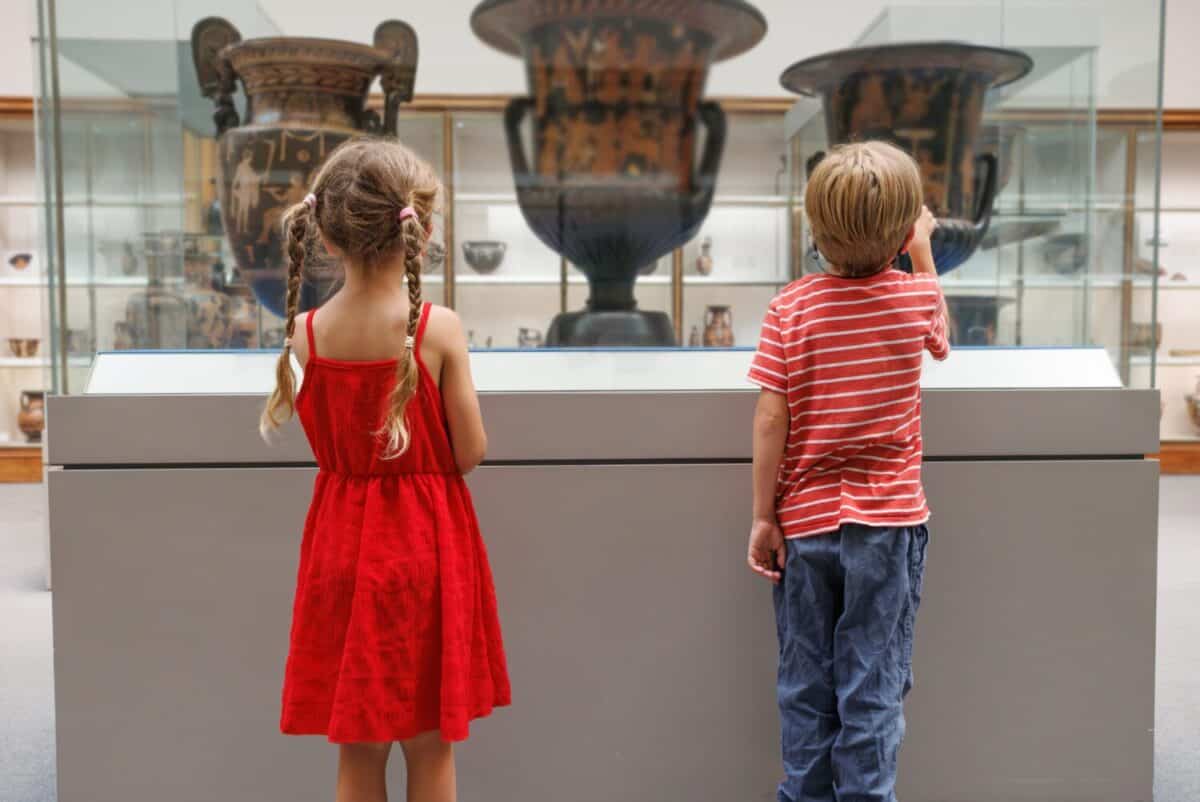
There are simple ways to spark curiosity naturally, though. Create low-pressure environments where questions are welcomed,” says Chick. That might look like exploring something new together, like visiting a museum, or simply letting your child experiment and play.
You can also encourage your child to wonder right along with you. Say something like, “I’m curious why that works that way,” and see if you can explore some possible answers together. When kids see adults asking questions and exploring ideas, they learn that not having all the answers is perfectly okay.
And you have to give your child the space for curiosity to be cultivated. If your child has a packed after-school schedule that keeps them busy, they’re not going to have the time or mental bandwidth to daydream. “That’s why it’s important to protect unstructured time and reduce over-scheduling, when possible,” Chick explains.
While curiosity isn’t always a constant thing, there may be a time when the consistent lack of enthusiasm could be concerning. “If the change in your child’s behavior comes with anxiety, sadness, or withdrawal, you should speak with your child’s doctor to help them get the support they need,” says Chick.
When kids feel seen, safe, and supported, their curiosity can continue to spark questions and inspire deep thinking throughout their lifetime. That’s why providing the space for your child to stay curious, welcome questions, and show them that mistakes are nothing more than experience earned is so important. So get curious with your kid. You both just might learn something new.
The image featured at the top of this post is ©tetesong/Shutterstock.com