As times change, so does the world, and more specifically, the types of jobs that will exist in the future. If you’re a parent of a school-aged kid, you’ve likely heard of STEM or STEM classes. It’s an acronym that stands for Science, Technology, Engineering, and Math. At first, the term may seem daunting, but if you think your child would enjoy learning more, then you need to get involved.
The great thing about STEM is that you can start small. You don’t need to enroll your son or daughter in computer programming classes right away. Instead, your kids can start to learn valuable lessons while they play, interact with others, and do their chores. Let’s look further into this phenomenon and how you can help your child today.
What STEM Means for Kids

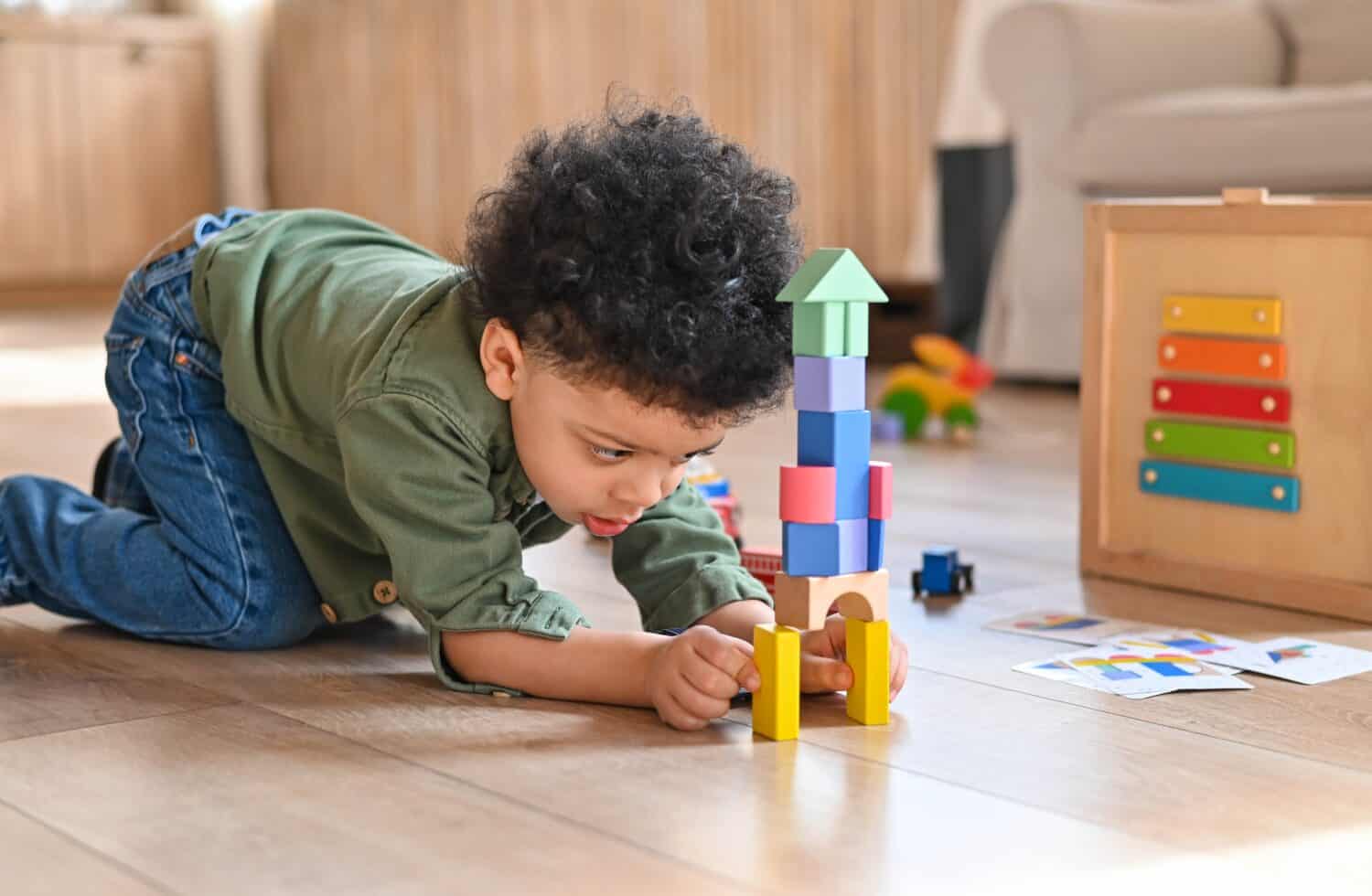
Many STEM principles can be taught through play with blocks, LEGOS, and other toys your family probably already has at home.
©BaLL LunLa/Shutterstock.com
While the term may stand for Science, Technology, Engineering, and Math, this idea is really more about a different way of thinking. Kids who may go into these fields in the future may show particular attributes already, such as:
- Noticing patterns
- Solving problems creatively
- Showing curiosity and asking “why”
- Often trying again after something fails
Your children may exhibit these attributes at school, home, or even while playing at the park. Some kids have a particular way of thinking, and STEM may be for them.
Incorporating STEM Through Play
Before it even comes time to enroll your kids in special classes, you can help them hone their science, math, or engineering skills while they play in the house or in the backyard.
Fun With Blocks
There are currently toys on the market that seem like simple fun, but they can teach your kids volumes. LEGOs, blocks, and magnetic tiles are just a few options. When your kids build towers or structures, they’re learning about structure, balance, and gravity. One day, they may construct real buildings.
When your kids play with blocks, you can ask questions that can help them focus their thoughts. Questions like:
- “What shape will be the tallest without falling over?”
- “What type of base should you create to make it sturdy?”
- “What happens if we use bigger blocks at the bottom?”
- “How can we make this bridge stronger?”
Then, let your kids try to answer or work it out on their own. After that, feel free to help them out and see how they do the next time.
Sand, Water, and Messy Fun
Take your kids to the beach or out to the backyard on a hot day, and the fun they have with water will teach them more than any textbook could. When your kids are playing in the pool or the bathtub, they may notice that some objects float while others sink, and that the water sometimes flows downhill or just puddles in place.
When you are playing with water, there are certain activities that you can try, such as building a foil boat and seeing how many coins it can hold while staying afloat. You could also pour water through funnels at different speeds and see how your kids react. You can also look at how fast or slow certain objects sink.
Outdoor Nature Fun

There's much knowledge to gain even during quiet walks outdoors.
©Valery Zotev/Shutterstock.com
You can also introduce many STEM ideas while your kids are outside playing in the yard or at the park. Take your kids for a walk every day, and when you’re out there, you can show them different concepts, such as:
- Sorting leaves by shape, size, and color
- Safely watching ants as they walk and seeing how they each have different roles
- Watching how shadows change during the course of a day
A great activity for learning new skills is growing a garden. Have your kids help you plant seeds, and then watch as they grow over time into a lovely flower or plant. In addition to learning new concepts, watching a seed grow into something new and knowing that you had a part in it is great for your mental health.
While you’re gardening, ask your kids questions that prompt them to think. Questions could include, “What do plants need to live?” or “Why do you think worms come out after rain?” Then, talk about their answers.
Lessons in the Kitchen
Whether your kids have an interest in cooking or they just like to watch you while you prepare meals, there are many STEM lessons you can impart during the process.
One of the simplest ways to teach your kids analytical skills in the kitchen is to show them how you measure ingredients, as this introduces numbers and fractions. Other activities that can get them thinking include counting blueberries by ten, comparing which bowls hold more food, or doubling ingredients for recipes like pancake batter and seeing how your kids react.
There are also many chemistry-related concepts that you can incorporate into your cooking lessons. Ask questions that prompt them to think more deeply about food preparation. Questions like:
- “Why do cookies spread in the oven?”
- “What would happen if we left out the baking powder?”
- “What do you think makes the dough puff up?”
Your kids don’t need to know all of the answers, and neither do you. These are just questions that get a youngster's mind moving in different ways. You can also teach them a few lessons while you’re shopping for ingredients at the grocery store. The kids can help weigh the fruit on the scale, compare prices, and even estimate the final cost at checkout.
STEM in Chores
Perhaps the greatest opportunity to teach your kids about science and math concepts is when they’re doing their chores. For instance, when they help with the laundry, and they’re sorting socks, they’re learning about classification. When they pour the detergent, they’re learning about the concept of volume. Talking about using hot versus cold water teaches them a bit about energy.
Later, when your kids are sweeping the floors, or they’re watching you while you clean, you can introduce them to lessons about how soap breaks down grease, how vinegar removes odors, and how baking soda fizzes while it cleans. Before using a product, read the label with your kids, and they’ll learn a bit about safety awareness.
If you’re ever fixing items around the house, building furniture, or changing batteries, have your kids watch, and you can introduce them to engineering and technology concepts. Remember that when you’re teaching about tech, it’s more than just computers and screens. You can introduce different types of tech, such as how a flashlight works, how kitchen appliances work, and how an old radio works.
Consider creating a STEM kit that you keep around the house so your kids can connect the concepts they’re learning. The kit can include measuring cups and tape, magnifying glasses, a notebook and pencils, a flashlight, and anything else you may feel could help.
STEM on the Go
When you’re driving around, running errands, and bringing your kids from place to place, you can introduce other concepts. As you drive, have your kids count license plates from certain states or cars of specific colors. Talk a bit about distance, speed, and time, and have your kids estimate how many minutes it will take to reach your destination.
Once you get where you’re going and you’re waiting in line, you can practice clapping patterns, play I-Spy with shapes, and have them guess how many people are in line ahead of you.
If one of your stops includes the park, teach lessons while they play. Things like how swings demonstrate momentum, how slides show friction, and see-saws illustrate balance.
Concepts by Age
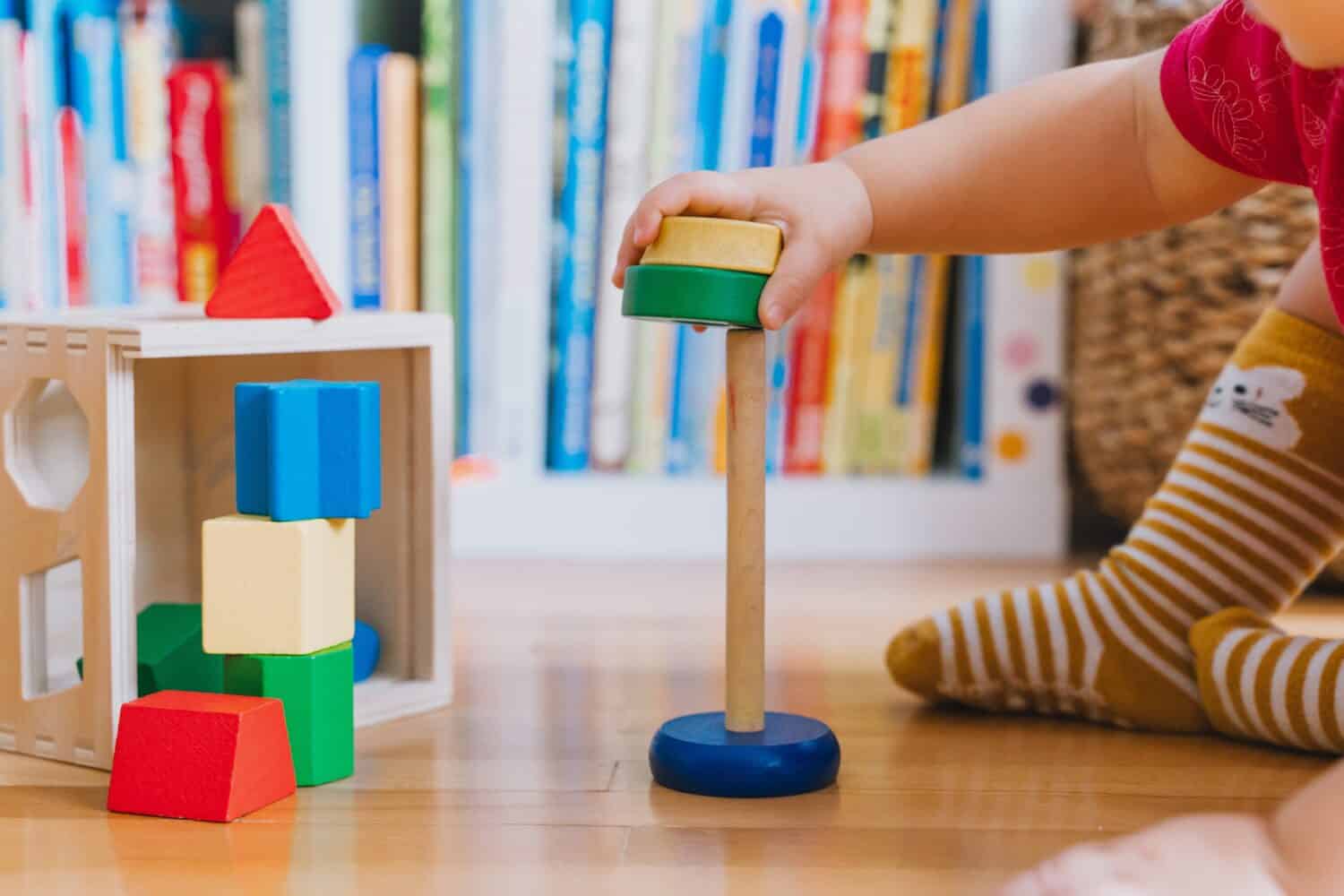
Even toddlers can build a STEM foundation by playing with blocks and shapes.
©Natalia Deriabina/Shutterstock.com
Remember that you don't have to be an expert in science, technology, engineering, or math. You’re just introducing simple concepts that will get your kid’s wheels turning, and you can start at almost any age. Here are some ideas for different age groups:
- Toddlers (2-3): Naming and pointing out shapes, pouring water, pushing toy cars down ramps.
- Preschoolers (3-5): Mixing/combining colors, simple measuring, sink-or-float games, and counting during clean-up activities.
- Early Elementary (6-8): Following simple recipes, tracking and identifying weather, and building challenges with blocks.
- Tweens (9-12): Budgeting their allowance, planning routes on a map, home repairs, and basic coding.
These are all activities that you can do even if you feel like you don’t have a lot of time or that you’re not that good at math, and even if your kids haven’t yet shown an interest in STEM-related activities.
The Real Goal
In the end, the real goal of introducing these simple concepts is to prepare your kids for the future. Even if your child doesn’t become an engineer or math teacher, introducing this way of thinking will teach them how to ask questions when they don’t understand something and test ideas to see what will work in their own lives. Introduce simple concepts, and you’ll impart skills that will guide your kids for a lifetime.
The image featured at the top of this post is ©Yarrrrrbright/Shutterstock.com