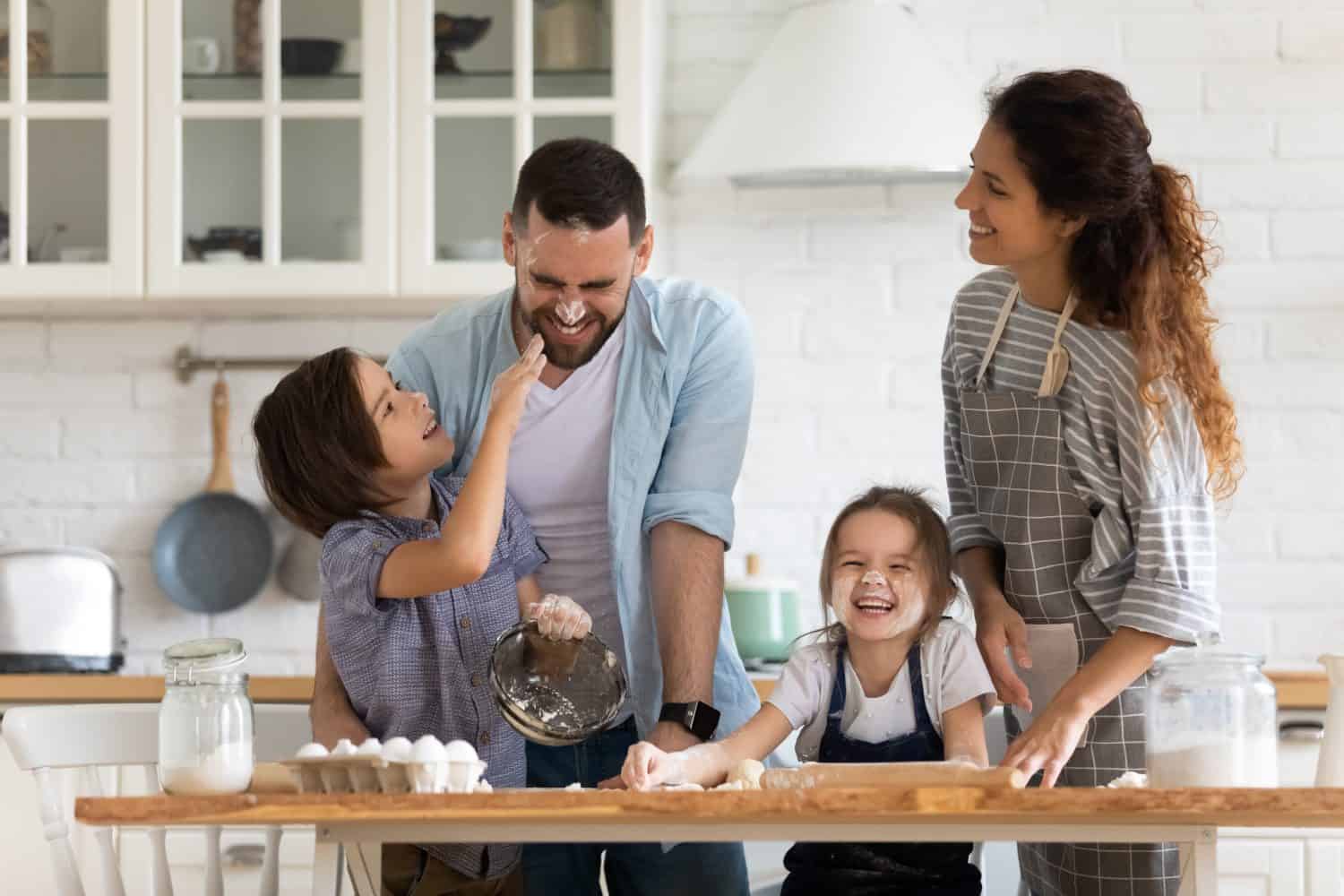
Introducing your kids to meal planning and cooking may seem like a hassle, but the truth is, there are so many wonderful things they can learn from working with you in the kitchen. It’s basically a built-in STEM lesson!
Parents can teach kids of all ages concepts related to math, science, and more while showing them a valuable life skill at the same time: how to make dinner. And, no, you don’t have to be a homeschool family to take advantage of this wonderful at-home teaching. Anyone can incorporate some (or all) of these lessons into their nightly dinner prep with their families.
From talking points revolving around measuring ingredients to practice doubling a recipe, plus actual food-based science experiments to try, there are so many ways you can teach kids in the kitchen. Here are a few tips to get you started.
Measuring
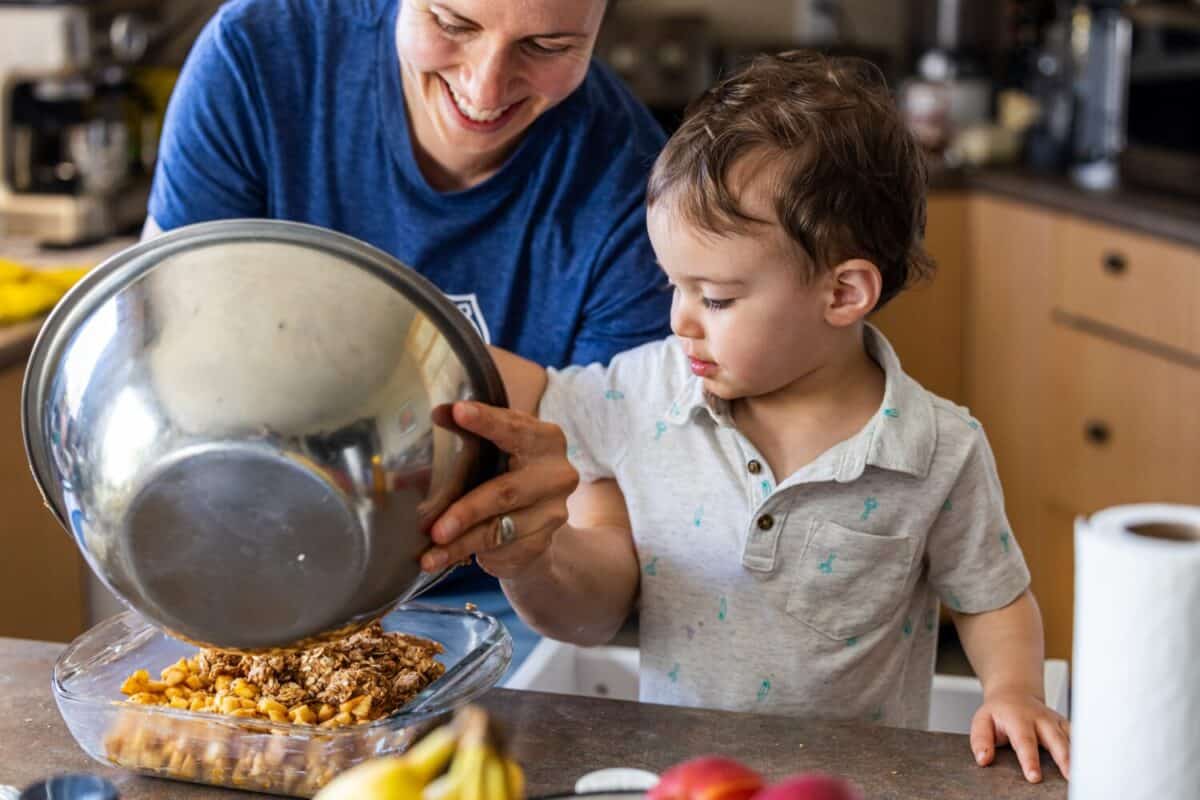
Kids can help measure ingredients and learn about math in the kitchen, even at a young age.
©EB Adventure Photography/Shutterstock.com
Much like chemistry, cooking is all about precisely measuring ingredients. The National Education Association recommends teaching kids by having them measure a variety of ingredients with different measuring utensils, which include liquid and dry ingredients.
Talk about the thickness of different ingredients — oil pours slowly and heavily, whereas water is lighter and flows faster. You can also show them how to use a knife to level off excess flour in a measuring cup or baking soda in a teaspoon, or explain that it's okay to go slightly over the limit for certain things like seasonings (or chocolate chips!).
For younger kids, simply counting the number of eggs or blueberries needed is good practice as well.
It’s fun, and if things get messy, that’s all part of learning!

There are many ways for kids to learn math skills while also learning how to follow a recipe.
©PeopleImages.com – Yuri A/Shutterstock.com
Converting, Doubling & More Measuring Practice
There are plenty of ways to sneak math into your cooking lesson. Doubling the recipe? Teach your kids how to multiply the measurements for each ingredient to make more pancakes or pasta. Or, conversely, how to halve a recipe when you want a smaller portion.
You can also teach your kids about different measuring conversions. We have a conversion chart magnet on our fridge that's helpful, so you can also use a visual like that to show them that one cup of water is 16 tablespoons or 4 quarter cups.
One of the most fun ways to use math? By slicing a freshly baked cake or pan of brownies and having your child learn how to divide it into five pieces for each member of the family, for example, or cut it into equal pieces. Fractions associated with a tasty treat are much easier to remember.
Hot vs. Cold
Ingredients change depending on their environment, which is why water boils and evaporates when it’s hot and freezes into ice when it’s cold. This feels like basic knowledge, but these are the building blocks for learning about the stages of matter, according to the NEA.
You can also observe chemical reactions in cooking, such as adding yeast to bread to make it rise or combining baking soda and vinegar to see its reaction.
Conduct Experiments
While you’re waiting for dinner to finish, it’s the perfect time to conduct some real-life science experiments using ingredients from the kitchen!

Older kids can double recipes, convert measurements, and do other experiments while cooking.
©fizkes/Shutterstock.com
- Blind taste test: Gather different ingredients and blindfold your kids to see if they can figure out what they’re eating, as suggested by Kids-Cooking-Activities.com. Use 3-5 different foods, like pretzels, chocolate chips, cheese, and more, and write down what food they guess. This is a good lesson on how our senses work together to communicate information to our brains.
- Salt and water: In a process called osmosis, sprinkling salt on a sliced tomato will cause the tomato’s water to seep out because water moves from inside the tomato (where there is less salt) to the outside (where there is more salt) to balance the concentration of solutes, according to National Geographic Kids.
- Make rock candy: When you add enough sugar to water, you can make rock candy, per Mental Floss. This happens because the water can’t hold all the dissolved sugar; eventually, the water will evaporate, and the sugar will come together to form tiny crystals. For even more fun, add food coloring to the water!
- Sink or float: KC Adventures recommends playing sink or float with your kids. Fill up a large bowl or bucket of water, then find different food items to test their buoyancy. Kids can guess the results of the experiment at the beginning, then write down what each type of food does when it’s submerged in water.
It doesn't have to be a long, drawn-out lesson for kids to learn something from cooking with you. Even just integrating small lessons or having them practice the steps of cooking can teach them something, and it's a fun way to bond.
The image featured at the top of this post is ©fizkes/Shutterstock.com