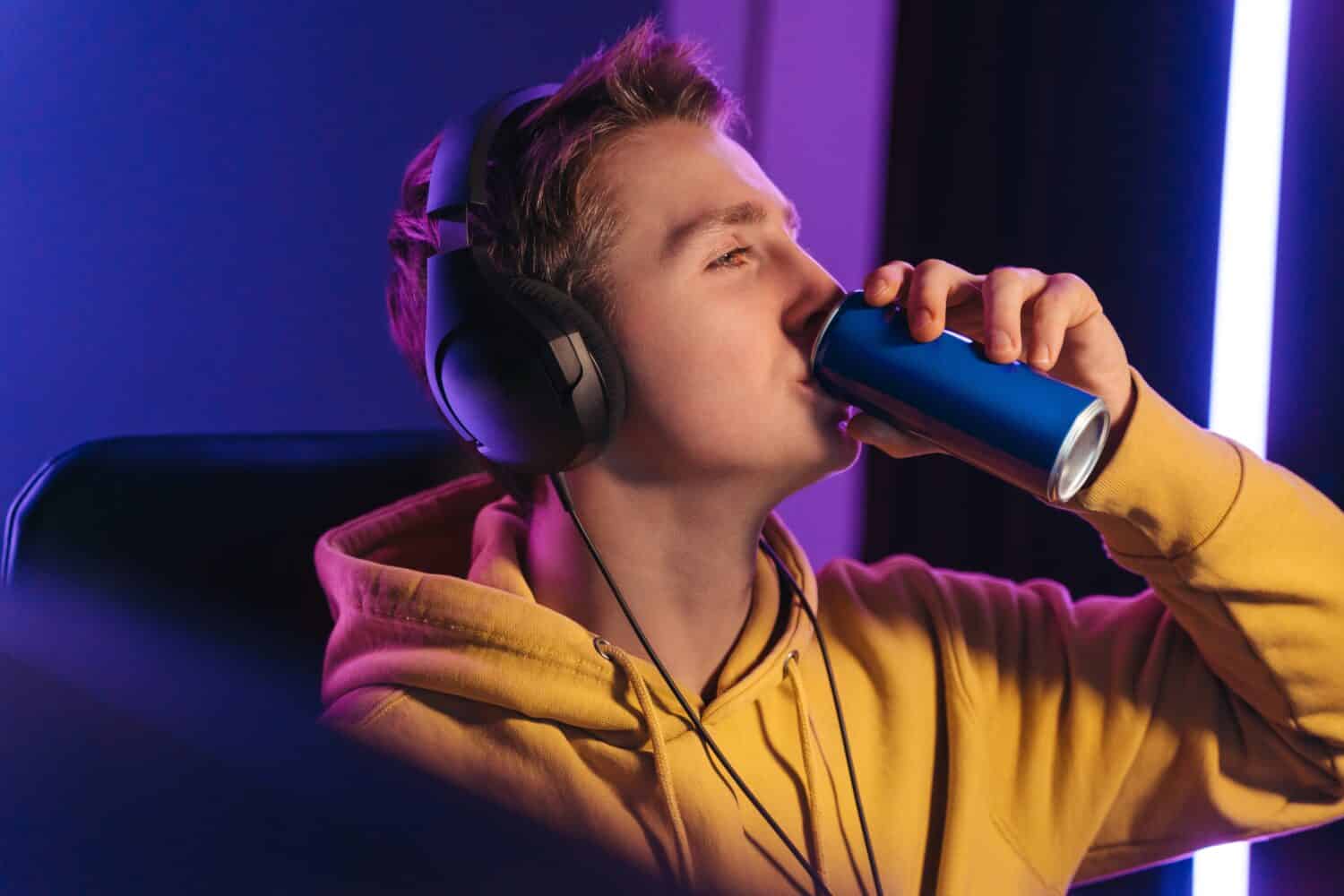
Energy drinks are marketed based on the claims that they provide enhanced performance for sports or concentration. Some parents may think it's okay to let their teens get a quick boost from an energy drink. However, consuming these high-caffeine and sugary beverages may be more harmful than you realize.
The American Academy of Pediatrics report from the Committee on Nutrition (CON) and Council on Sports Medicine and Fitness (COSMF) states, “Rigorous review and analysis of the literature reveal that caffeine and other stimulant substances contained in energy drinks have no place in the diet of children and adolescents.”
We speak with Whitney Casares, M.D., pediatrician and author of “My One-of-a-Kind Body“, to understand why energy drinks are a bad choice for growing minds and bodies.
Energy Drink Use Is Up Among Teens

Many teens turn to energy drinks to keep their energy up for studying and other activities. However, energy drinks can be detrimental to adolescent health.
©Antonio Guillem/Shutterstock.com
According to the CDC, 30%–50% of adolescents consume energy drinks. Dr. Casares sees this trend as well. “I’m definitely seeing more teens reaching for energy drinks,” she says. “They often turn to them because they’re exhausted, stressed, or trying to keep up with school, sports, and social life. It’s become a quick fix for burnout, but unfortunately, it’s one that can backfire on their sleep, mood, and focus.”
Is Any Amount of Caffeine Safe for Teens?
Dr. Casares tells us, “The American Academy of Pediatrics recommends that teens get no more than about 100 milligrams of caffeine per day, which is roughly the amount in one small cup of coffee.”
This is less than the 400 milligram limit that is recommended for adults by the FDA. Dr. Casares explains, “Teen brains and bodies are still developing, so caffeine can hit them harder, increasing anxiety, jitteriness, and sleep problems far more than it does in adults.”
According to the Center for Science in the Public Interest (CSPI), popular energy drinks may contain up to 300 milligrams per 16-ounce drink.
Energy Crashes, Dehydration, and Heart Palpitations
Beyond caffeine, energy drinks often contain added sugar and other potentially harmful ingredients. A recent study looking at the impact energy drinks have on health revealed that energy drinks often contain ingredients such as caffeine, sugar, additives, and legal stimulants such as taurine, L-carnitine, and guarana.
Dr. Casares tells us, “Many energy drinks also contain ingredients like guarana, taurine, and ginseng, all of which can act as additional stimulants. Combine that with high sugar content and you’ve got a recipe for energy crashes, dehydration, and heart palpitations in some kids.”
If Your Teen Consumes a Lot of Energy Drinks, Help Them Cut Back Safely
Dr. Casares doesn't recommend quitting energy drinks cold turkey. Caffeine is a stimulant, and stopping its use abruptly can cause withdrawal symptoms such as headaches, irritability, fatigue, nausea, and depressed mood. For this reason, Dr. Casares says, “When it comes to cutting back, gradually is the key word. Start by swapping one high-caffeine drink a day for water, a smoothie, or a caffeine-free alternative, then keep reducing over time.”
While cutting back on caffeine, Dr. Casares also recommends self-care. “Getting more sleep, staying hydrated, and eating balanced meals all help reduce cravings and those dreaded caffeine headaches.”
What Are Some Healthy Alternatives to Drinking Energy Drinks?

A fruit smoothie can taste great and provide a healthy boost to your day.
©Luna Vandoorne/Shutterstock.com
When your teen is complaining of a lack of energy, there are ways to help without reaching for high-sugar, caffeinated beverages. Dr. Casares recommends, “Parents can encourage consistent sleep routines, real meals (not skipped breakfasts), and quick movement breaks. Sometimes, a walk outside or a five-minute stretch can do more for energy and mood than any drink.”
There are also healthy foods that can provide a natural energy boost. For example, smoothies with protein, yogurt with fruit, or even water with a squeeze of citrus can all provide a much-needed boost, according to Dr. Casares.
Could Drinking Energy Drinks Be a Red Flag?

Today's teens face a lot of demands and expectations.
©LStockStudio/Shutterstock.com
Today's teens are busier than ever. With sports, school demands, academic expectations, and extracurricular activities (not to mention a smartphone that may keep them scrolling long past their bedtime), teens are probably not getting enough downtime or sleep. Many parents wonder if their teen's energy drink habit is a red flag that they have too much going on.
Dr. Casares warns, “If your teen is using energy drinks to keep up with their packed schedule, it’s a signal they might be running on empty in more ways than one.”
What's the Final Word?
The recommendation from the American Academy of Pediatrics is that adolescents should not consume energy drinks. According to Dr. Casares, “Energy drink consumption is common but can be dangerous for young minds and bodies. I recommend avoiding them whenever possible.”
The image featured at the top of this post is ©Arsenii Palivoda/Shutterstock.com