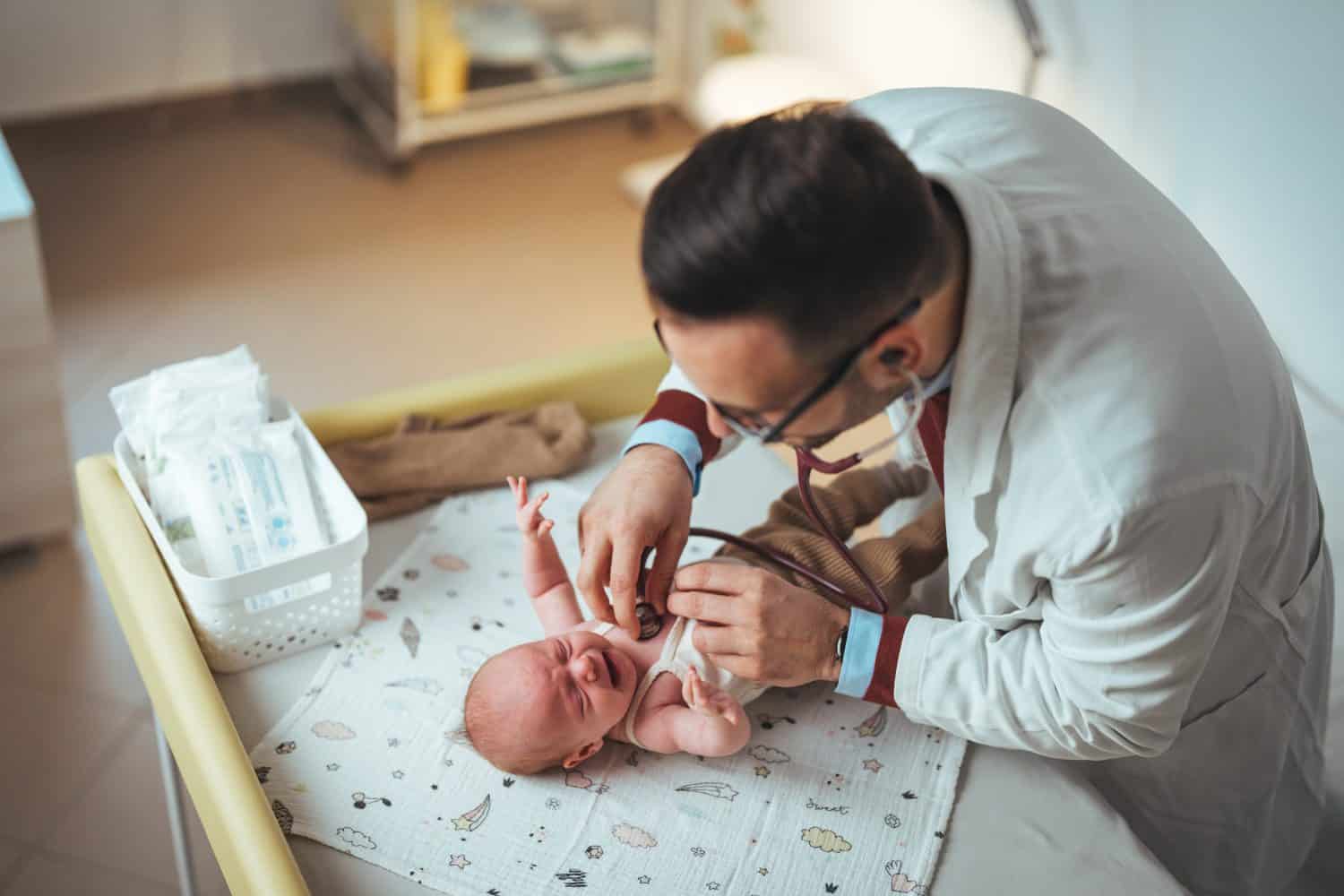
You know what it’s like to feel sick. There’s the sniffling, the stuffy nose — and ugh, the sinus pressure. Sure, coming down with the common cold as an adult isn’t any fun, but for a newborn, a cold (and other viruses) can be downright dangerous. Here’s everything you need to know about protecting your newborn baby from catching any cooties and staying healthy.
Which Illnesses Are Most Dangerous for Newborns?

©Mila Supinskaya Glashchenko/Shutterstock.com
RSV. Influenza. Pertussis. The common cold. These viruses aren’t going to make your baby cranky and uncomfortable; they can be life-threatening, says Dr. Jaime Jordan, MD, FAAP, a board-certified pediatrician.
“Although they may cause ‘just a cold’, they can escalate quickly and severely in newborns.” Sadly, this can lead to infant mortality — an estimated 100,000 children under the age of 5 die each year from RSV, according to the World Health Organization (WHO). And approximately 160,700 deaths in children 5 years old or younger occur due to pertussis, per the National Foundation for Infectious Diseases.
But those aren’t the only illnesses that pose serious risks. “The most feared infectious illness for newborns has historically been sepsis/bacteremia, which is a blood infection; however, due to excellent vaccinations available in the last few decades, these are now rarely seen,” says Dr. Marc J. Grella, MD, FAAP, a pediatrician at Massachusetts General Hospital.
“The most dangerous diseases for newborns are Group B strep infection and neonatal herpes, which are contracted from a mother during pregnancy.”
The good news: vaccines help protect against many illnesses. “Thankfully, there are vaccine-preventable illnesses, such as Haemophilus influenzae B, pneumococcal pneumonia, hepatitis B, polio, rotavirus, etc.,” adds Grella. “Many of these illnesses are less prevalent because of vaccines, which are crucial to keep these illnesses at bay and to keep your baby protected, since they are our most vulnerable population.”
©Lopolo/Shutterstock.com
Are Babies Born With Immunity?
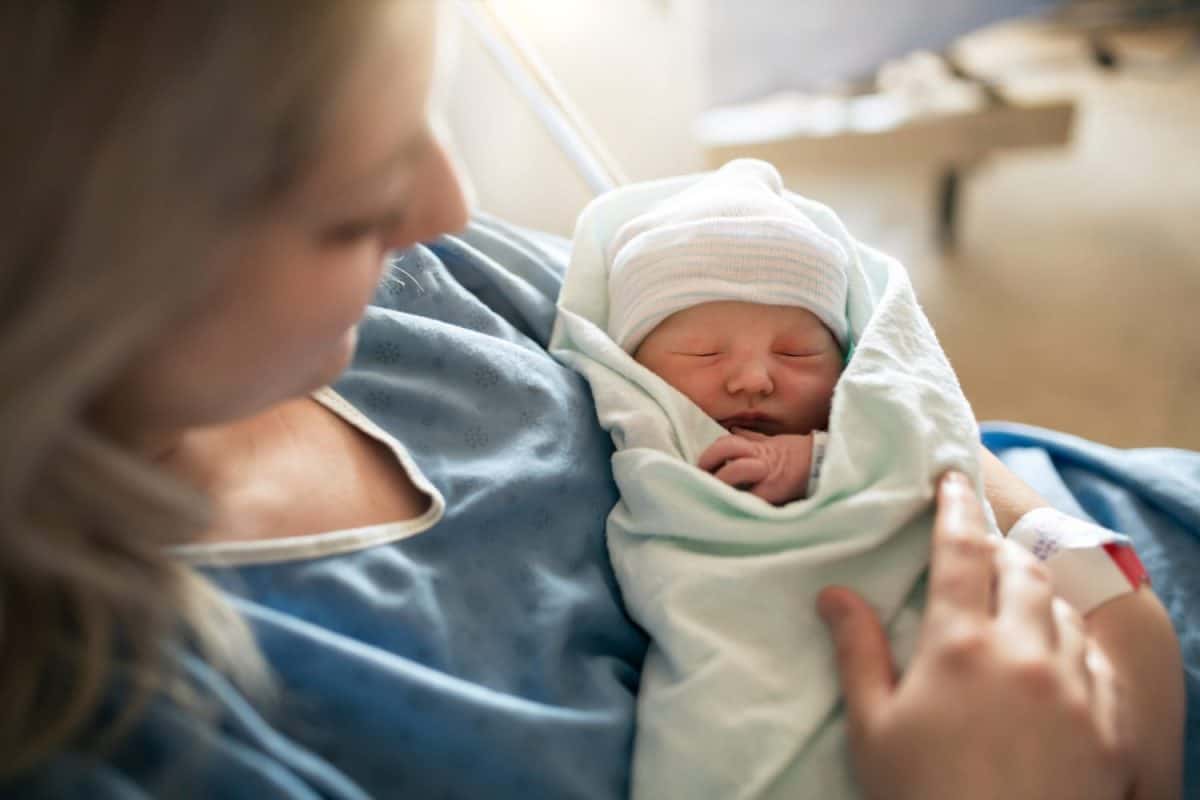
If you thought that babies are born without an immune system, think again. “Babies are born with some immunity (called antibodies) to infections that are transferred from their mothers through the placenta,” explains Grella. “This is called passive immunity, and it can last for several to many months, depending on the particular type of infection.”
That said, the immunity isn’t strong enough to ward off many sicknesses. “Most infants do not have great immunity at birth, nor do they have a well-formed blood-brain barrier,” says Jordan. “Some mild infections can become more severe because of a newborn’s immature immune system and lack of barriers/protection.”
As those originally built-in antibodies fade, your baby begins making their own (known as active immunity) through both vaccination and exposure to germs. This is why maternal vaccines matter, too. “If a mom received her TDaP, RSV vaccine, or flu shot during pregnancy, their baby usually gets a little immunity from those vaccines, but they are not fully protected,” says Jordan.
How Long Should You Wait Before Introducing Your Baby to People?
Your baby might barely be a few hours old, and already friends and family are hovering outside your hospital door, waiting to sneak a peek. Ultimately, it’s up to you to determine when the time is right. “Some people have very large families and want to introduce baby to many people early on,” Jordan advises. “This comes with risk, so the later you wait, the better.”
Grella adds: “Ideally, it would be great to limit exposure to others until after the second set of vaccines at age 4 months.” Of course, keeping Grandma away that long might not be realistic. “Waiting this long is rarely practical, so many doctors suggest waiting until at least the first set of vaccines, which are given at age 2 months,” he adds.
The weather also should play a part in your decision-making, too. “Summer is considered the safest time of year for newborns, while winter is likely the most dangerous, with both RSV and influenza making the rounds,” explains Grella. So if you have a winter baby, try to wait until you see signs of spring before allowing visitors.
How to Set Rules for Visitors
If you do allow for visitors, set non-negotiable ground rules: prescreen for illness, ask people to stay home if they’re feeling under the weather, and consider requiring vaccines like Tdap and the flu shot. Also, keep crowd control to a minimum. “You can always turn people away or scale back your visitors if you’re not comfortable with a large group,” says Grella.
If you don’t want your baby passed from one person to another, let guests coo while your baby stays safely in the comfort of your arms — and your arms only. Make masking mandatory, and of course, hand hygiene is obligatory. And keep the visit short to limit potential exposure to illnesses.
When all else fails, place the blame for your requirements on your pediatrician. “Some new moms tell visitors that the pediatrician recommended no visitors until a certain date to take the blame away from them,” says Grella. “In the end, if it’s clear that you are doing something for the safety of your at-risk newborn, your friends and family should understand.”
©Dragana Gordic/Shutterstock.com
When Should You Take Your Newborn to the Doctor?
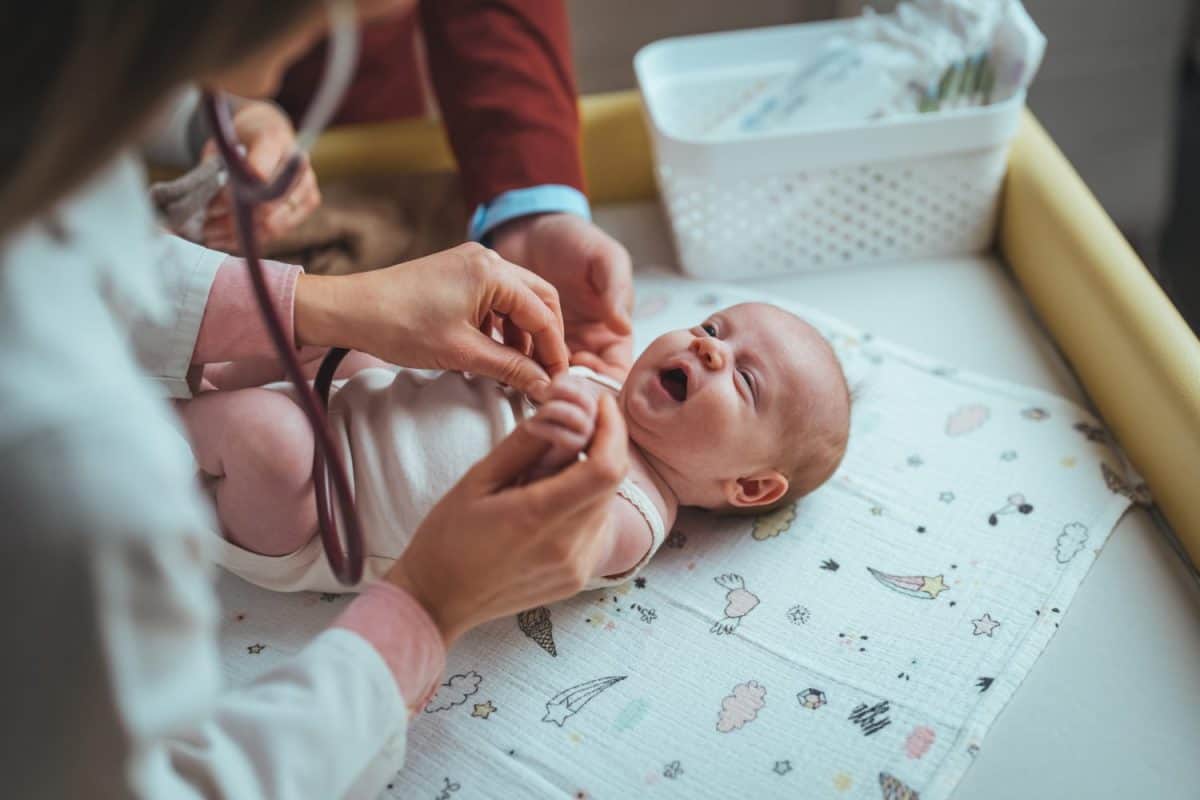
Sometimes, you don’t need a laundry list of symptoms to know that something’s not right. Here are some signs that it’s time to call the doctor ASAP:
- Fever
- Infrequent feeds
- Difficulty breathing
- Lethargy
- Rash
- Decreased wet diapers
- Increased jaundice
“If you have questions at any time about whether your baby might be ill, call your doctor's office,” says Jordan. “There are no silly questions, and your doctor would much rather see your baby and reassure you than have you sit at home and worry.”
When you have a newborn, it’s scary to think how a simple illness can quickly escalate. But there’s a bright side: “Babies are at more risk of getting more severe illness the younger they are,” says Jordan. “Time, vaccines, breastfeeding, and eventual broader exposure to the world will build your baby's immune system.”
The image featured at the top of this post is ©Dragana Gordic/Shutterstock.com