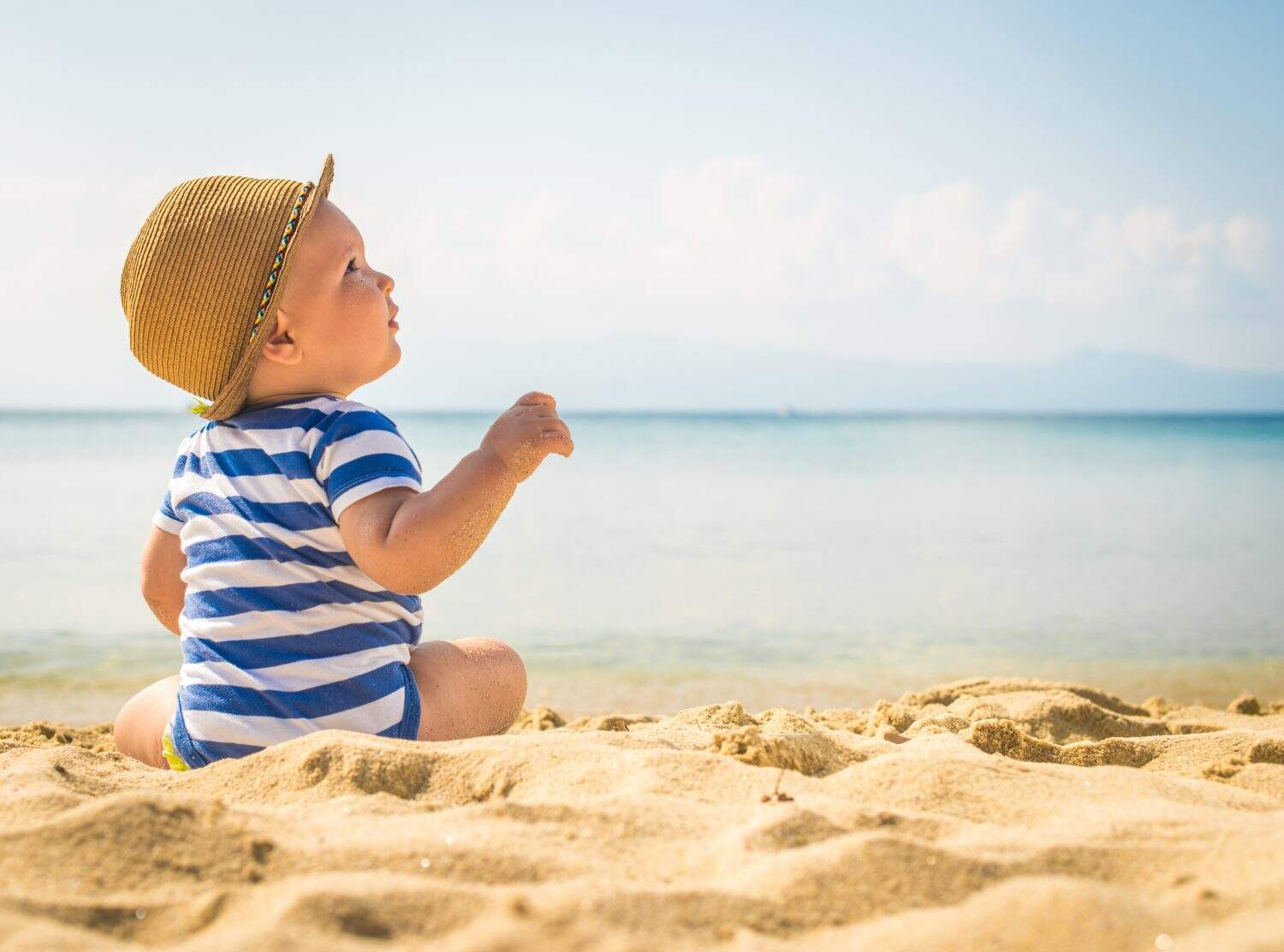
It’s beach season, and there’s nothing we love more than sunshine and smiles on the sand. Splashing in the water, having epic sand castle competitions, taking family photos — what could be better? But bringing a baby to your beach vacation can complicate things. (Think: less reading on a towel and more frantically trying to distract baby crawling toward the ocean or rubbing sand in their eyes.) Entertaining a baby and keeping them safe near the ocean can feel overwhelming, but don't let it stop you from making wonderful family memories.
Babies who are old enough to sit up and play, but young enough not to want to swim in the ocean, require special preparation for the beach. After all, you can't put them in floaties and let them run around the sand and water all day like you can with older kids!
It’s important to have toys to keep babies happy on long beach days and distract them from eating sand — and a plan for how to handle it when they inevitably do eat sand. You should have plenty of sunscreen on hand, as well as snacks and water (and/or milk) to keep them hydrated and happy. And don't forget swim diapers!
With a little planning and a few extra products on hand, your baby’s first beach trip will be smooth sailing. Follow these tips from a mom who's been there.
How Much Sunscreen Do They Need?
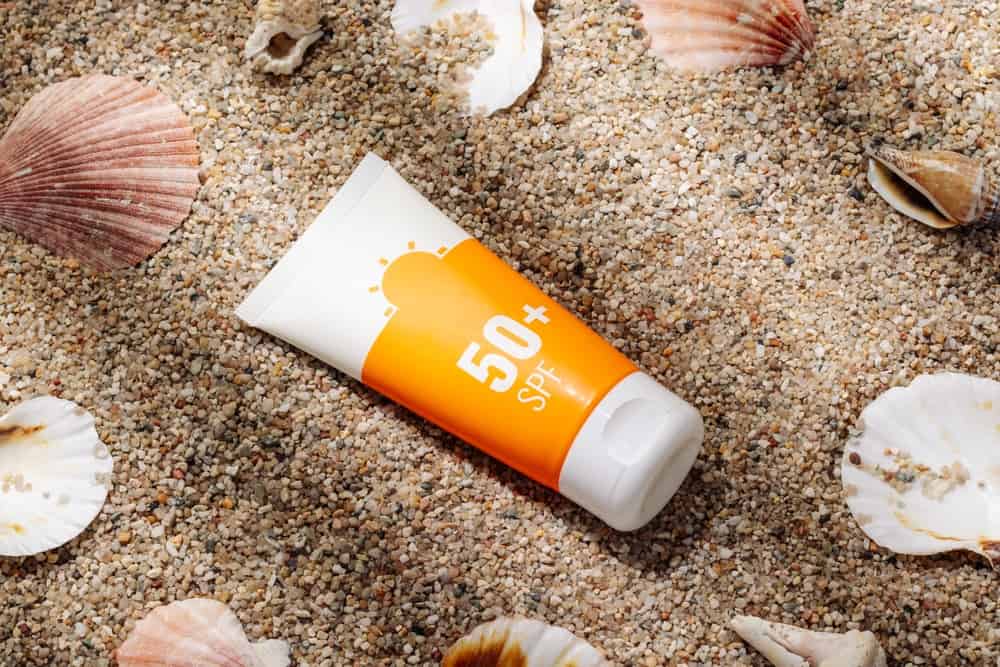
Babies over 6 months should wear sunscreen at the beach.
©lyalya_go/Shutterstock.com
If your baby is under 6 months old, you may want to reconsider taking them to the beach. Not only will you need to take extra precautions at this age, but younger babies are less likely to find anything fun to do (other than breastfeeding or drinking a bottle in the shade).
If you do choose to brave a trip with your little one, the American Academy of Pediatrics (AAP) recommends keeping babies under 6 months out of direct sunlight and using protective clothing and shade, like a beach umbrella. You can also dress your baby in long sleeves and a hat and avoid bringing your baby outside between 10 a.m. and 4 p.m. when UV rays are the strongest.
If shade and clothing are not available, a small amount of sunscreen can be applied to limited areas such as the face and back of hands. Keep in mind that they are too young for all-over sunscreen until they reach 6 months.
If your baby is over 6 months old, you should apply a sunscreen with an SPF of at least 30 that is broad-spectrum (meaning it screens out UVB and UVA rays). Consider using a mineral-based sunscreen with zinc oxide or titanium dioxide, especially on their nose, cheeks, ears, and shoulders. Apply it at least 30 minutes before going outdoors, and reapply every 2 hours and after swimming or sweating. (I like to bring a clean makeup brush or sponge to make applying sunscreen even easier, especially once they are already hot and sticky.)
What If My Baby Gets a Sunburn?
Call your doctor if your baby under 1 year gets a sunburn. For older babies, apply cool compresses to the affected area, offer water or milk to replace lost fluids, give them over-the-counter pain medication if needed, and keep them out of the sun until the sunburn is fully healed. Remember: excessive sun exposure during childhood increases their risk of skin cancer later on, so it’s important to stay on top of it.
Assign a Designated Baby Watcher

Take turns as the designated baby watcher to keep little ones safe on the sand and in the water.
©Monkey Business Images/Shutterstock.com
Before heading to the beach, talk to your partner, friend, grandparent, or sitter about the baby-watching schedule. One person should be a designated baby or kid supervisor, with eyes constantly on little ones to prevent accidents or drowning.
The AAP recommends using touch supervision, which is when an adult keeps on hand on the baby constantly when floating, paddling, or playing in water to make sure they remain within arm’s reach at all times. This is important, even if they are wearing a floatie, because they can be swept away or drown in seconds.
My husband and I like to use a zone defense on the beach: one person actively watches the kids in the sand, while the other keeps an eye on the kids in the water. If we go with other adults, we can give each other breaks by taking 20 or 30 minutes alone to read or take a beach nap while someone else watches the kids. You'll just have to see what works best for your family.
What If They Eat the Sand?
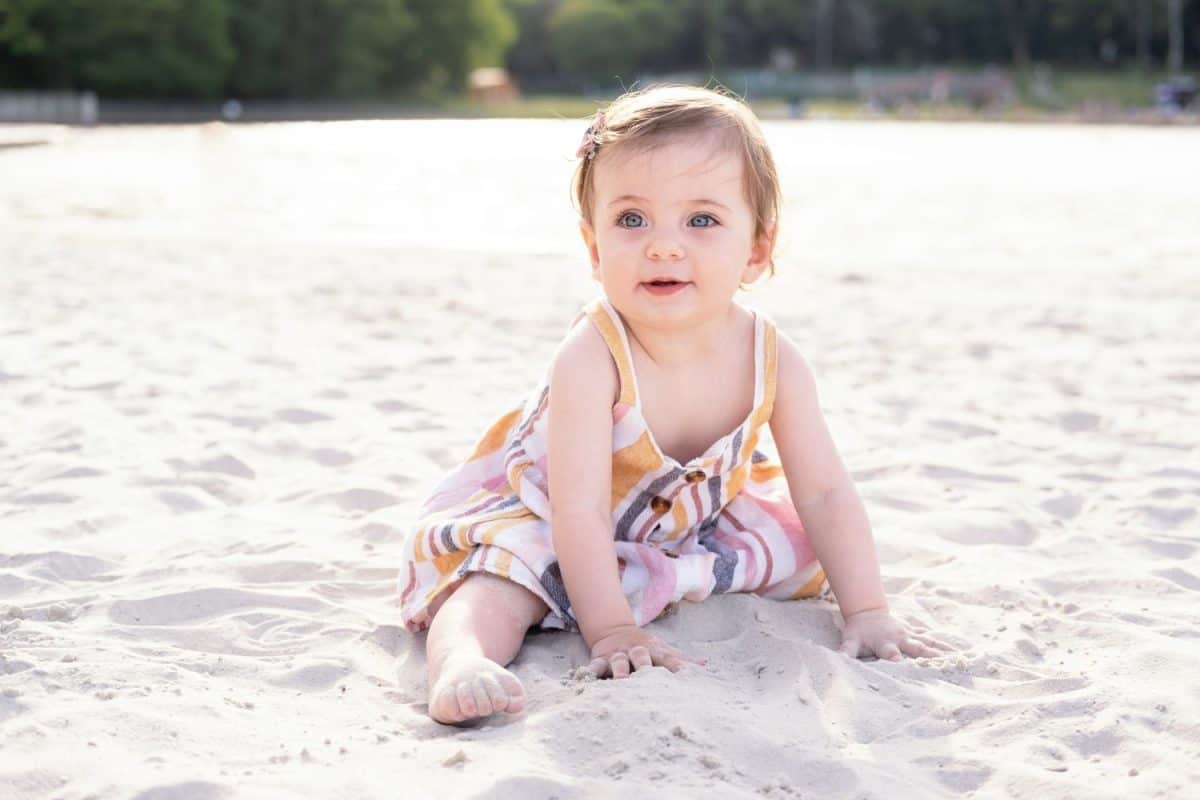
Inevitably, your baby will accidentally eat some sand during your beach trip.
©Shevtsova Yuliya/Shutterstock.com
When you go to the beach, expect sand to get everywhere. Especially when a baby is involved. (You’ll be changing sandy poop diapers for days afterward, trust me.) Other than the obvious ew factor, eating sand can cause your baby to get sick, as it can contain germs, according to the Centers for Disease Control and Prevention (CDC).
With that being said, it’s not the end of the world if some sand gets in their sandwich. If you are worried about the amount of sand they ate, or if your baby starts acting strangely, vomits, or runs a fever after your beach trip, you can call Poison Control at 1-800-222-1222.
Another sandy situation to look out for is objects in the sand. Not everybody takes care of the beach or leaves it as clean as they found it. I’ve found cigarette butts, broken glass, and even condoms on the beach before. So you might want to do a quick check before setting up camp on the beach.
Do They Need a Swim Diaper?
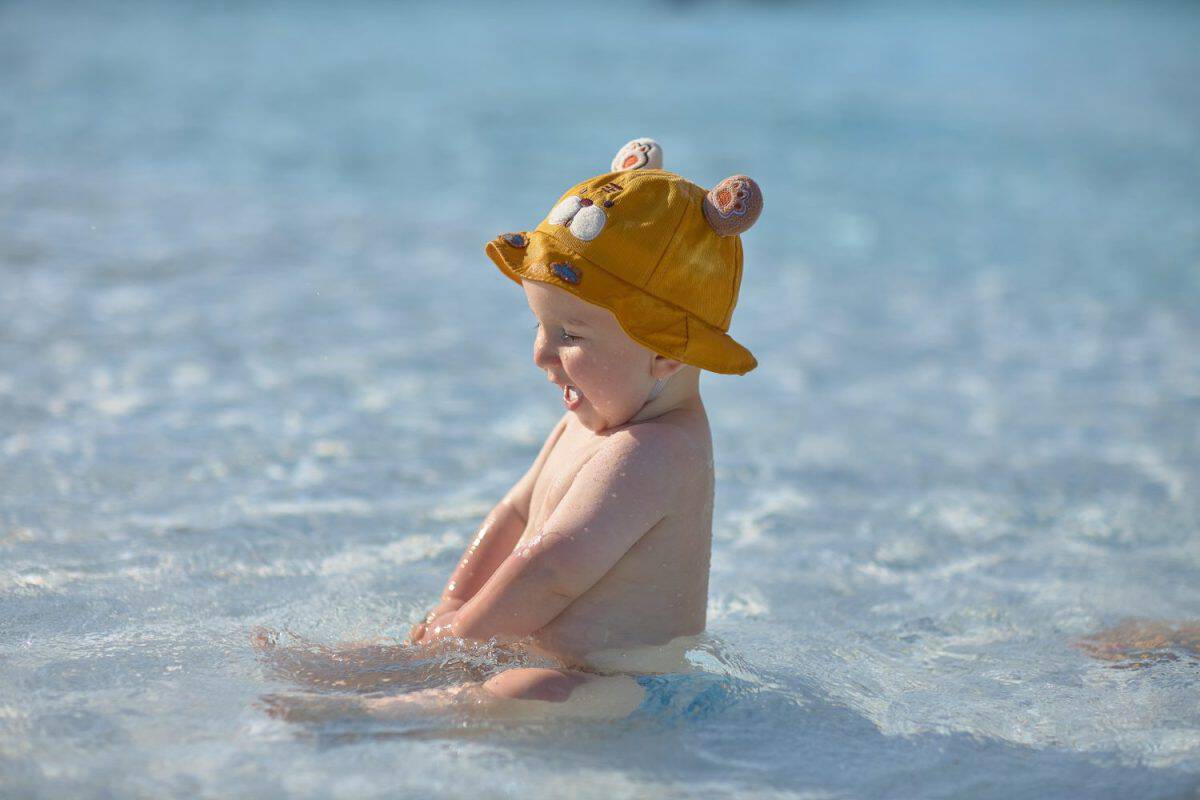
Babies should wear a swim diaper at the beach to prevent germs from spreading.
©justkgoomm/Shutterstock.com
You may have heard that swim diapers don’t actually stop pee from leaking — and that’s true. But they are still necessary for kids who haven’t been potty trained. According to the CDC, swim diapers are not leak-proof but can help contain solid feces and can delay the release of diarrhea-causing germs into the water for a few minutes (aka, just enough time for you to grab your baby and run them to the restroom).
Even though urine can leak from swim diapers, they can still help reduce the amount of urine in the water, which is particularly important at pools. The CDC recommends checking your baby’s swim diaper every 60 minutes and changing it away from the water in a designated diaper-changing area to prevent the spread of germs.
What Toys Should I Bring?
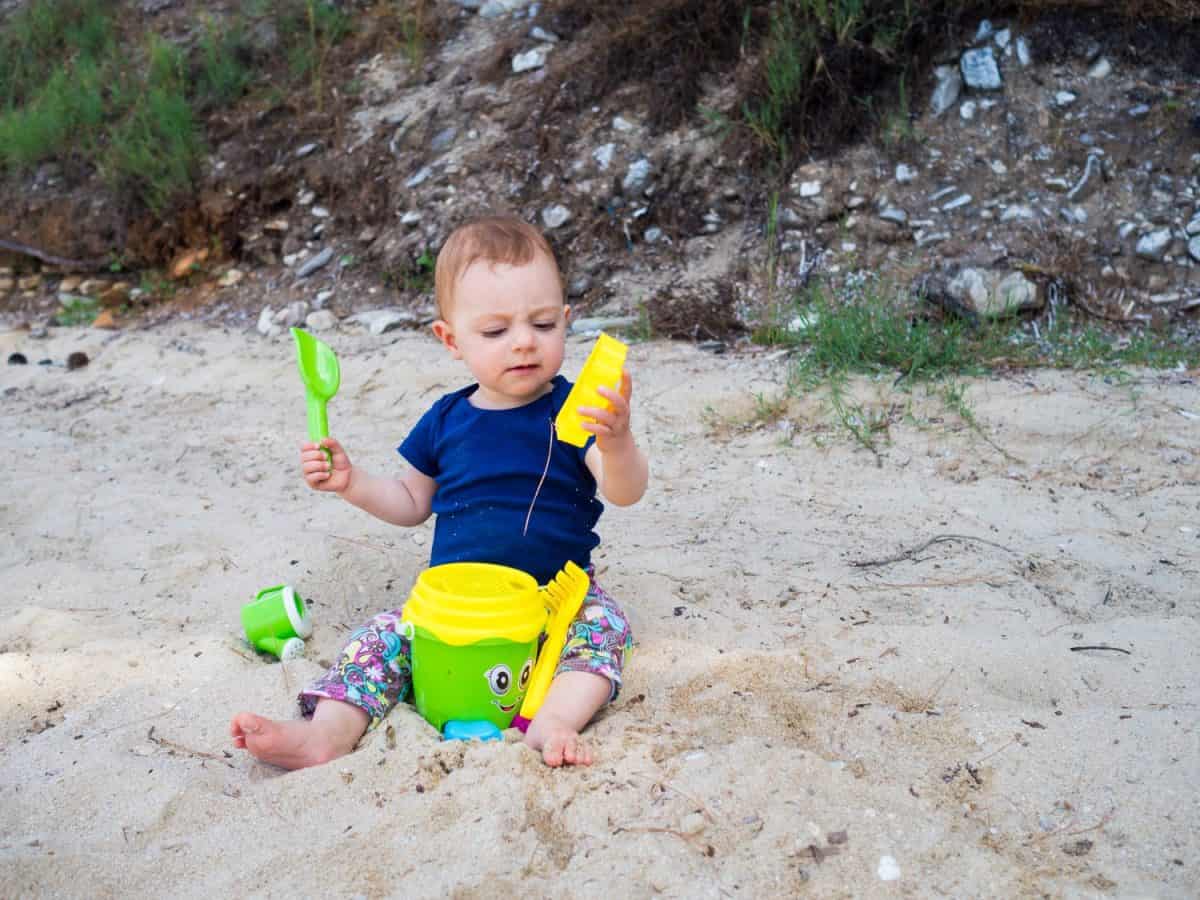
Toys are an important part of any beach trip, especially for babies!
©tikcelo/Shutterstock.com
Babies will turn anything into a toy, but if you don’t want them chewing on sticks or seashells, we highly recommend bringing some baby-friendly toys to the beach. Consider silicone sand toys for making sandcastles (or chewing on) and a small shade canopy where babies can play if they need a break from the sun. I love bringing bubbles to the beach for my little ones since they love bubbles, and it keeps them distracted.
It's also a good idea to bring snacks and water or milk to keep your baby hydrated. Watermelon slices are also good since they contain so much water. We always bring a wagon to the beach packed with a mini cooler, towels, and sand toys, which makes carrying the baby and all their accessories easier.
Time to Go Home
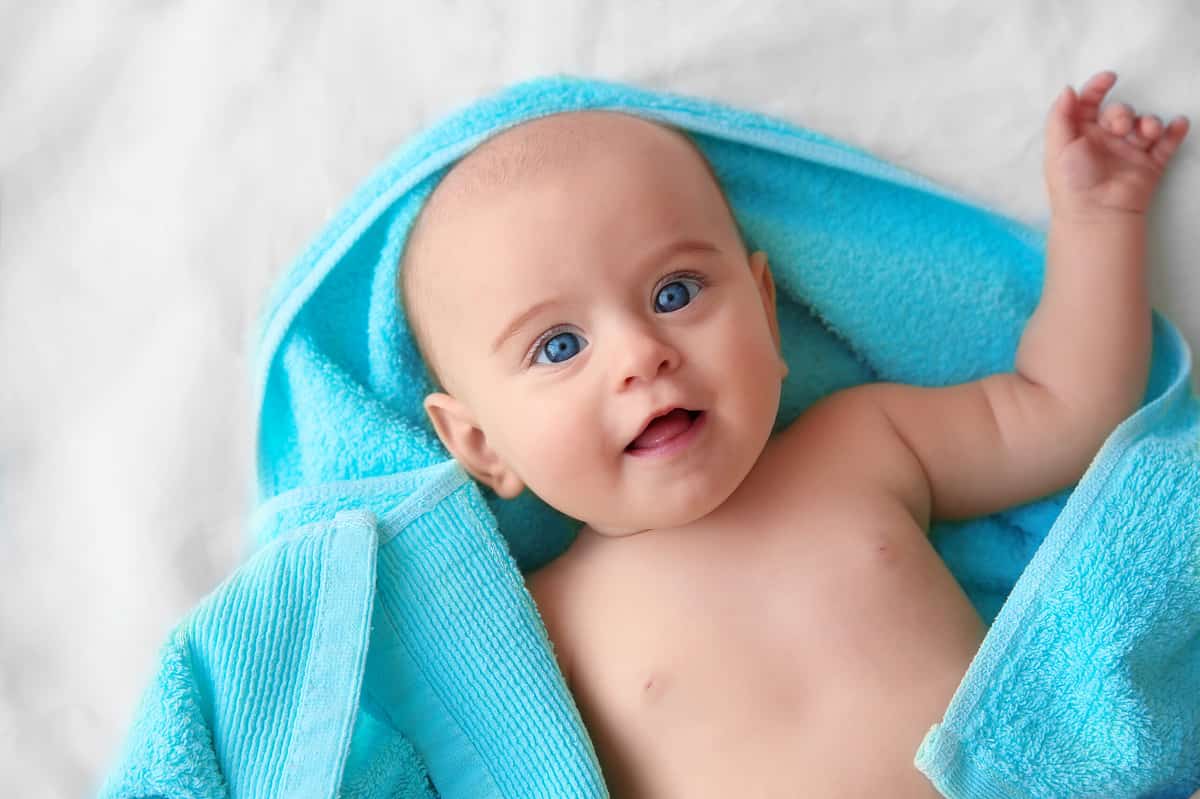
All good things must come to an end, including your beach trip with your baby.
©Africa Studio/Shutterstock.com
When it’s time to go home, I always bring baby powder to help remove the sand easily. Sprinkle it over legs, feet, and arms to help the sand wipe away more easily than with water alone. For babies, I like to take off their wet swimsuit and wrap them in a towel before walking back to the car so they are more comfortable.
It’s also a good idea to bathe them right away to remove sand from all the nooks and crannies of a chunky baby’s body. Afterward, offer something to eat because all that playing is bound to make them hungry. Once they are clean with happy tummies, that post-beach nap will be amazing!
Babies may not remember their first beach trip, but seeing how they play in the sand, marvel at the water, and enjoy time in the sun will make all the precautions worth it. Not to mention the adorable pictures you’ll get!
The image featured at the top of this post is ©Marko Poplasen/Shutterstock.com