
In today's world, one of the most powerful messages for women is to step into our power. This means something different for everyone, but the motivation is the same. It's a basic human need to desire stability and happiness, and for some, this also includes motherhood. However, for some of us, the idea of becoming a mom is wrought with confusion, insecurity, and uncertainty.
From 2016 through 2023, the percentage of women having their first child at age 35 and older increased by 25%. Alternatively, the number of women having children by age 25 decreased by 23%. To figure out why, you would need to speak with each woman individually. But as someone who's 34 and feeling the ticking of the biological clock, I can confirm one thing: societal pressure doesn't help.
To gain more insight, we speak with Cheri Bergeron, Founder and CEO of Mission Motherhood Media and Founder and President of Cheri’s Choice, Inc. After becoming a first-time mother at 44, she shares wisdom, guidance, and honesty about motherhood later in life.
Society Is Loud, But Our Inner Voices Are Often Louder
By medical standards, any pregnancy over the age of 35 is considered “geriatric.” Given that approximately 20% of first-time mothers are over this age, it's more common than many realize. Additionally, pregnancy-related risks gradually increase with age. This means there's no sudden spike in pregnancy risks when a woman turns 35. While the term is slowly being replaced with the more widely accepted “advanced maternal age,” it can still promote a negative stigma. Bergeron shares more on her opinion, and where future moms can shift their focus instead.
“I don’t think women can afford to ‘ignore' age constraints because they are based on some biological realities of declining fertility after age 35,” Bergeron says. “Instead, I believe women need to educate themselves and be proactive in their plan for motherhood, similar to the way we plan our careers.” She also encourages understanding fertility timelines and taking intentional measures to preserve fertility.
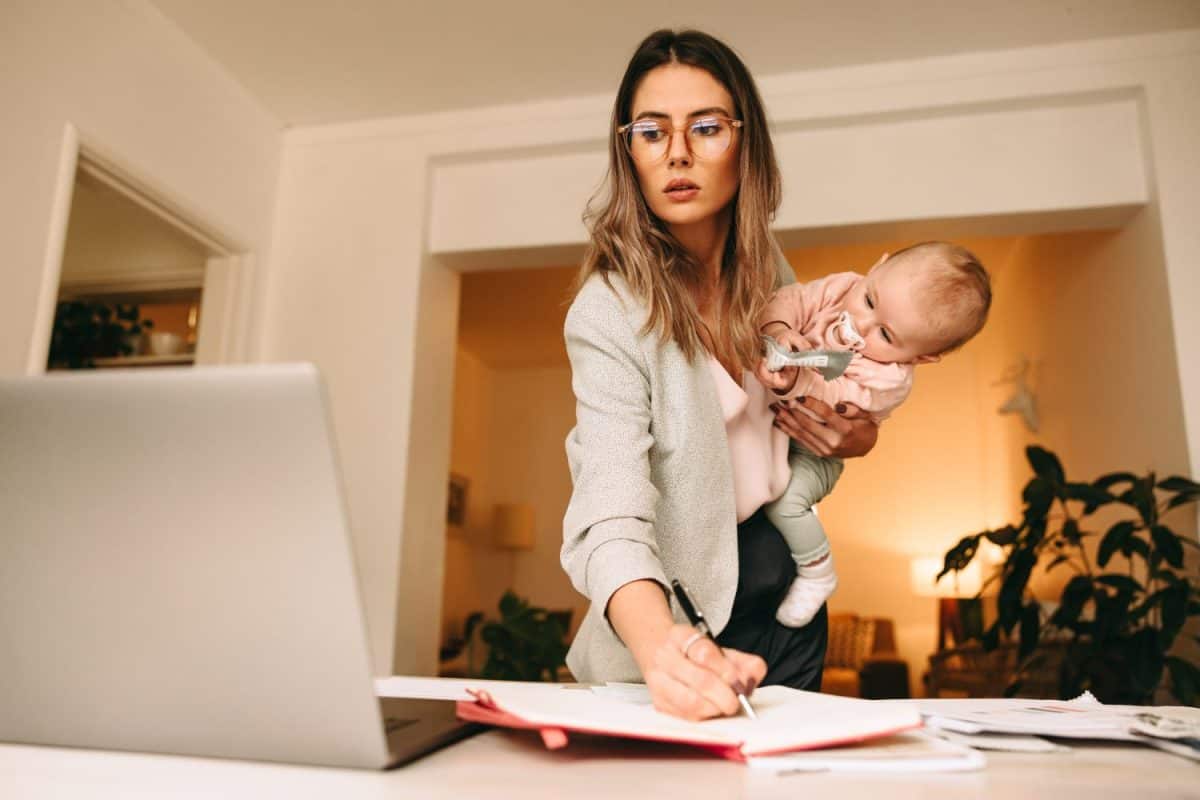
©Jacob Lund/Shutterstock.com
“I can also say that ‘geriatric' pregnancy is certainly misleading, especially when we’re talking about carrying and delivering a child. Using the eggs of a 27-year-old donor, I was able to carry and deliver healthy children when I was 44 and two weeks shy of my 47th birthday.”
Bergeron faced her own struggles on the way to becoming a mother. She says that what kept her on the path to motherhood was clarity about her core purpose in life. “I believed that motherhood would allow me to make an enduring impact that would last long after I was gone from this earth. And I was confident that I would find a way to become a mother, even if it looked different than
traditional families.”
Women Are Considering the Whole Picture
One of the most common questions women ask when choosing to start a family is, “Am I ready?” And many parents would respond by saying there's never a perfect time to have a baby. The decision rests solely on our shoulders and in our hearts. For Bergeron, the choice was something she felt deep down. Surprisingly, the biggest issues she faced had little to do with carrying and delivering her babies.
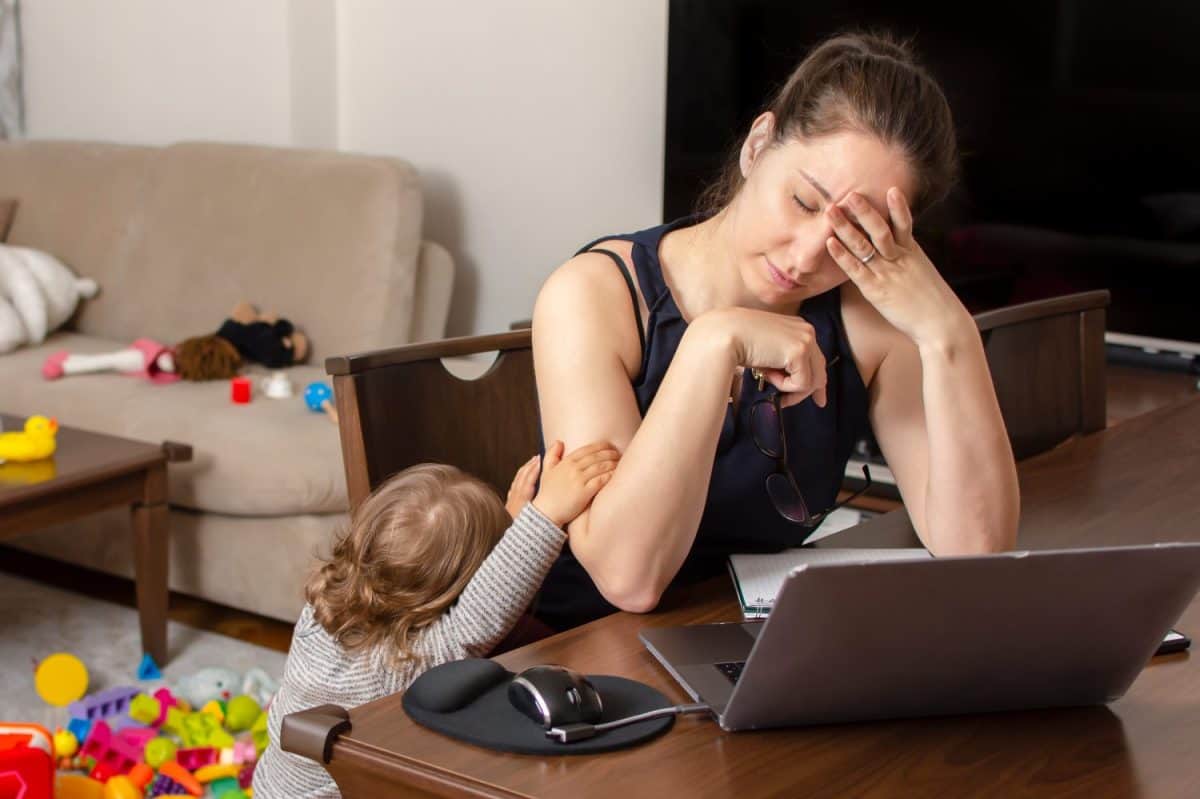
©ErsinTekkol/Shutterstock.com
“Carrying a baby and delivering a baby in my 40s wasn’t the issue. The biggest issues with conceiving naturally are egg count and quality, both of which decline with age, especially after age 40. That said, everyone is different,” she shares.
At Cheri’s Choice, they recommend getting a fertility assessment in your 20s or early 30s to get a baseline of your fertility at a relatively young age. Bergeron adds that she also recommends egg freezing to preserve options for a biological child, if that is a preference.
“My advice in general is this: if you feel called to be a mother, you can absolutely make that dream a reality. It may look different than you imagined — using donors, single motherhood, motherhood later in life–but that’s okay. Each woman’s path to motherhood is uniquely theirs, just like a person’s fingerprint,” she says.
Thoughts on Careers, Relationships, and Self-Reflection in Becoming a Mother
Many women, myself included, put their careers and stability ahead of starting a family. As more of us redefine the idea of “traditional,” Bergeron says that clarity is the best thing to have when considering motherhood.
“I believe women need to be clear about what they want in life and not ‘settle' for less to conform to society’s view of relationships, motherhood timelines, and/or family structures. Because settling for a bad relationship can create far more harm than good, for the woman and for her children,” she explains.

©Gorodenkoff/Shutterstock.com
“Instead, I believe women need to feel empowered and give themselves permission to become mothers on their own terms. This is a big part of the work that we do at my nonprofit, Cheri’s Choice. I help women navigate their path to motherhood with clarity, confidence, and choice.”
Bergeron also explains that building a foundation for raising a family involves just as many considerations. “Being established in a career before motherhood offers pros and cons. Personally, I felt settled in my career and my finances when I had my children, which I thought was nice. I didn’t have to struggle financially to raise my children. Women who choose to have children earlier may experience some diminishment in career growth because they haven’t reached the same level of career maturity. In the end, this is a very personal decision that each woman must make for herself.”
Empowering Mothers, Regardless of Age
For some women, perhaps the environment is what keeps them from becoming mothers. With others, it might bw lack of stability in their relationship or job. For many more, it could be general anxiety, generational trauma, or just the fear of something that feels so much bigger than ourselves.
In this, we find the plight of being a woman — and the beauty of it all. Becoming a mother often takes honest conversations, and if a woman's environment is heavily influencing her decision but not making her happy, there are some questions to ask.
“If that’s the case, then the woman must face some hard realities. First, is this the person I want to raise my children with? Second, am I willing to forgo motherhood just to conform to societal expectations? Third, am I prepared to create a village that will help me achieve my dream of motherhood?” says Bergeron. “These are the kinds of thought processes that we go through in workshops given through Cheri’s Choice to help women get clarity on these important life decisions.”

©Alena A/Shutterstock.com
She adds that finding a supportive community can make a significant difference. “This process of discovery can be galvanizing and empowering at the same time. I believe it’s tremendously helpful for women to hear from others who have walked this road and fulfilled their dream of motherhood. And have a sounding board to explore their hopes and concerns to arrive at the right decision for themselves.”
At the very root of motherhood, it's a calling. Not every woman will feel it, and there is nothing wrong with choosing not to have children. For those who do, putting time between themselves and society's standards is becoming more accepted every day. Women are not alone in waiting, and for some of us, that makes all the difference.
“Love has a way of drowning out fear. I don’t believe love and fear can truly co-exist. Yes, there will be fear of the unknown, but motherhood is a journey of love. If the love and sense of purpose are strong enough, I believe the fear will fade into the background.”
Cheri Bergeron, President of Cheri’s Choice, Inc.
The image featured at the top of this post is ©ANRproduction/Shutterstock.com