
Children can learn a lot through play. Playing helps kids develop critical thinking and problem-solving skills, but it also helps with cooperation, imagination, and communication. There are unlimited ways for kids to learn through play, including imaginary games, outdoor play, and even video games.
However, board games provide a unique opportunity for kids to learn strategy, foster cooperation, and bond with their families. While almost everything seems to be online these days, it can be beneficial, not to mention a lot of fun, to pull out physical board games for your next family game night.
The Benefits of Board Games Differ From Video Games
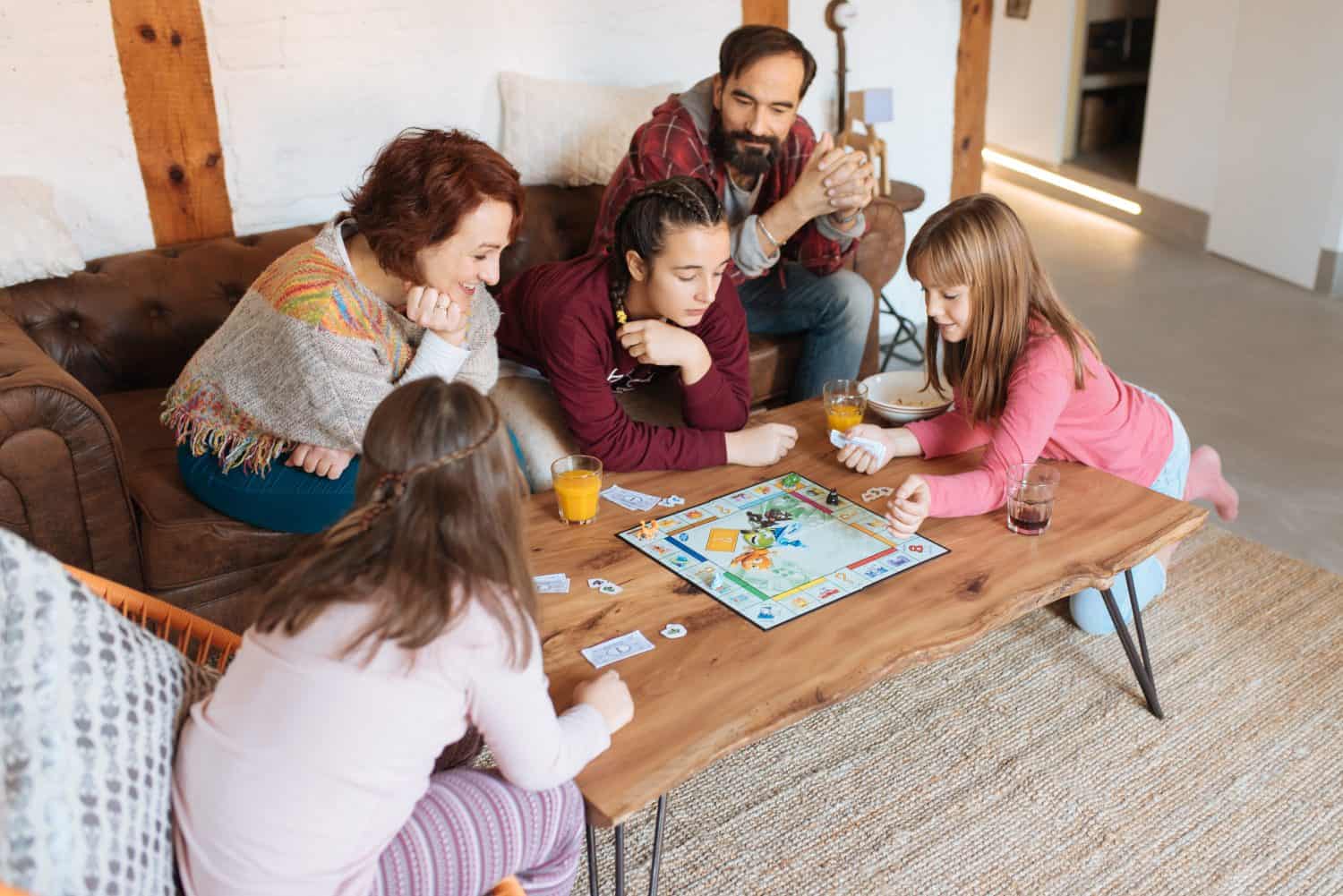
One way to spend quality time with your kids is by having a family game night where you play old-fashioned board games, rather than video games.
©David Prado Perucha/Shutterstock.com
Both video games and board games can be beneficial to children's development. However, digital versus physical games have a different set of skills that help teach kids. According to a study by the National Institute of Health, “Board gaming seems to enhance fluid intelligence, verbal working memory, and social performance, whereas video gaming improves attention, visuospatial, working memory, and mental flexibility performance.”
According to the Manhattan Psychology Group, “Board games help children learn important social skills such as waiting, turn-taking, sharing, how to cope with losing, making conversation, problem-solving, compromising, collaborating, and being flexible.”
How Do Board Games Teach Kids Social Skills?
Experts say there are 10 essential social skills kids need to learn to develop positive relationships, reduce stress, communicate effectively, and have healthy and productive lives as they grow up. These skills include: empathy, communication, conflict resolution, cooperation, respect for diversity, self-control, etiquette, patience, positivity, and how to be assertive.
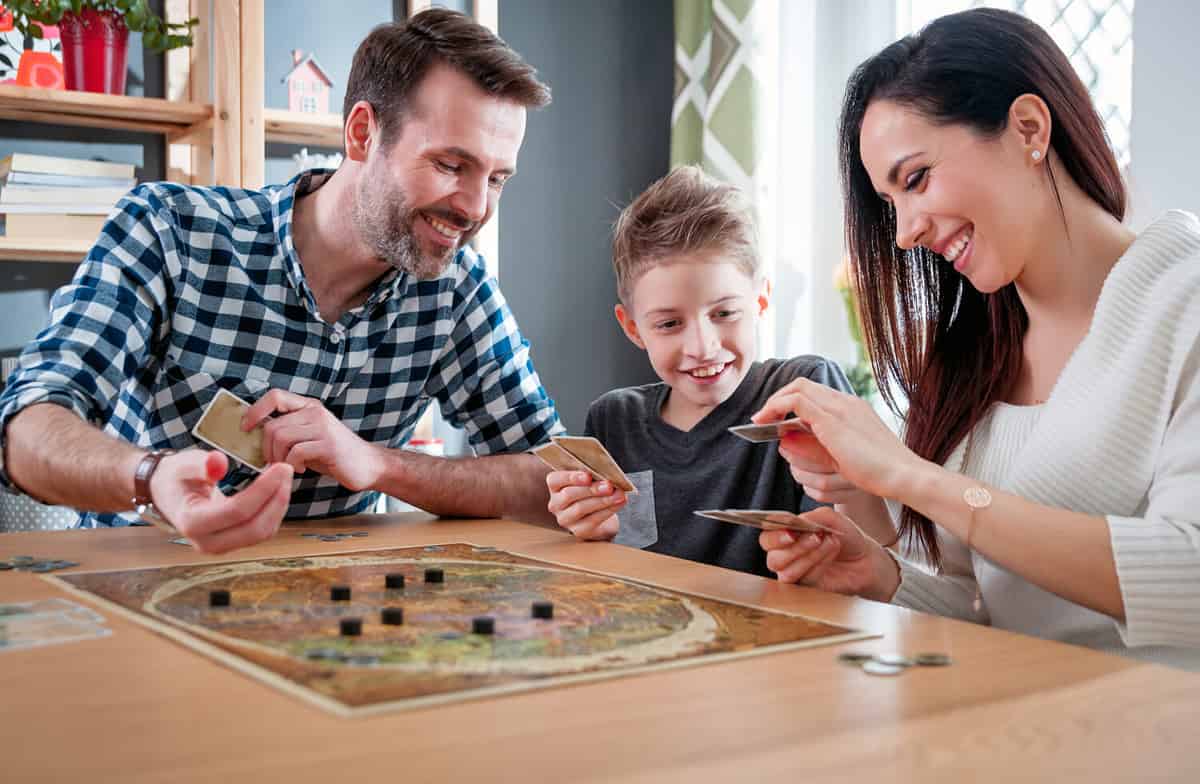
Board games help kids develop patience and learn how to be a good sport, whether winning or losing.
©Leszek Glasner/Shutterstock.com
Board games provide an entertaining way to help kids develop these skills as they play. It also gives parents the chance to model good sportsmanship, especially when it comes to losing gracefully. For example, even simple board games, like Candy Land, which can be played by very small children who don't know yet how to read, can help kids learn patience by waiting for their turn and following rules.
Anyone who has played Candy Land knows it's common to get sent back to the beginning before the game is finished. When this happens to a parent, it's a great time to model losing with dignity and calmness.
How Games Like Monopoly Secretly Teach Social Skills
There are many board games to choose from that can help kids foster social skills. But one iconic favorite that's been around for decades is Monopoly. Monopoly not only teaches kids about money and math skills, but it also encourages negotiation and communication. It helps kids learn the give and take through rent payments and property trading. The losses in Monopoly can be incredibly frustrating, while the wins are exhilarating. It's a great game for helping kids learn resiliency and how to lose gracefully.
Other Board Games Teach Kids to Cooperate
While competitive play has its benefits, there are also plenty of cooperative games where kids work together. These games invite cooperation rather than competitive play. For example, in a game like Hoot Hoot Owl, players work together to get the owls back to the nest before the sun goes down. For older kids, Pandemic is another example of a cooperative game. In this one, players team up to problem-solve as they battle global disease and the spread of infection.
Games Can Even Kids' Math Skills
Math games, like this Pizza Pie Cooperative Game, can teach kids math skills in such a fun way that they don't think about the fact that they are learning. But a board game doesn't have to be educational for kids to learn social skills. Board games foster natural play in an entertaining way while kids also learn all sorts of essential life skills.
Can Board Games Be Used As a Treatment for Mental Health Issues?
In one study, researchers reviewed previous studies to see if board games are beneficial in enhancing cognitive functions, educational knowledge, and also as a treatment for various conditions. The study concluded: “Board games can be expected to improve the understanding of knowledge, enhance interpersonal interactions among participants, and increase the motivation of participants.”
The researchers determined that more research is needed to see whether board games can treat conditions, such as ADHD. However, what they found is that board games are fun and motivating to kids, and can even be played without the need for speech. Because of this, board games are likely a useful tool to help kids undergoing treatment for mental health or other issues.
The image featured at the top of this post is ©Bill Branson (Photographer), Public domain, via Wikimedia Commons – License / Original