It is typical to hit the water during the summer and the warmer months. You get the swimsuits, the sunscreen, and all the gear. It is the perfect place to have fun and make unforgettable memories. However, when you have younger children, it is essential to consider water safety. What are the most critical water safety rules preschoolers and their families should know before heading to the pool? Let's find out!
The producers of Daniel Tiger’s Neighborhood have teamed up with the YMCA to help parents of preschoolers keep their families safe during pool season. In this article, we'll explore the Daniel Tiger episode and learn from a YMCA expert about pool safety.
Daniel's Tiger's Neighborhood Pool Safety
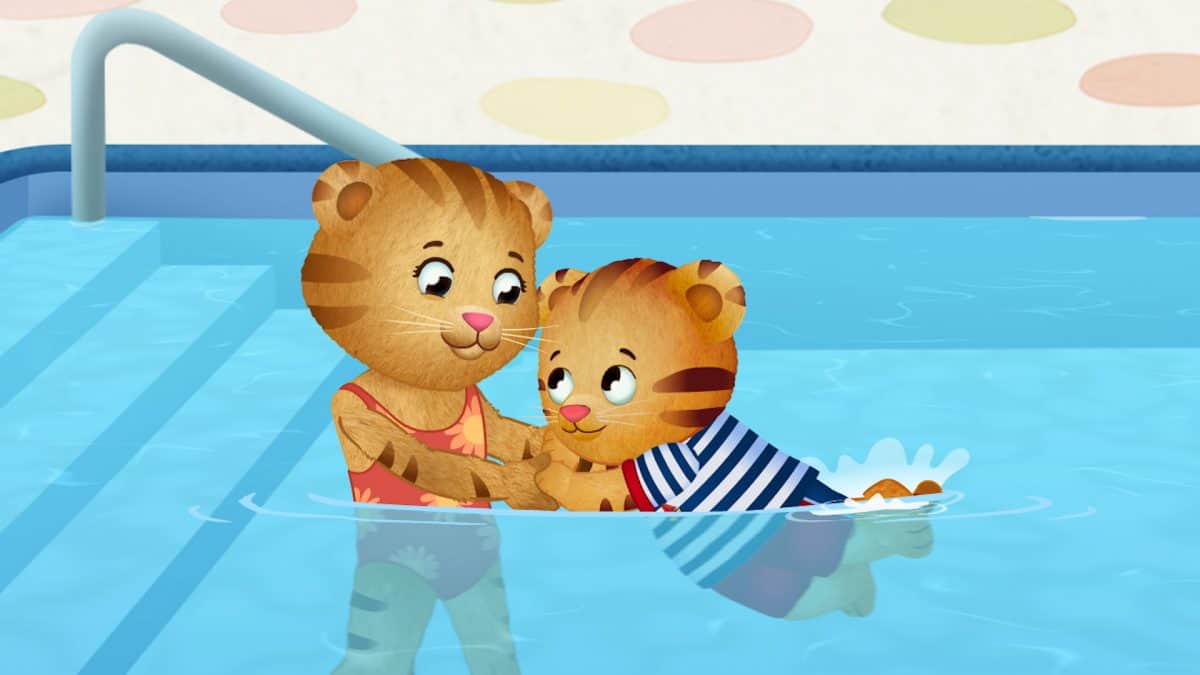
Daniel Tiger's Neighborhood is a beloved series that helps young children develop important skills.
©
Recently, Daniel Tiger's Neighborhood aired a special pool safety episode to help young viewers learn important lessons about being safe around water. In the episode, Daniel and his friends look forward to swimming, but they first take time to review the “pool rules,” including asking a grown-up for help, walking (not running) near the pool, and always wearing a life vest when needed.
Through catchy songs and gentle storytelling, the show reinforces that while pools are fun, safety always comes first. As with all Daniel Tiger episodes, this one is designed to speak directly to preschoolers in ways they can understand and remember, offering families a helpful springboard for real-life conversations about water safety.
Rules to Stay Safe at the Pool
- Listen to a grown-up while at the pool. The lifeguard or water watcher will remind you of the rules when you're near the water.
- No running. Slow down when you are around water. The ground is wet and could be slippery. If you run, you might fall and get hurt.
- Always ask. It's not safe to swim alone, so remember to ask a grown-up before you get in the water.
In addition to learning about water safety with Daniel Tiger, we partnered with the YMCA to share practical tips for keeping children safe around water. But first, let's take a look at some upcoming Daniel Tiger episodes that might be perfect for your little one.
Upcoming Daniel Tiger Episodes
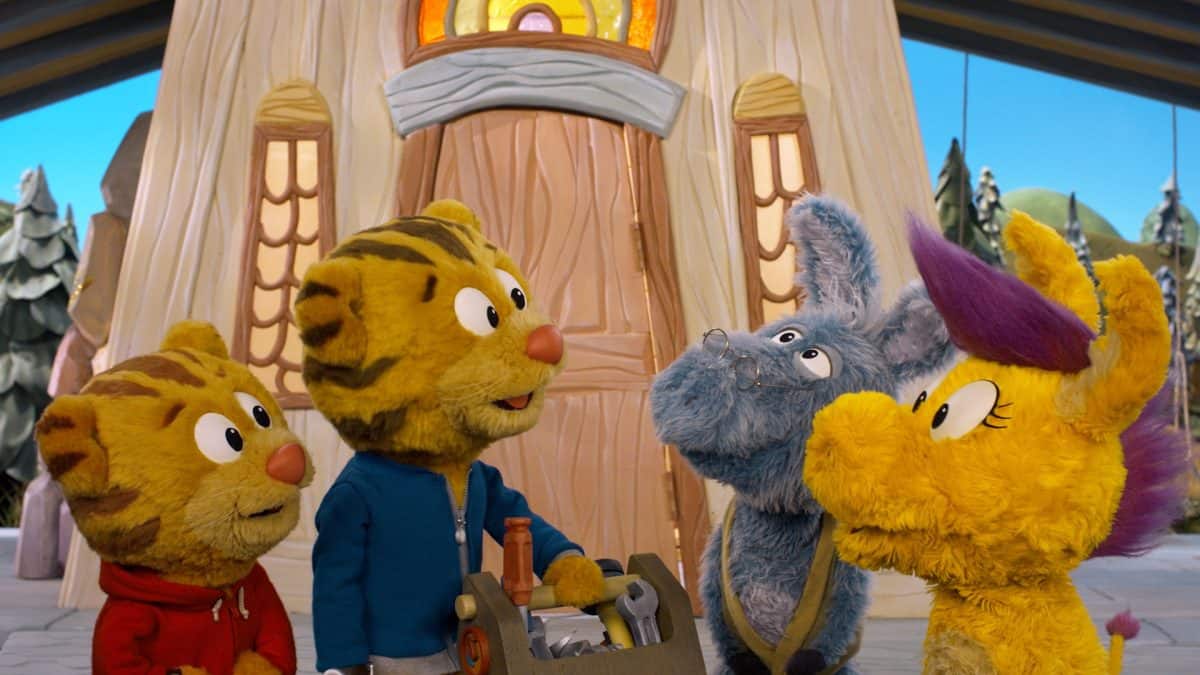
Be sure to check out Daniel Tiger's adventure with Donkey Hodie.
©
If you're looking for more of Daniel Tiger’s life lessons, a heartwarming new puppet adventure brings Fred Rogers’ beloved characters together for a new generation. For the first time, two of his most cherished modern spin-offs, Daniel Tiger’s Neighborhood and Donkey Hodie, join forces in a brand-new half-hour crossover special, airing August 11 on PBS KIDS.
Titled Daniel Tiger Visits Someplace Else, the special reimagines animated favorites Daniel Tiger and Dad Tiger as puppets, transporting them from the Neighborhood of Make-Believe to the whimsical world of Donkey Hodie.
More than just a television crossover, this nostalgic event is a celebration of Fred Rogers’ enduring legacy and the vibrant characters who continue to teach kindness, curiosity, and emotional intelligence to generations of children.
Produced by Fred Rogers Productions and Spiffy Pictures, the special features Emmy-winning and Emmy-nominated talent. Now in its seventh season, Daniel Tiger’s Neighborhood builds on the educational and emotional foundation of Mister Rogers’ Neighborhood. Meanwhile, Donkey Hodie, inspired by original puppet characters created by Fred Rogers, encourages resilience and problem-solving through imaginative adventures and catchy songs.
The crossover launches a week of new Donkey Hodie episodes, along with new Daniel Tiger’s Neighborhood episodes (streaming August 11), including a timely story and strategy song about Daniel using a new bathroom, just right for little tigers starting a new school year.
What Do The Experts Say About Water Safety?

Lindsay Mondick, Director of Strategy and Quality Practices of Aquatics at the YMCA of the USA
©
Now we turn to Lindsay Mondick, Director of Strategy and Quality Practices of Aquatics at the YMCA of the USA, to get an expert's opinion on water safety.
“The most important rule for preschoolers and parents is always to have active adult supervision. An adult should be within arm’s reach of preschoolers at all times when kids are near the water. Additionally, parents should avoid distractions like using phones or reading while supervising,” says Mondick.
Mondick shares that this is why the YMCA launched a powerful new public service campaign, Phones Down Eyes Up, to help remind parents to be totally distraction-free and responsible for supervising kids around water this summer. There’s even a pledge you can take at PhonesDownEyesUp.org, plus free safety lanyards and digital tools to help keep water safety top of mind all summer long.
Model Responsible Behavior
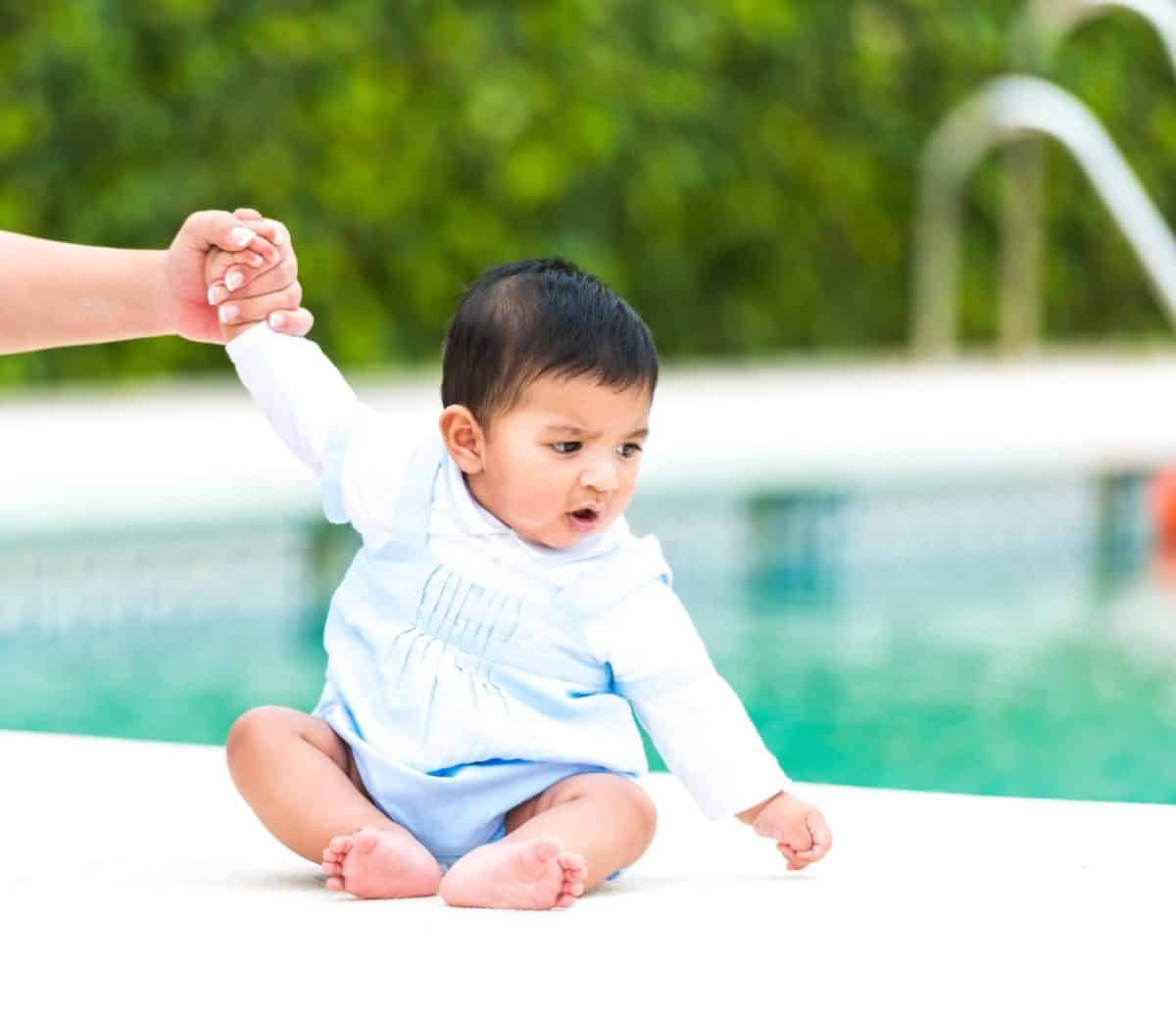
Parents can model safe pool behavior for even the youngest children.
©Tatyana Vyc/Shutterstock.com
Mondick explains that parents play a crucial role in modeling and reinforcing good pool behavior. Preschoolers learn best by watching and imitating the adults around them. “Parents can lead by example and reinforce this at home by following pool rules themselves,” says Mondick.
Simple rules that Daniel Tiger's Neighborhood covered, like walking instead of running and entering the pool feet first, help prevent injuries. Other rules, such as obeying lifeguards and wearing a life jacket while boating or in open water, will help reinforce safety in the pool and beyond. Also, while breath-holding contests are a standard pool game, they can be dangerous.
Model good behavior by not “showing off” how long you can hold your breath, and do not encourage children to hold their breath for a long time while swimming.
The American Academy of Pediatrics states that many children can begin formal swim lessons starting at age 1, depending on their individual readiness and family circumstances. However, the right age can vary depending on the child’s development, comfort in water, and family readiness.
The YMCA offers water acclimation and water discovery classes for children starting at 6 months. These classes focus on educating parents and caregivers, acclimating children to the pool through games, songs, and activities, and developing safe family habits.
A good program should have trained and certified instructors and lifeguards supervising the pool deck.. These instructors should be certified in CPR, first aid, and water safety instruction. Additionally, Mondick suggests looking for a program that offers age-appropriate curricula, lessons tailored to developmental stages, and incorporates play-based learning for younger children.
The program should also focus on safety skills, including water entry and exit, floating, treading water, turning to grab the wall, and swimming to safety. When it comes to swim classes for younger children, look for parent and child classes that encourage bonding and reinforce safety habits. Be sure to look for small class sizes and clean, safe facilities.
Water Safety Tips for Parents
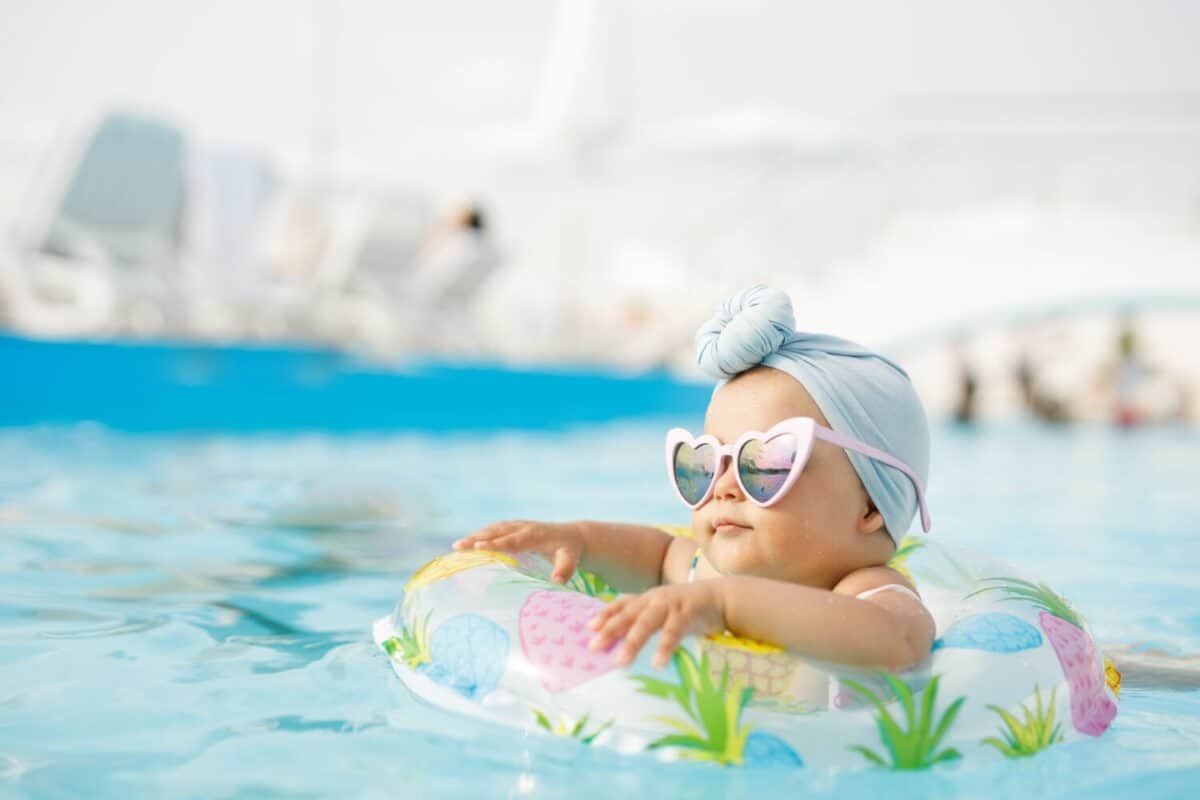
There are several things you can do to make the pool safer for children.
©KDdesign_photo_video/Shutterstock.com
There are lots of ways parents can be proactive with water safety. Mondick says if parents have a backyard pool or plan to visit friends with one, there are several simple but essential safety measures they can take to protect their children.
Tips for Pool Safety
- Ensure the pool has a four-sided fence. The fence should be at least 4 feet high and separate the pool from the house and yard. The fence should include a self-closing and self-latching gate that is out of reach of children.
- Install pool alarms, door alarms, or gate alarms to alert you if someone enters the pool area.
- Remove temptations by keeping toys, floats, and furniture away from the pool edge when the pool is not in use.
- Designate a water watcher, or a responsible adult, to actively watch the water when kids are swimming.
- Keep rescue equipment like a life ring, reaching pole, and phone close to the pool in case of an emergency.
Taking a few simple precautions can go a long way toward preventing accidents and keeping pool time safe and fun for everyone.
Helping Nervous Kids

Spending time at the pool is one of childhood’s great joys, but it must be paired with water safety.
©Irina WS/Shutterstock.com
Helping kids feel safe, confident, and joyful around water is all about creating a positive emotional environment while maintaining clear safety boundaries. Mondick suggests some ways families can make pool time both safe and fun for preschoolers who may be nervous:
- Keep sessions short and sweet so you can end on a high note before cold, fatigue, or frustration set in. Then you can increase the time as confidence grows.
- Start with play and use games, toys, and songs to make the water inviting. Let children explore at their own pace.
- Use familiar routines to help reduce anxiety and build anticipation. You can also bring comfort items to help them adjust, like goggles or swim shirts. Let them choose their gear to give them a sense of control.
- Celebrate small wins and cheer for every milestone!
- Stay close and reassure them by offering calm encouragement. Use positive language to help motivate them.
These are just a few of the ways you can help a nervous child become a confident swimmer, but the most important thing is to stay patient, positive, and consistent. Every child progresses at their own pace, and with gentle encouragement, fun routines, and plenty of emotional support, even the most hesitant swimmer can learn to feel comfortable and capable in the water.
Parting Thoughts
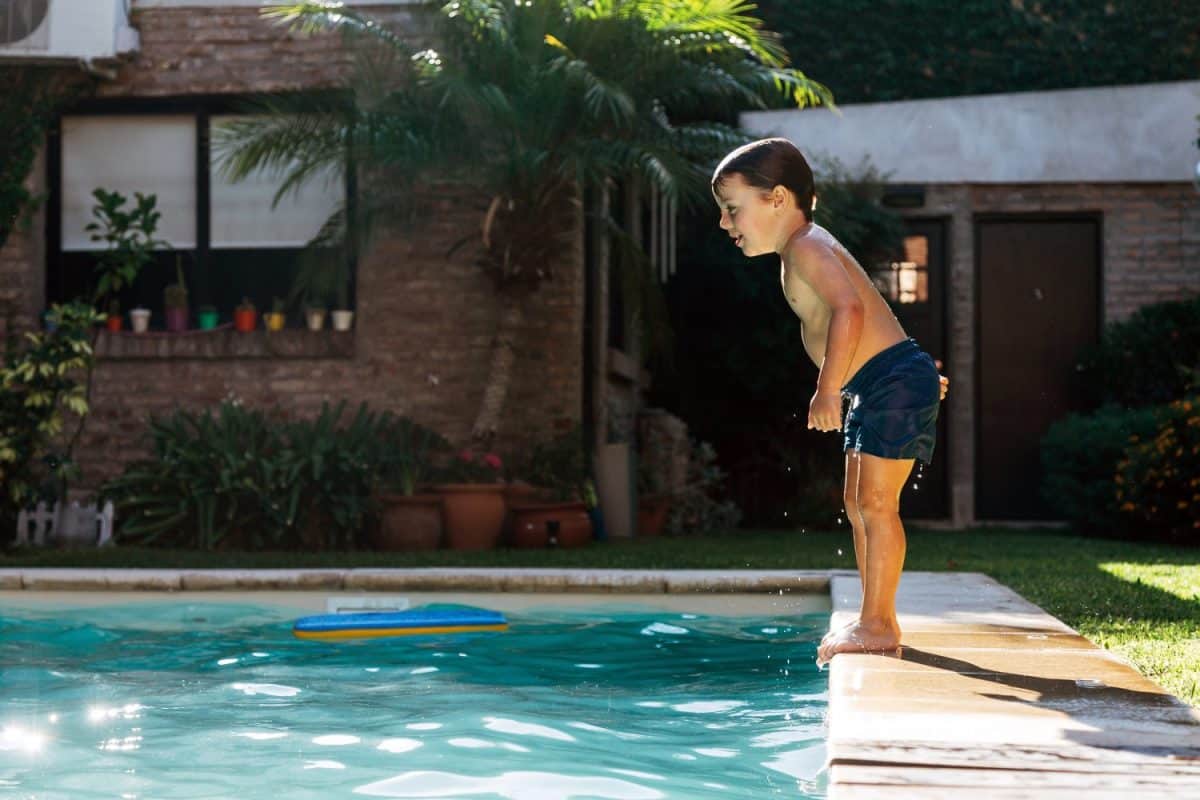
Raising kids to have a healthy respect for the water will have a huge payoff for years to come.
©Alex Photo Stock/Shutterstock.com
With the right guidance, pool time can be one of the most joyful parts of summer for families with young children. Thanks to resources like Daniel Tiger’s Neighborhood and expert advice from the YMCA, parents and caregivers have powerful tools to help keep little ones safe while building confidence around water. By modeling good behavior, staying alert, and making safety a family priority, we can turn pool days into fun, memorable, and safe experiences that children will treasure and remember for years to come.
The image featured at the top of this post is ©Evgeny Atamanenko/Shutterstock.com