









































Simple Grammar Rules Most Americans Still Get Wrong
English grammar can be tricky, even for people who use it every day. Many of the rules taught in school are easy to forget over time, especially when casual texting, social media, and everyday conversation do not always follow formal writing standards. Mistakes involving punctuation, word choice, subject-verb agreement, apostrophes, and commonly confused words can slip into emails, schoolwork, resumes, and social posts without people realizing it.
Moms Who Think looks at simple grammar rules many Americans still get wrong. These are not obscure rules meant only for editors or English teachers. They are everyday basics that can make writing clearer, cleaner, and easier to understand. Whether you are helping a child with homework, reviewing a college essay, writing a work email, or just testing what you remember from school, this list is a useful refresher on grammar rules worth knowing.
Is it who or whom?
The misuse of who and whom is one of the most common grammatical mistakes Americans make.
Answer
It's correct to use the word who when you're talking about the subject of the sentence and to use whom when you're talking about the object of the sentence. For example, you would say, "Who is going to play?" and "To whom are you giving the ball?"
Is it me or I?
It can be difficult to know whether you should use me or I in a sentence because they're both personal pronouns.
Answer
Even though me and I are both personal pronouns, they have different purposes. You should use I when you're referring to the subject and me when you're referring to the object. For example, you would say, "The teacher gave me the test," and "The teacher and I are meeting after school."
When should you use "your" instead of "you're?"
Your and you're have different meanings even though they're two of the most misused words.
Answer
Your is the possessive form of "you" and should be used as a pronoun. You're is a contraction meaning "you are."
What's the difference between to, too, and two?
To, too, and two may look similar and sound the same, but it's important to remember the difference between them.
Answer
To is a preposition that shows the relationship between two parts of the sentence. It often shows location or direction. Too, on the other hand, is an adjective or adverb that means also. Two represents a number.
When should you use "its" instead of "it's?"
Its and it's shouldn't be used interchangeably because one is a possessive pronoun and one is a contraction.
Answer
Typically, an apostrophe and "s" is used to show possession. However, you don't use an apostrophe with a possessive pronoun. For the possessive form of it, you add an s without the apostrophe. "It's" with an apostrophe is the contraction for "it is."
When should you use "good" instead of "well?"
Even though good and well seem to have the same meanings, they're different parts of speech.
Answer
Good and well can't be used interchangeably because good is an adjective while well is an adverb. Which one you use depends on what part of speech the word is modifying. For example, you would say, "This pizza is good," and, "You did well on the test."
Is it affect or effect?
It's very easy to mix up affect and effect because they look and sound similar, but there are differences between them.
Answer
Affect is a verb that means to impact or make a difference to. Effect is usually used as a noun to describe the impact or change that was caused by an action. Although effect can sometimes be used as a verb that means to directly cause something to happen, this is a less common usage of the word. Generally, if it's an action, the proper word is affect.
Can you spot the misplaced modifier?
Modifiers are an important part of a sentence, but they can make the sentence unclear if they're misplaced.
Answer
When the modifier in a sentence is separated from the word it's modifying, it can completely change the meaning of a sentence. For example, instead of saying, "My daughter pet the dog in her ballet shoes," you should say, "My daughter wore her ballet shoes while she petted the dog."
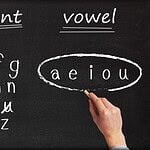
When should you use "a" instead of "an?"
Many native English speakers determine which to use based on the way it sounds, but it's easy to confuse a and an.
Answer
You should use a in front of a consonant sound and an in front of a vowel sound. It can be confusing to know which to use because it's not about the letter in the front of the word–it's about the way the letter is pronounced. For example, you would say "an hour" instead of "a hour" because the h is silent.
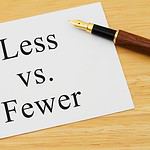
What's the difference between less and fewer?
Less and fewer are similar in many ways, but there is a grammar rule about when you should use each word.
Answer
Generally, fewer is used for things that can be counted while less is used for things that you can't count. However, less is usually used when you're talking about time or money.
Can you spot the double negative?
While it may seem obvious that a double negative is an awkward way to state something, it's important to remember that it also changes the meaning of the sentence.
Answer
A double negative is a statement that has two negative parts, which turns it into a positive statement. This type of statement often has a contraction such as don't or can't with the word no. For example, it would be unclear to say, "I won't cook no dinner," which implies that you will cook dinner.
Is it should of or should have?
The phrases should of, could of, and would of, are sometimes used in place of should have, could have, and would have.
Answer
There is no correct way to use should of, would of, or could of. The contractions would've, should've, and could've represent would have, should have, and could have.
What's the difference between each and every?
It's easy to confuse each and every even though they have different meanings.
Answer
Each is used to describe individual items that are within a group of two or more. Every, on the other hand, is used to describe groups of at least three or more. The word every also refers to every item or person in the group, while each refers to the individual item.
When should you use "who" instead of "that?"
Who and that are another set of words that are usually used interchangeably although they have different purposes.
Answer
You can determine whether you should use who or that by identifying whether you're talking about a person or an object. Who is used when you're talking about a person and that is used when you're talking about an inanimate object.
What's the difference between there, their, and they're?
There, their, and they're are often confused even though they have three different meanings.
Answer
There is an adverb that usually indicates location or position. Their is the possessive form of they and indicates that something belongs to someone or a group of people. They're is a contraction meaning "they are."
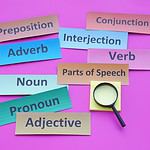
What's the difference between an adjective and an adverb?
Many people confuse adjectives and adverbs, leading them to incorrectly use both types of words in a sentence.
Answer
While an adjective is a word that modifies a noun, an adverb is a word that modifies a verb, adjective, or another adverb. Although not all adverbs end in "ly," the majority of them do.
When should you use an apostrophe?
Apostrophes are often misused, especially when it comes to showing possession in a sentence.
Answer
Apostrophes can be used to show possession, to omit letters as part of a contraction, or to make a letter or number plural. When an apostrophe is used to show possession, you add the symbol at the end of the word before the "s" in most cases. If it's a singular noun that ends in "s," you still add an apostrophe and "s" at the end. If it's a plural noun that ends in "s," you only add an apostrophe at the end.
What's the difference between everyday and every day?
It's easy to confuse "everyday" and "every day" since they look nearly the same. However, they have two different meanings.
Answer
The word "everyday" is an adjective that describes something ordinary. Every day, with a space between the words, is simply a way to say that something happens daily.
Is it a lot or alot?
When describing something with a large amount, many people confuse a lot and alot.
Answer
If you're saying there is a large amount of something, the correct spelling is "a lot" with a space between the words. "Alot" without a space is simply a misspelling and is never correct.
What's the difference between than and then?
Than and then are only different by one letter, but they have very different meanings.
Answer
Than is a word used to compare two things while then is used to refer to time. For example, you would say, "I ate more than I did yesterday," and, "We're going to eat then go to the mall."
The image featured at the top of this post is ©Kongpraphat/Shutterstock.com