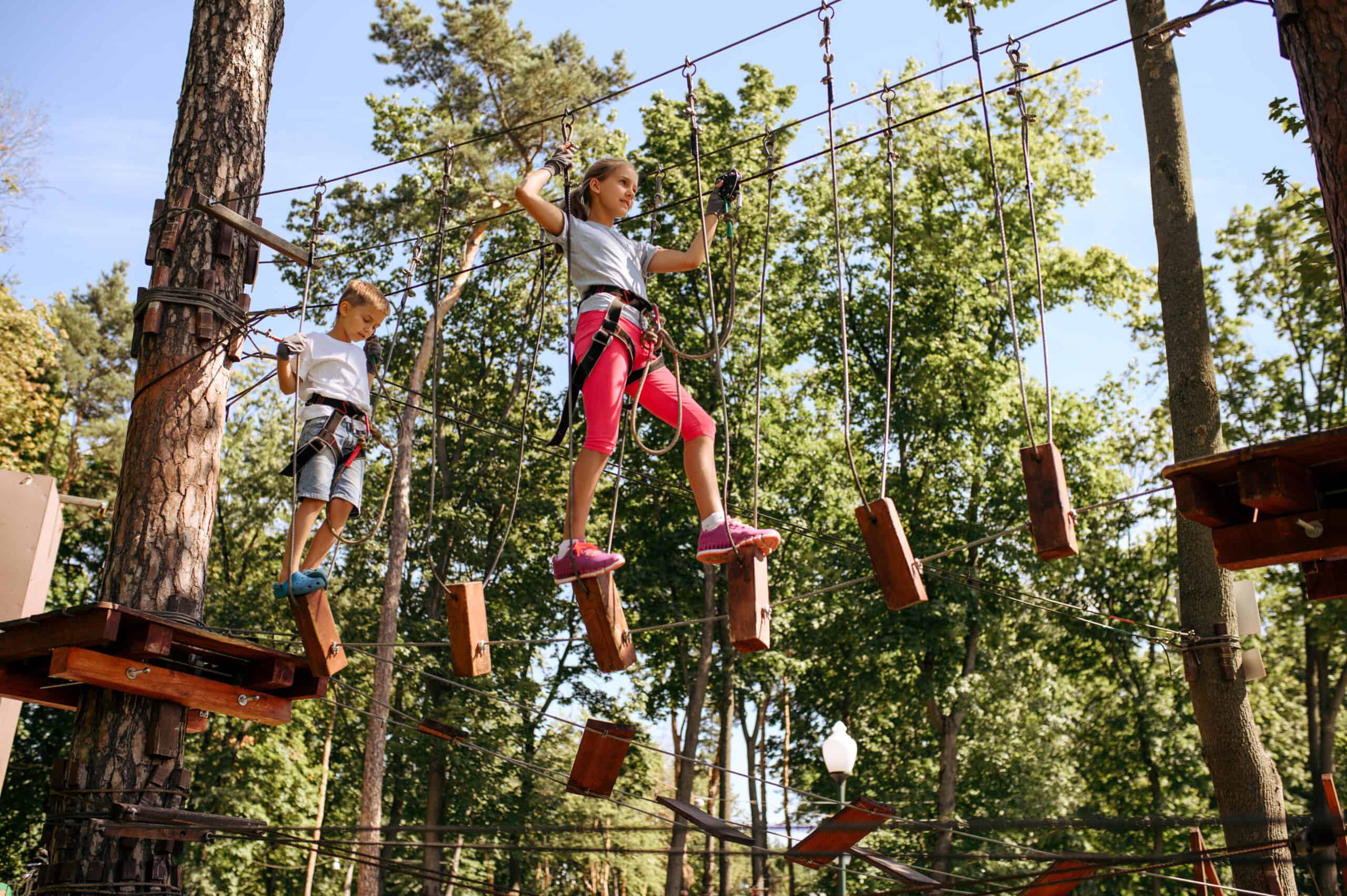
Confidence is more than simply feeling good about yourself. It's also knowing that when you fail, the world isn't ending, and you can rebound. No matter how much we don't want it to happen, we're going to have to watch our kids fail and get hurt at some point — it's part of being alive. But we don't want that failure to stop them in their tracks.
That's where confidence comes in. When kids grow up believing in themselves, they know they can get through anything life throws at them. But how do parents raise resilient kids? One of the hardest parts of parenting is knowing when to push your kids, when to let go, when to step in to their rescue, or when to let them figure it out on their own. Read on for some strategies to help answer those difficult questions.
Understand What Confidence Really Looks Like

Letting kids problem-solve on their own, rather than jumping in, helps them gain confidence in their own abilities.
©Ground Picture/Shutterstock.com
We aren't born being naturally confident. It takes learning through trial and error to believe in yourself. Confidence doesn't mean you never feel afraid or have doubts. Even the most confident children will experience nervousness and self-doubt. The goal is to help children gain not only confidence but also resilience. We want our children to believe in themselves even when life gets uncomfortable.
Don't Be a Fixer, Try Scaffolding Instead
When your kids are small, it's easy to fix whatever ails them. When they fall and get hurt, you can give them a kiss and a band-aid to make it all better. But this changes as kids grow and their problems become more complex. You can't instantly fix things when your 5th grader has a fight with their friend or gets a bad grade on a test. As much as we want to solve every problem, experts agree that rather than jumping in to “fix things,” parents should think of their support as “scaffolding.”
Scaffolding is a parenting technique developed by psychologist Lev Vygotsky. When parents use scaffolding, they provide temporary support while teaching kids a new skill. Instead of telling your child exactly what to do, scaffolding involves cooperation and guidance. It also involves asking your child open-ended questions and encouraging them. As they develop skills and grow more confident, your support can gradually fade away. This process helps grow their skills and confidence.

Preventing our child from failing doesn't build resilience. It's more important to show them that everyone makes mistakes.
©we.bond.creations/Shutterstock.com
Let Your Kid Fail
This one is easier said than done. No parent enjoys watching their kids fail. But if you step in every time to save your kid, they'll never know if they can do it on their own. They'll also never learn how to deal with failure and move on. Experts tell us that “helicopter parenting” can have unintended negative consequences. When you do too much for your children, they may get the idea that they aren't capable of doing it themselves.
Encouraging learning from mistakes rather than getting upset over them helps kids develop resiliency. Everyone makes mistakes, and kids can learn from your reaction that it's okay not to be perfect. In fact, failure is an amazing learning tool. Teaching your child that they can learn from their mistakes helps them not be afraid to try challenging tasks. It also helps them develop important problem-solving skills that will benefit them throughout their lives.
Focus on Effort More Than Outcomes
According to Utah State University, “Confident children often develop a growth mindset.” Kids with a growth mindset are open to trying new things and are not afraid to make mistakes. You can help encourage a growth mindset in your kids by praising their effort rather than the outcome. For example, if your child gets an A on their math test, rather than telling them how smart they are, tell them how proud you are of their hard work in preparing for the test. It may sound counterintuitive, but too much praise can set kids up for expecting perfection, and being disappointed in themselves when they don't reach it.
Your Love and Support Go a Long Way

Experts agree that kids do better when they have a strong support system from their parents, family, and community.
©PeopleImages/Shutterstock.com
A 2022 study found that children thrive when supported by parents, family, and community. The researchers also found that parents with their own emotional support system had kids who were more likely to flourish. The message here is don't neglect your own well-being and mental health. Parenting is hard, but having a strong support system plays a major role in preventing burnout and boosting overall family resilience.
Model Confidence and Resilience Yourself
We know kids learn from watching their parents. It's hard to encourage resiliency in your child if you don't feel it yourself. You can help your kids by being kind to yourself when you make mistakes. Also, let them hear you express positive self-talk. When something goes wrong, it's okay to express disappointment, but openly share with your kids that you also make mistakes and how you learn from them. This normalizes struggles and helps children understand how to keep their self-worth even when experiencing difficulties.
Have Patience
And finally, don't expect confidence to appear overnight. It's a lifelong journey that develops gradually. Your support and encouragement are key to helping your child grow up to be a confident and resilient adult.
The image featured at the top of this post is ©Nomad_Soul/Shutterstock.com