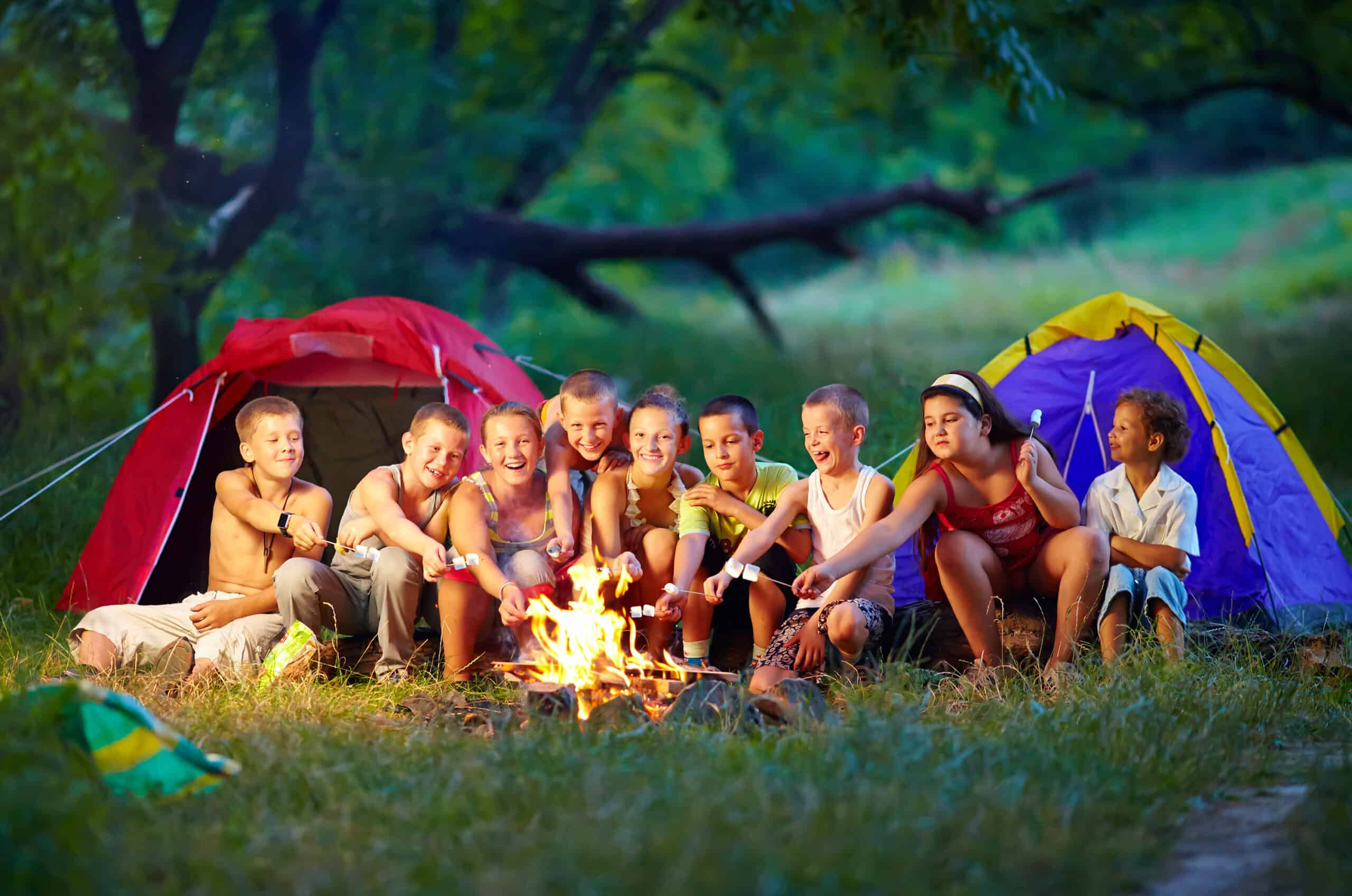
When I was choosing a camp in the 1990s, options were limited. There was Girl Scout Camp, YMCA Camp, and not a whole lot of other options. Today, kids have dozens, if not hundreds, of different overnight and day camps to choose from. So how do parents help them narrow it down to a manageable number of programs?
The American Camp Association has some ideas for picking a camp, and we have a plan of our own. Here's how we recommend choosing the perfect summer camp for your kid or kids in 2026.
Decide If They Want to Do Overnight Camp

An overnight camp can be a great option, but younger kids may not be ready for it.
©Halfpoint/Shutterstock.com
This can be a decision made by the adult if you know they're not ready yet. If your child is 9 to 11 years old, they might start considering going overnight, and you'll need to evaluate together if you think they're ready for sleeping somewhere else with other adults.
Consider if they have a friend who will be going with them, if they've been camping with the family before, and if sleeping away from home might be traumatic for them. I think it's best to wait until both parent and kid are sure that they won't call home in the middle of the night.
If you choose an overnight camp, check local YMCA and scout camps for simple and inexpensive outdoor options. For more indoor, subject matter-based camps, it's a good idea to look at local or state colleges and universities, which often offer programs that help kids hone their skills for the next level of music, art, sports, or academics.
Consider Special Needs
Before you consider the full array of camp options for your child, think about any special needs they have and if an adult at camp will be able to handle those needs. Some camps are run primarily by teens or college kids earning money over the summer. If you don't feel confident that your child's needs will be met by the adults present at a camp, don't present it to your child as an option.
Set a Geographical Boundary and a Price Limit
Because there are so many cool options for camps today, it's easy for kids to get carried away with expensive specialty classes or experiences that are farther away. I prefer not to drive more than 30 minutes, and I have a hard limit of $500 for a day camp. Usually, I set a total budget per child for camps that allows them to pick one premium camp and several more affordable options to keep things fair for each sibling and manageable for me.
When my kids were younger, I wouldn't present any options that were close to the limits. Now that they're approaching middle school, I show them some camps that are stretches, with the understanding that they can't choose all of them.
The Fun Part: Choose Camps Based on Interest

Watersports is the highlight of camp for many kids.
©Max Topchii/Shutterstock.com
Does your kid have an activity they've always wanted to try, but it doesn't fit into their schedule during the school year? Summer camps can be the perfect opportunity to try something new without committing a lot of time or money to it. This is especially nice for younger kids who aren't already involved in a lot of extracurriculars.
When my kids were in early elementary, they tried camps focused on dance (meh), theater (huge hit), soccer (hard pass), and track and field (yes for one kid, no for the other). They found some activities that they really loved, and those they didn't were over in five days.
Now that they're in late elementary, my kids have very different opinions of what they're looking for in a camp. My daughter is most interested in camps where she can hang out with her friends and enjoy being a kid — spending time outside, relaxing by the pool, or participating in an open-ended craft. My son wants to go to camps where he can learn something, preferably something science or history-related.
Sporty kids might want to try a camp that helps them build skills in their specific sport, or try something off-the-wall, like ultimate frisbee, fencing, or pickleball. Creative kids can find a variety of arts camps, from visual arts to performing arts to fashion design. Or you can pick a general interest camp — we really like camps that give kids a chance to get away from screens and spend some time outdoors.
Once you and/or your kids have decided what they want to get out of their camp experiences, start looking at options within your parameters. Park districts, schools, museums, forest preserve districts, scouts, and community centers are good places to start for general interest camps or camps centered around popular sports or activities.
If your child is looking for a specific interest, search the internet for that kind of camp in your area. Then, you can narrow down based on price, location, hours, and any other logistics that are important to you.
Make Plans with Friends to Attend the Same Camps

Volleyball camp is a great place to make new friends.
©Juice Flair/Shutterstock.com
Many kids are more likely to enjoy a camp if they go in with at least one friend on the first day. My kids like to ask around to see what their friends are planning. Sometimes, a friend has thought of something that never occurred to my kids, like the improv camp my son is attending with his friend this summer. Having a friend can also be helpful for carpooling purposes.
If your kids have different interests from their friends, encourage them to make new friends at camp. These may end up being one-week-only friendships, or they could lead to longer-lasting friendships, especially if your child is moving from elementary school to junior high or is in a specialized activity with a limited number of kids.
Consider Any Other Deal Breakers
Each kid has their own personal preferences that will make a camp miserable for them, even if it's related to their favorite subject and all of their friends are there. If you know your kid is heat-sensitive, pick indoor camps during the hottest part of the summer. If they hate packing a lunch, consider half-day camps or camps where meals are provided. If your kid isn't adept at swimming yet, stay away from camps that are heavily water-activity-based. But don't sweat it if your kid has a bad week at camp. You'll know not to sign up for that one next year!
The perfect summer camp is different for every kid (and every parent). By following these steps, you should be able to find a camp that your kid will want to go back to year after year.
The image featured at the top of this post is ©Olesia Bilkei/Shutterstock.com